THE ADVENTURE COLLECTIVE® · Independent discovery and booking for outdoor travel

Escape Marrakech for a full-day trek into the Ourika Valley to reach Setti Fatma’s cascading falls, visit a Berber home and a women’s argan cooperative, and enjoy an optional riverside Moroccan lunch.
Escape Marrakech for a full-day trek into the Ourika Valley to reach Setti Fatma’s cascading falls, visit a Berber home and a women’s argan cooperative, and enjoy an optional riverside Moroccan lunch.
You step out of Marrakech’s heat into a cooler ribbon of river and chestnut trees—the Ourika River daring you downstream. Within an hour the city blurs and the High Atlas folds up around you; a panoramic pull-over reveals craggy ridgelines and terraced fields cut into ochre slopes.
Verified experiences and guided adventures in the surrounding area.
Operated by Provan Agency · Setti Fatma, Marrakesh-Safi
You step out of Marrakech’s heat into a cooler ribbon of river and chestnut trees—the Ourika River daring you downstream. Within an hour the city blurs and the High Atlas folds up around you; a panoramic pull-over reveals craggy ridgelines and terraced fields cut into ochre slopes.
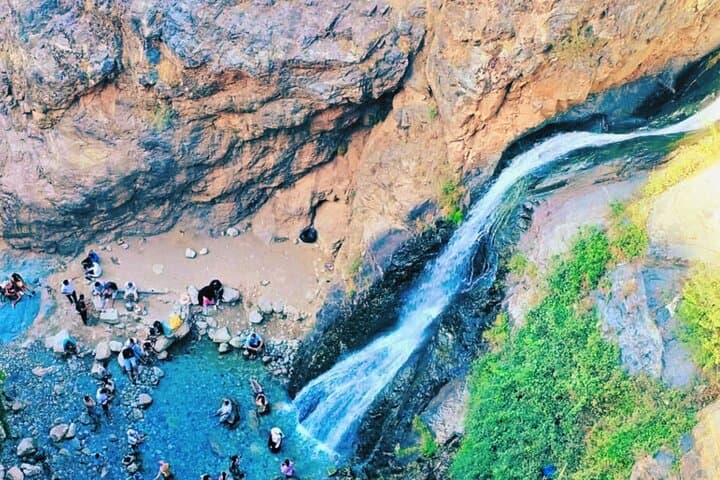
The village of Setti Fatma sits at the head of a short network of trails that lead to seven waterfalls. The geology is simple and honest: schist and limestone carved by seasonal runoff into narrow gorges and stepped cascades. The valley has long been home to Tamazight-speaking Berber communities; visits to a local house and an argan cooperative give context to the landscape—a working highland culture shaped by water and stone.
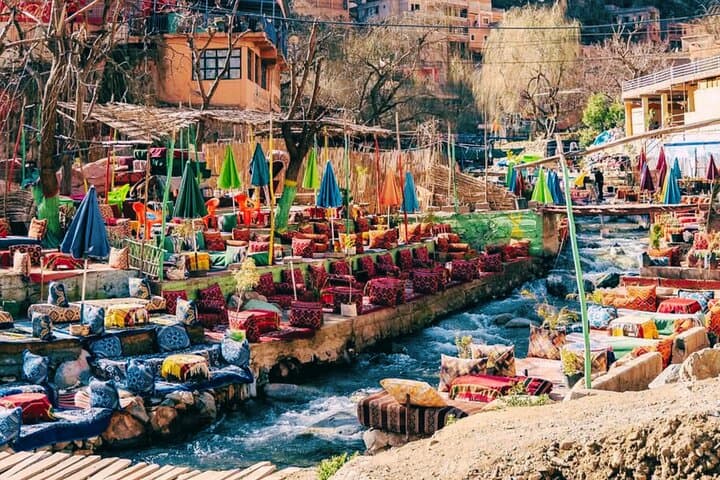
On trail you’ll cross shallow streams, pick your way over rocky steps and follow mule tracks that climb roughly 200–300 m over a few kilometers. The hike to the main falls is moderate—photo stops and steam-cooled air reward steady pacing. After the hike, a riverside lunch of tagine or salads (vegetarian and gluten-free options available) provides an easy, convivial end to the day.
Practical guidance: go early to avoid crowds and afternoon sun, wear grippy shoes for wet rocks, carry 1–2 liters of water and a lightweight layer for gusty mountain air. Respect private terraces and support cooperatives—your visit helps local women’s livelihoods and keeps trails maintained.
moderate.
6–7 hours.
Suitable for travelers with light to moderate fitness; includes uneven terrain and short uphill sections.
The guided hike to the main waterfalls typically takes 45–60 minutes each way with short photo stops; expect roughly 4 km round-trip and 200–300 m total elevation gain.
The riverside Moroccan lunch is optional and not included; vegetarian and gluten-free options are available if you choose to upgrade.
Yes—this itinerary is described as suitable for all physical fitness levels, though parents should be comfortable helping children over short, rocky sections and stream crossings.
Yes—hotel pick-up and drop-off in Marrakech are included with an air-conditioned vehicle and professional driver.
The Ourika Valley has been inhabited by Berber communities for centuries; terraced agriculture and argan production reflect traditional land use tied to seasonal water flows.
Support village cooperatives and avoid single-use plastics; stay on marked trails to limit erosion and respect private terraces to reduce community impacts.
Provan Agency operates guided outdoor trips and adventures with an emphasis on safety, stewardship, and memorable experiences.
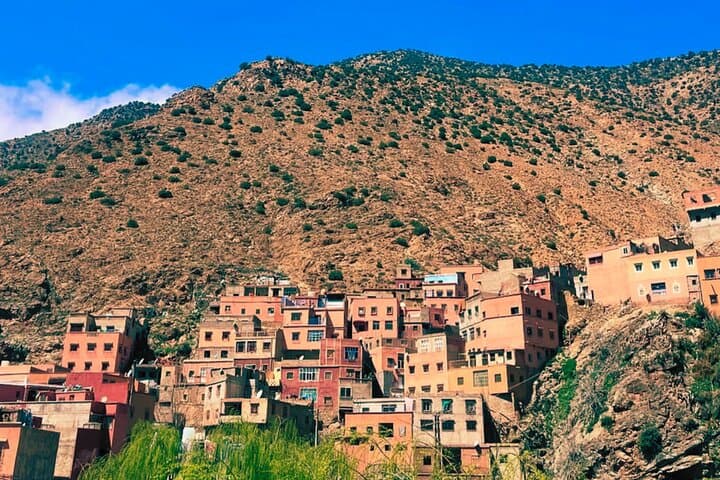
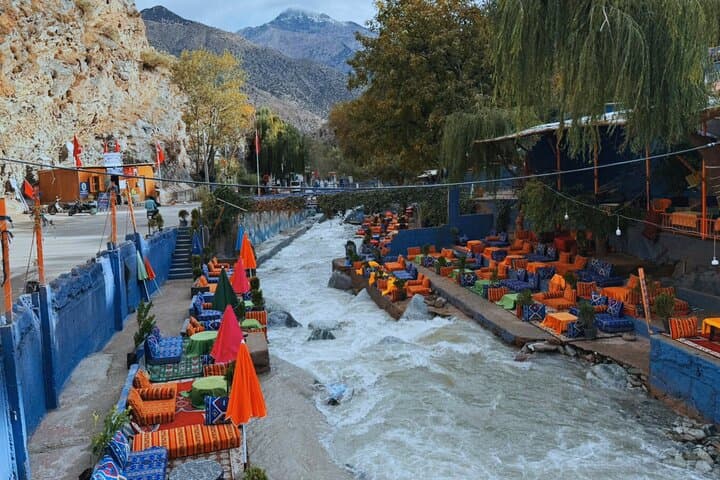
You step out of Marrakech’s heat into a cooler ribbon of river and chestnut trees—the Ourika River daring you downstream. Within an hour the city blurs and the High Atlas folds up around you; a panoramic pull-over reveals craggy ridgelines and terraced fields cut into ochre slopes.
You step out of Marrakech’s heat into a cooler ribbon of river and chestnut trees—the Ourika River daring you downstream. Within an hour the city blurs and the High Atlas folds up around you; a panoramic pull-over reveals craggy ridgelines and terraced fields cut into ochre slopes.
The village of Setti Fatma sits at the head of a short network of trails that lead to seven waterfalls. The geology is simple and honest: schist and limestone carved by seasonal runoff into narrow gorges and stepped cascades. The valley has long been home to Tamazight-speaking Berber communities; visits to a local house and an argan cooperative give context to the landscape—a working highland culture shaped by water and stone.
On trail you’ll cross shallow streams, pick your way over rocky steps and follow mule tracks that climb roughly 200–300 m over a few kilometers. The hike to the main falls is moderate—photo stops and steam-cooled air reward steady pacing. After the hike, a riverside lunch of tagine or salads (vegetarian and gluten-free options available) provides an easy, convivial end to the day.
Practical guidance: go early to avoid crowds and afternoon sun, wear grippy shoes for wet rocks, carry 1–2 liters of water and a lightweight layer for gusty mountain air. Respect private terraces and support cooperatives—your visit helps local women’s livelihoods and keeps trails maintained.