THE ADVENTURE COLLECTIVE® · Independent discovery and booking for outdoor travel

Escape Marrakech for a single-day trek into the High Atlas: visit a women's argan cooperative, photograph sweeping valley viewpoints and hike to Setti Fatma's waterfalls. Practical route details and what to pack make this an ideal day trip for nature-minded travelers.
Escape Marrakech for a single-day trek into the High Atlas: visit a women's argan cooperative, photograph sweeping valley viewpoints and hike to Setti Fatma's waterfalls. Practical route details and what to pack make this an ideal day trip for nature-minded travelers.
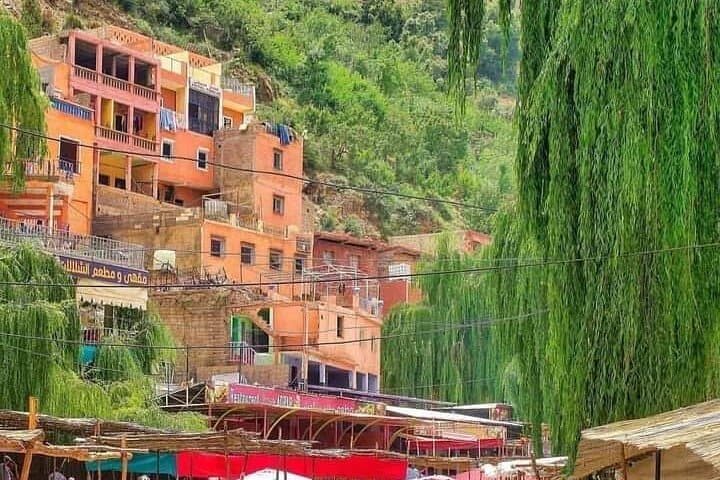
A cool mountain wind greets you as the road pulls away from Marrakech and the palms give way to the raw ridgelines of the High Atlas. Within 90 minutes the city noise thins and the Ourika Valley opens: a braided river cutting terraces and stone villages into the slopes. At a roadside viewpoint the valley spreads below like a living map of irrigation channels, orchards and ochre houses.
Verified experiences and guided adventures in the surrounding area.
Operated by Morocco Marrakech tours · Setti Fatma / Ourika Valley, Marrakesh-Safi
A cool mountain wind greets you as the road pulls away from Marrakech and the palms give way to the raw ridgelines of the High Atlas. Within 90 minutes the city noise thins and the Ourika Valley opens: a braided river cutting terraces and stone villages into the slopes. At a roadside viewpoint the valley spreads below like a living map of irrigation channels, orchards and ochre houses.
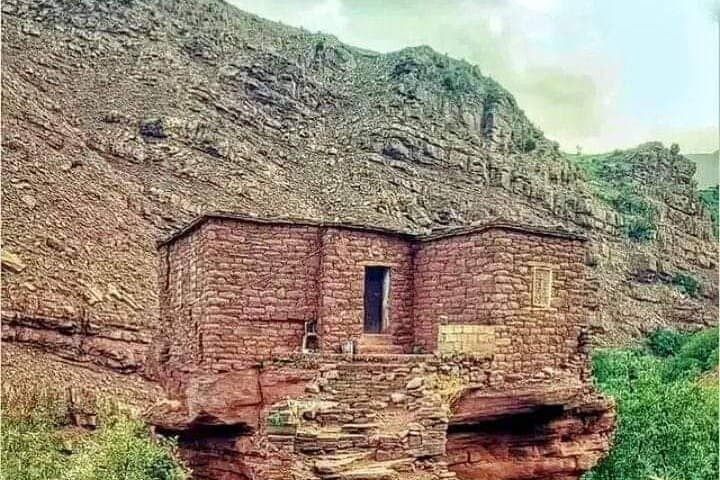
The valley has been occupied by Amazigh (Berber) communities for centuries; footpaths and stepped fields tell a slow agricultural history while argan trees on the lower slopes supply oil made by women's cooperatives nearby. Geologically the High Atlas is young, uplifted by tectonic collision; expect exposed schist and coarse volcanic soils, with river-polished boulders around the gorge.
The outing includes a visit to a cooperative to learn traditional argan pressing, then a guided hike from Setti Fatma toward a series of waterfalls. The trail is roughly 3–5 km round-trip with 200–350 m of elevation gain depending on how high you climb—rocky riverbank steps, short scramble sections, and intermittent river crossings.
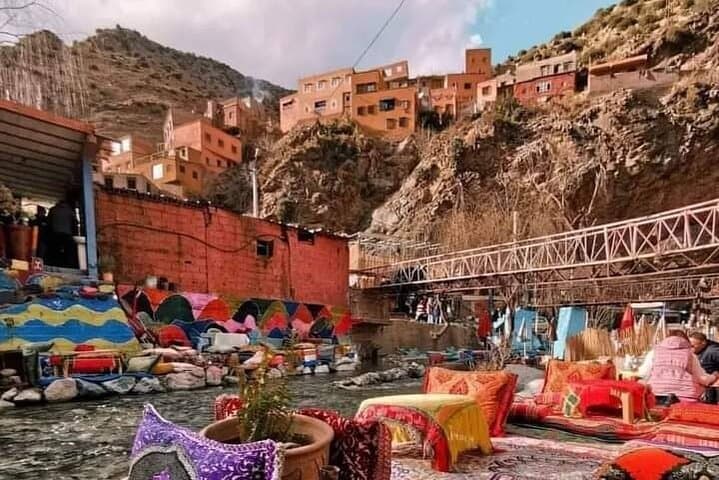
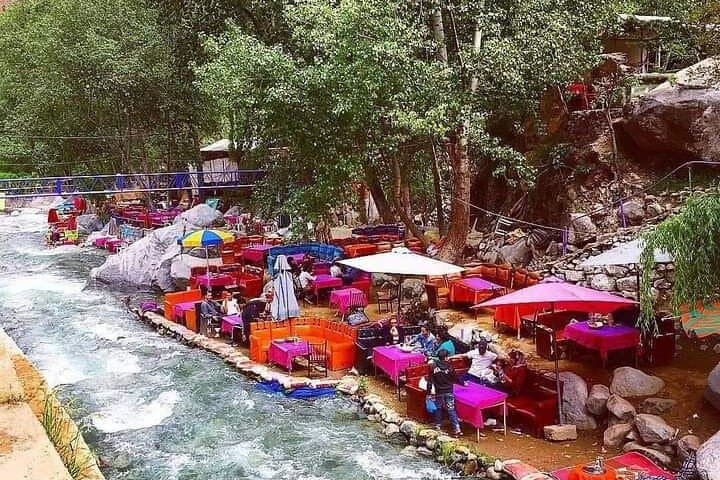
Practicalities: start early to avoid mid-day heat and crowds, wear grippy shoes, and bring 1–2 liters of water. Carry small local currency for purchases and tips; cell coverage is intermittent. The hike is achievable for most active travelers but be prepared for uneven terrain and slippery rock near cascades. Finish with a riverside lunch—the current nearby seems to nudge you toward slowing down and soaking in the mountains before the drive back to Marrakech.
moderate.
8 hours.
Suitable for travelers in regular walking shape—able to manage uneven paths, river steps and short climbs for up to 2 hours.
The guided section typically covers 3–5 km round-trip and takes about 1.5–2 hours depending on pace and how many waterfalls you visit.
Most tours include air-conditioned vehicle pickup and drop-off from central Marrakech meeting points or hotels—confirm your pickup point when booking.
Yes—families commonly join, but the trail has uneven terrain and short scrambles; young children should be carried in a pack if unsure-footed.
Lunch by the riverside is typically included or arranged as part of the day; check the tour details and advise of dietary needs in advance.
The Ourika Valley has long been home to Amazigh (Berber) farming communities; traditional argan production and terraced agriculture reflect generations of mountain livelihoods.
Argan woodlands are protected in places and cooperatives help sustain local economies; stick to trails, avoid disturbing vegetation, and support local vendors to encourage responsible tourism.
Morocco Marrakech tours operates guided outdoor trips and adventures with an emphasis on safety, stewardship, and memorable experiences.
A cool mountain wind greets you as the road pulls away from Marrakech and the palms give way to the raw ridgelines of the High Atlas. Within 90 minutes the city noise thins and the Ourika Valley opens: a braided river cutting terraces and stone villages into the slopes. At a roadside viewpoint the valley spreads below like a living map of irrigation channels, orchards and ochre houses.
A cool mountain wind greets you as the road pulls away from Marrakech and the palms give way to the raw ridgelines of the High Atlas. Within 90 minutes the city noise thins and the Ourika Valley opens: a braided river cutting terraces and stone villages into the slopes. At a roadside viewpoint the valley spreads below like a living map of irrigation channels, orchards and ochre houses.
The valley has been occupied by Amazigh (Berber) communities for centuries; footpaths and stepped fields tell a slow agricultural history while argan trees on the lower slopes supply oil made by women's cooperatives nearby. Geologically the High Atlas is young, uplifted by tectonic collision; expect exposed schist and coarse volcanic soils, with river-polished boulders around the gorge.
The outing includes a visit to a cooperative to learn traditional argan pressing, then a guided hike from Setti Fatma toward a series of waterfalls. The trail is roughly 3–5 km round-trip with 200–350 m of elevation gain depending on how high you climb—rocky riverbank steps, short scramble sections, and intermittent river crossings.
Practicalities: start early to avoid mid-day heat and crowds, wear grippy shoes, and bring 1–2 liters of water. Carry small local currency for purchases and tips; cell coverage is intermittent. The hike is achievable for most active travelers but be prepared for uneven terrain and slippery rock near cascades. Finish with a riverside lunch—the current nearby seems to nudge you toward slowing down and soaking in the mountains before the drive back to Marrakech.