THE ADVENTURE COLLECTIVE® · Independent discovery and booking for outdoor travel

Escape Marrakech for a five-hour private drive into the High Atlas where gentle hikes lead to waterfalls, Berber tea with a local family, and a home-cooked tagine. Practical route notes and local insights help you plan the day.
Escape Marrakech for a five-hour private drive into the High Atlas where gentle hikes lead to waterfalls, Berber tea with a local family, and a home-cooked tagine. Practical route notes and local insights help you plan the day.
You leave Marrakech behind on a two-lane road that climbs into the southern foothills of the High Atlas; sunlight slants across terraced fields and lemon trees while the air cools and the city noise recedes.
Verified experiences and guided adventures in the surrounding area.
Operated by Morocco Luxe Tours · Setti Fadma, Marrakech-Safi
You leave Marrakech behind on a two-lane road that climbs into the southern foothills of the High Atlas; sunlight slants across terraced fields and lemon trees while the air cools and the city noise recedes.
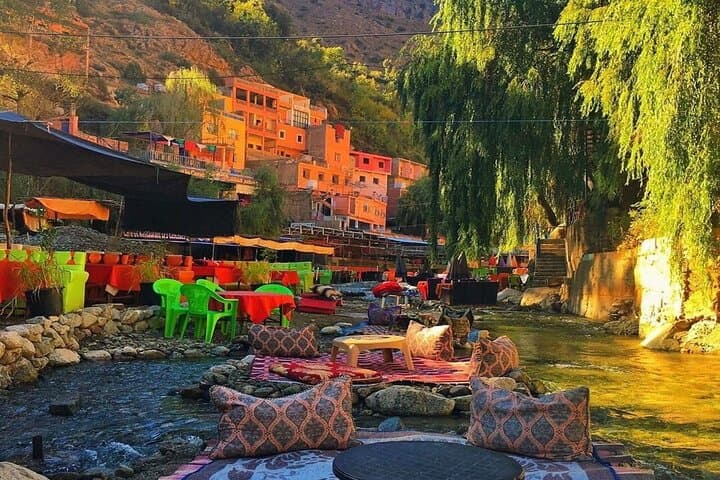
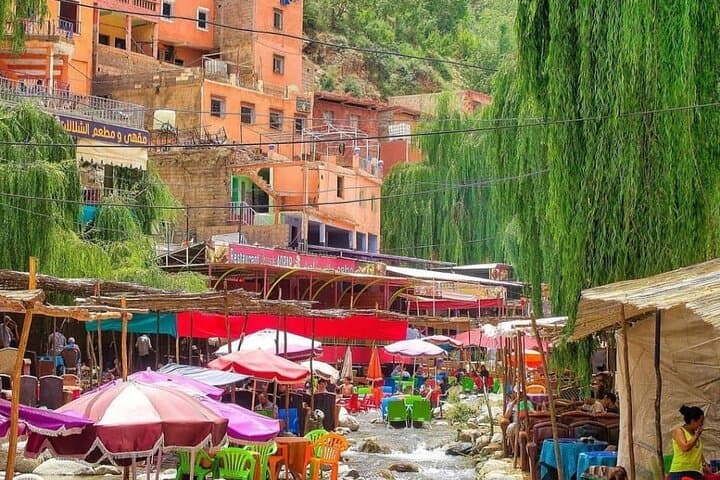
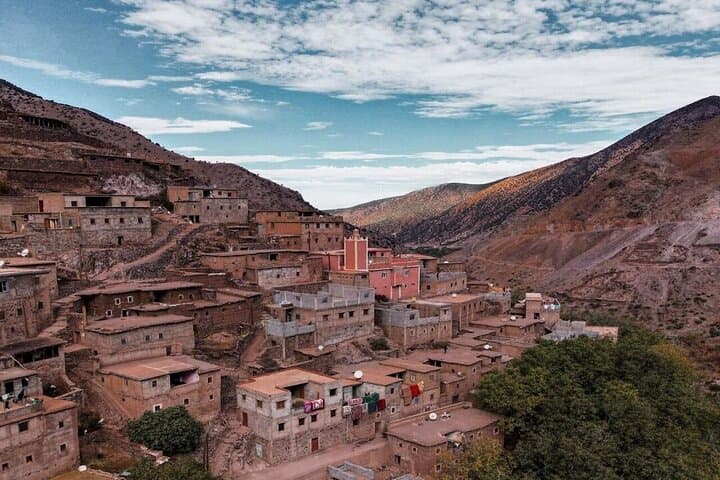
Arriving in the Ourika Valley feels like stepping into a working mountain landscape: irrigation channels cut neat lines across cultivated slopes, and stone houses cluster around narrow lanes. The hike to Setti Fadma’s waterfalls is a gentle ascent through oak and olive groves, with the sound of rivulets daring you to slow down and listen. Along the way you’ll visit a Berber cooperative in Oualmas, sample mint tea in a family home, and sit down to a tagine made from local ingredients.
Geologically the High Atlas is young—uplifted by the African-Eurasian collision—and the valley’s streams have carved stepped cascades where granite meets softer schist. Culturally, the region has long been shaped by Amazigh (Berber) life: seasonal grazing, terraced farming, and weekly markets that still move goods by foot and mule.
Practical guidance: aim for an early start to avoid midday heat and peak traffic; wear sturdy shoes for uneven, sometimes slippery paths; bring water and modest clothing for village visits. The full tour runs about five hours including transport, with several short walks and one main uphill section to the cascades. Expect friendly hospitality, basic mountain facilities, and a chance to support local cooperatives—pack a small tip and a reusable bottle to reduce waste.
moderate.
5 hours.
Light to moderate fitness; able to walk on uneven ground and ascend short hills.
The main walking portion to the Setti Fadma cascades is usually 30–60 minutes each way depending on pace and stops.
Yes—walks are short and the tour is family-friendly, but those with mobility issues should note uneven terrain and some uphill sections.
Local hosts are accustomed to simple requests—inform your guide in advance and they can adapt the tagine for common dietary needs.
Tipping is appreciated; consider a small tip for your guide and a modest amount for the family that hosts lunch or the cooperative.
The Ourika Valley has been inhabited by Amazigh (Berber) communities for centuries and served as a seasonal corridor between Marrakech and High Atlas pastures; many villages retain traditional farming practices.
Foot traffic and seasonal tourism strain local water resources—avoid single-use plastics, stick to paths, and buy from community cooperatives to support sustainable livelihoods.
Morocco Luxe Tours operates guided outdoor trips and adventures with an emphasis on safety, stewardship, and memorable experiences.
You leave Marrakech behind on a two-lane road that climbs into the southern foothills of the High Atlas; sunlight slants across terraced fields and lemon trees while the air cools and the city noise recedes.
You leave Marrakech behind on a two-lane road that climbs into the southern foothills of the High Atlas; sunlight slants across terraced fields and lemon trees while the air cools and the city noise recedes.
Arriving in the Ourika Valley feels like stepping into a working mountain landscape: irrigation channels cut neat lines across cultivated slopes, and stone houses cluster around narrow lanes. The hike to Setti Fadma’s waterfalls is a gentle ascent through oak and olive groves, with the sound of rivulets daring you to slow down and listen. Along the way you’ll visit a Berber cooperative in Oualmas, sample mint tea in a family home, and sit down to a tagine made from local ingredients.
Geologically the High Atlas is young—uplifted by the African-Eurasian collision—and the valley’s streams have carved stepped cascades where granite meets softer schist. Culturally, the region has long been shaped by Amazigh (Berber) life: seasonal grazing, terraced farming, and weekly markets that still move goods by foot and mule.
Practical guidance: aim for an early start to avoid midday heat and peak traffic; wear sturdy shoes for uneven, sometimes slippery paths; bring water and modest clothing for village visits. The full tour runs about five hours including transport, with several short walks and one main uphill section to the cascades. Expect friendly hospitality, basic mountain facilities, and a chance to support local cooperatives—pack a small tip and a reusable bottle to reduce waste.