THE ADVENTURE COLLECTIVE® · Independent discovery and booking for outdoor travel

A full-day excursion from Marrakech into the High Atlas to visit Berber villages, a women-run argan cooperative and the cascading Setti Fatma waterfalls. Expect short hikes, riverside lunches, and vivid cultural encounters.
A full-day excursion from Marrakech into the High Atlas to visit Berber villages, a women-run argan cooperative and the cascading Setti Fatma waterfalls. Expect short hikes, riverside lunches, and vivid cultural encounters.
You leave Marrakech’s ochre walls behind and watch the highway give way to almond orchards and terraced fields; the road tightens and the High Atlas pushes closer, each ridge nudging the sky. In the Ourika Valley the river dares you forward—its stony bed a ribbon of cold, clear water leading to Setti Fatma’s seven falls. Villages cling to the slope like weathered books, and the air smells faintly of wood smoke and argan paste.
Verified experiences and guided adventures in the surrounding area.
Operated by Marrakech Day Trips · Setti Fatma, Marrakech-Safi
You leave Marrakech’s ochre walls behind and watch the highway give way to almond orchards and terraced fields; the road tightens and the High Atlas pushes closer, each ridge nudging the sky. In the Ourika Valley the river dares you forward—its stony bed a ribbon of cold, clear water leading to Setti Fatma’s seven falls. Villages cling to the slope like weathered books, and the air smells faintly of wood smoke and argan paste.
This valley has long been a corridor between Marrakech and the highlands: Berber households, some centuries old, still practice small-scale agriculture and communal crafts. Geologically the valley is carved from uplifted Atlas ranges—schist and limestone folded by tectonic forces—and the waterfalls gather where resistant rock forces water into ledges and plunge pools.
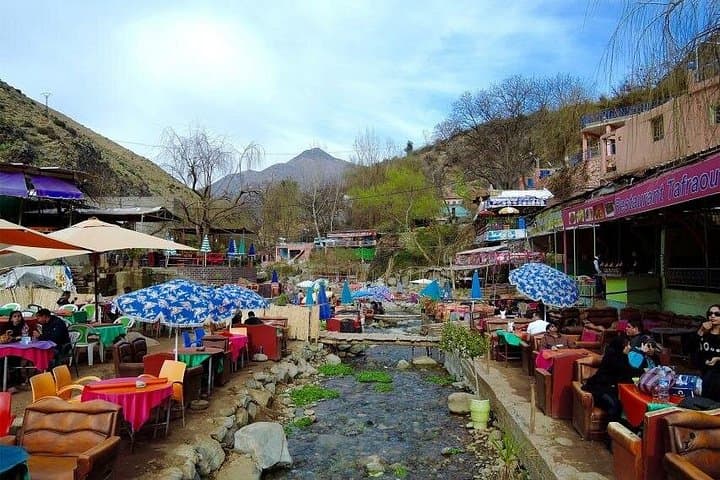
Culturally, you’ll see women’s cooperatives crushing argan kernels by hand, and simple riverside restaurants serving tagines beside dripping pines. Locals navigate footpaths expertly; here mountains are practical territory rather than untouched wilderness.
Practical guidance: plan a full day (about 6–7 hours). Expect 30–60 minutes of easy-to-moderate walking on rocky, uneven trails to reach the main cascades; good footwear and a light waterproof are wise. Bring cash for cooperative purchases and a respectful attitude—ask before photographing people. Start early to avoid midday heat and crowds, and keep a reusable bottle: water sources near villages are limited. The experience balances cultural encounters with short mountain hikes—ideal for travelers who want a grounded, sensory introduction to the High Atlas without technical climbing.
moderate.
6–7 hours.
Suitable for travelers with basic fitness; requires walking on uneven trails and short uphill sections.
The drive to Ourika Valley and Setti Fatma typically takes 45–60 minutes each way depending on traffic and exact pickup point.
Hikes to the waterfalls are short but on uneven terrain; they’re suitable for most travelers with basic mobility but not recommended for those with serious heart conditions.
Yes—women’s cooperatives usually sell freshly-pressed argan oil and related products; buying directly supports local families.
Most day tours include a riverside lunch at a local restaurant, but confirm with the operator for specific menu or dietary accommodations.
The Ourika Valley has long been inhabited by Amazigh (Berber) communities who traded with Marrakech and practiced terraced farming and pastoralism for centuries.
Tourism supports local cooperatives but increases pressure on trails and water sources; stick to paths, avoid single-use plastics and purchase from community-run businesses to maximize positive impact.
Marrakech Day Trips operates guided outdoor trips and adventures with an emphasis on safety, stewardship, and memorable experiences.
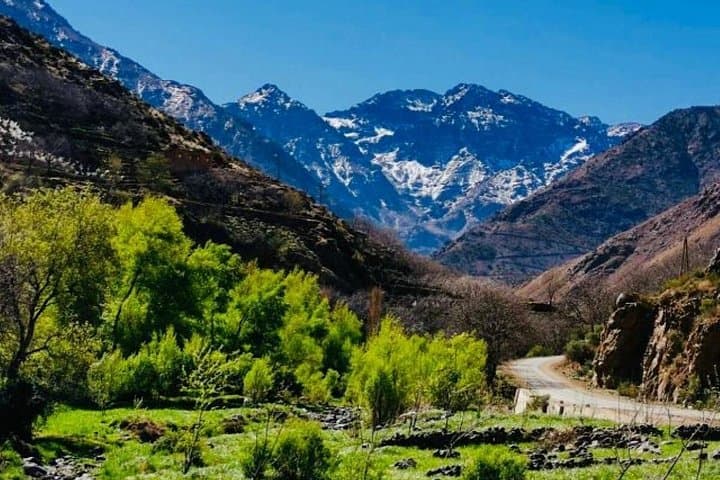

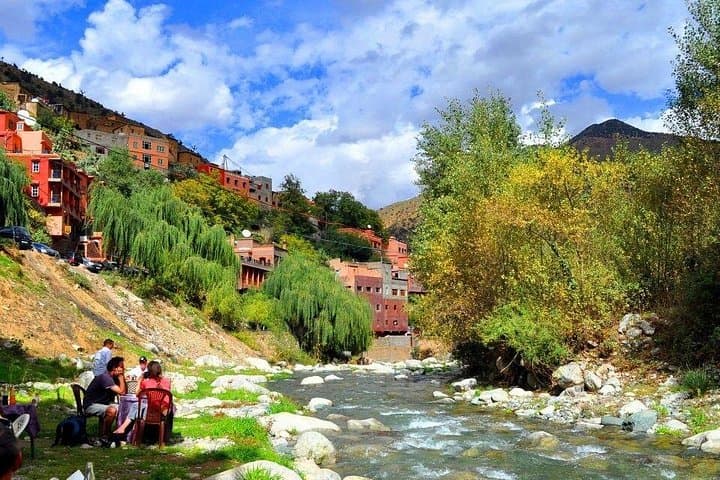
You leave Marrakech’s ochre walls behind and watch the highway give way to almond orchards and terraced fields; the road tightens and the High Atlas pushes closer, each ridge nudging the sky. In the Ourika Valley the river dares you forward—its stony bed a ribbon of cold, clear water leading to Setti Fatma’s seven falls. Villages cling to the slope like weathered books, and the air smells faintly of wood smoke and argan paste.
You leave Marrakech’s ochre walls behind and watch the highway give way to almond orchards and terraced fields; the road tightens and the High Atlas pushes closer, each ridge nudging the sky. In the Ourika Valley the river dares you forward—its stony bed a ribbon of cold, clear water leading to Setti Fatma’s seven falls. Villages cling to the slope like weathered books, and the air smells faintly of wood smoke and argan paste.
This valley has long been a corridor between Marrakech and the highlands: Berber households, some centuries old, still practice small-scale agriculture and communal crafts. Geologically the valley is carved from uplifted Atlas ranges—schist and limestone folded by tectonic forces—and the waterfalls gather where resistant rock forces water into ledges and plunge pools.
Culturally, you’ll see women’s cooperatives crushing argan kernels by hand, and simple riverside restaurants serving tagines beside dripping pines. Locals navigate footpaths expertly; here mountains are practical territory rather than untouched wilderness.
Practical guidance: plan a full day (about 6–7 hours). Expect 30–60 minutes of easy-to-moderate walking on rocky, uneven trails to reach the main cascades; good footwear and a light waterproof are wise. Bring cash for cooperative purchases and a respectful attitude—ask before photographing people. Start early to avoid midday heat and crowds, and keep a reusable bottle: water sources near villages are limited. The experience balances cultural encounters with short mountain hikes—ideal for travelers who want a grounded, sensory introduction to the High Atlas without technical climbing.