THE ADVENTURE COLLECTIVE® · Independent discovery and booking for outdoor travel

Escape Marrakech for a day in the Ourika Valley: riverside cafés, Berber villages, and short hikes to cascading waterfalls beneath the High Atlas. Learn what to expect on the trails, cultural highlights, and practical tips for a smooth day trip.
Escape Marrakech for a day in the Ourika Valley: riverside cafés, Berber villages, and short hikes to cascading waterfalls beneath the High Atlas. Learn what to expect on the trails, cultural highlights, and practical tips for a smooth day trip.
You step out of Marrakech's ochre heat into a cool ribbon of green—olive and walnut trees crowd the narrow road as the High Atlas rises like an approaching wall. The river threads the valley, its voice growing louder as the minibus winds toward Setti Fatma and the terraced hamlets that cling to the slopes.
Verified experiences and guided adventures in the surrounding area.
Operated by morocco desert travel · Setti Fatma, Marrakech-Safi
You step out of Marrakech's ochre heat into a cool ribbon of green—olive and walnut trees crowd the narrow road as the High Atlas rises like an approaching wall. The river threads the valley, its voice growing louder as the minibus winds toward Setti Fatma and the terraced hamlets that cling to the slopes.
The Ourika Valley has long been a summer refuge for Marrakechis and a corridor of Berber life. Geologically, the valley is carved from folded sedimentary rock and lateritic soils feeding swift streams and seasonal cascades; culturally, red-adobe villages and terraced farms testify to centuries of mountain agriculture and trade with Marrakech.
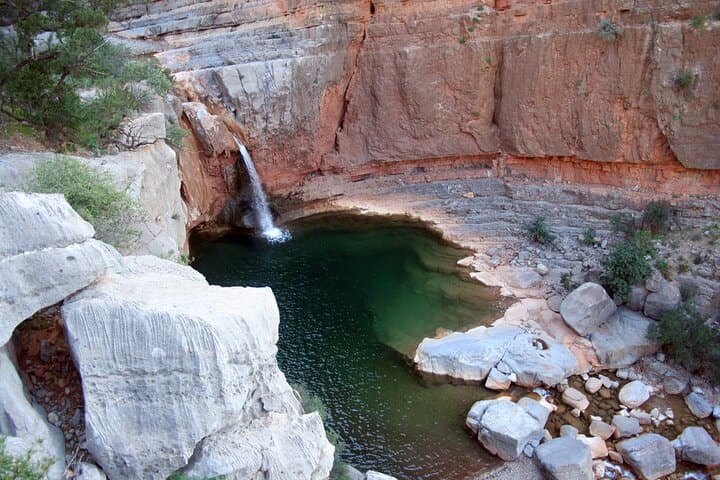
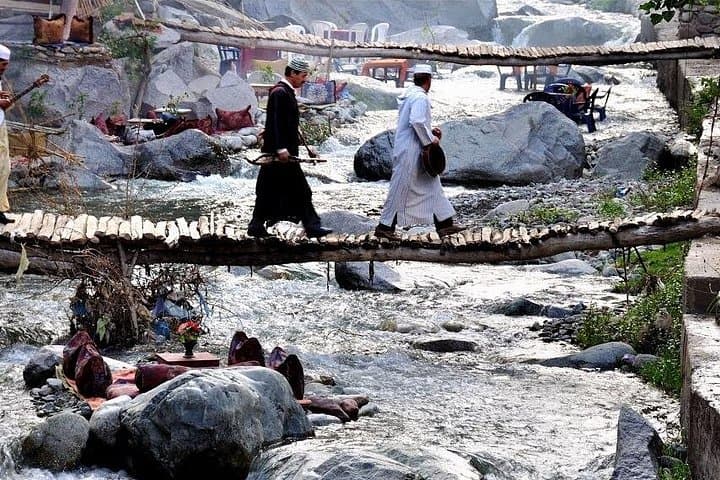
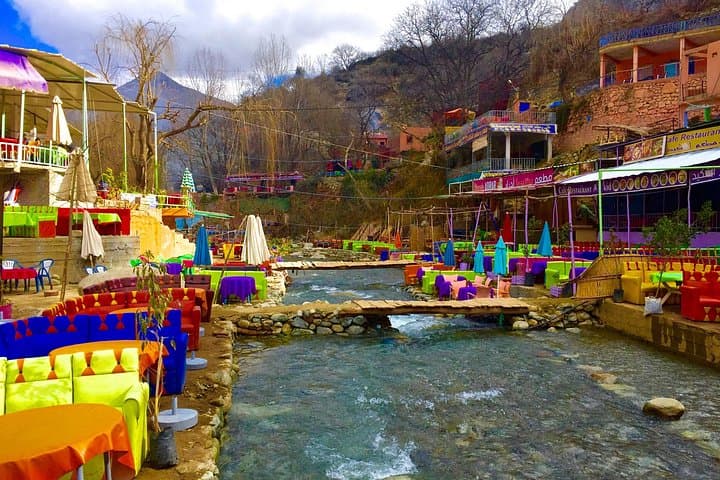
On a guided day trip you can expect short hikes to a series of waterfalls—steep stone steps and rocky footpaths totaling roughly 2–4 km round trip with 200–400 m of elevation gain on the more ambitious routes. The terrain alternates between packed dirt, loose shale and carved stone steps. Along the way local cafés offer mint tea and tagine, and markets in small villages sell textiles and argan oil.
Practical guidance: start early to avoid crowds and midday heat, wear grippy shoes for wet, uneven rock, and carry at least 1–2 liters of water and sun protection. If you plan to climb past the main falls, expect steeper, less-defined trails and bring a lightweight rain shell—mountain weather can shift quickly. Return transport to Marrakech is usually included, making this a straightforward, high-reward day outside the city.
easy.
8–9 hours.
Suitable for travelers in average fitness; expect several short uphill sections and uneven footing so basic cardio and balance help.
The drive typically takes 45–60 minutes each way depending on traffic and exact pickup point in Marrakech.
Main cascades are accessible by short, well-trodden paths but involve uneven steps; children and seniors can usually manage with steady pacing and rests.
Most tours include a riverside stop with time to buy a light lunch at local cafés, but meals are generally not prepaid—bring cash for food choices.
Some pools allow wading, but water is cold and currents can be strong; avoid swimming after heavy rain and follow local guidance.
The Ourika Valley has been inhabited by Amazigh (Berber) communities for centuries; its river and terraces supported seasonal agriculture and trade routes connecting the High Atlas to Marrakech.
Tourist visits can strain water and waste systems; stick to paths, avoid single-use plastics, and support local businesses to ensure economic benefits stay in the valley.
morocco desert travel operates guided outdoor trips and adventures with an emphasis on safety, stewardship, and memorable experiences.
You step out of Marrakech's ochre heat into a cool ribbon of green—olive and walnut trees crowd the narrow road as the High Atlas rises like an approaching wall. The river threads the valley, its voice growing louder as the minibus winds toward Setti Fatma and the terraced hamlets that cling to the slopes.
You step out of Marrakech's ochre heat into a cool ribbon of green—olive and walnut trees crowd the narrow road as the High Atlas rises like an approaching wall. The river threads the valley, its voice growing louder as the minibus winds toward Setti Fatma and the terraced hamlets that cling to the slopes.
The Ourika Valley has long been a summer refuge for Marrakechis and a corridor of Berber life. Geologically, the valley is carved from folded sedimentary rock and lateritic soils feeding swift streams and seasonal cascades; culturally, red-adobe villages and terraced farms testify to centuries of mountain agriculture and trade with Marrakech.
On a guided day trip you can expect short hikes to a series of waterfalls—steep stone steps and rocky footpaths totaling roughly 2–4 km round trip with 200–400 m of elevation gain on the more ambitious routes. The terrain alternates between packed dirt, loose shale and carved stone steps. Along the way local cafés offer mint tea and tagine, and markets in small villages sell textiles and argan oil.
Practical guidance: start early to avoid crowds and midday heat, wear grippy shoes for wet, uneven rock, and carry at least 1–2 liters of water and sun protection. If you plan to climb past the main falls, expect steeper, less-defined trails and bring a lightweight rain shell—mountain weather can shift quickly. Return transport to Marrakech is usually included, making this a straightforward, high-reward day outside the city.