THE ADVENTURE COLLECTIVE® · Independent discovery and booking for outdoor travel

Escape Marrakech for a day and hike to the waterfalls of Ourika Valley, visit a small Berber village, and enjoy a riverside tagine. This guided trip blends easy mountain walking with cultural insight into Atlas life.
Escape Marrakech for a day and hike to the waterfalls of Ourika Valley, visit a small Berber village, and enjoy a riverside tagine. This guided trip blends easy mountain walking with cultural insight into Atlas life.
The morning air out of Marrakech tastes of dust and citrus as the minivan peels away from the red city and climbs toward the High Atlas. Valleys open like pages; the Ourika River threads the floor, daring you to follow. Small farms and terraced slopes slip by, then the road narrows and the mountains feel closer — sharper rock faces, scents of thyme on the wind.
Verified experiences and guided adventures in the surrounding area.
Operated by Snoubi Travelling · Setti Fatma (Ourika Valley), Marrakesh-Safi
The morning air out of Marrakech tastes of dust and citrus as the minivan peels away from the red city and climbs toward the High Atlas. Valleys open like pages; the Ourika River threads the floor, daring you to follow. Small farms and terraced slopes slip by, then the road narrows and the mountains feel closer — sharper rock faces, scents of thyme on the wind.
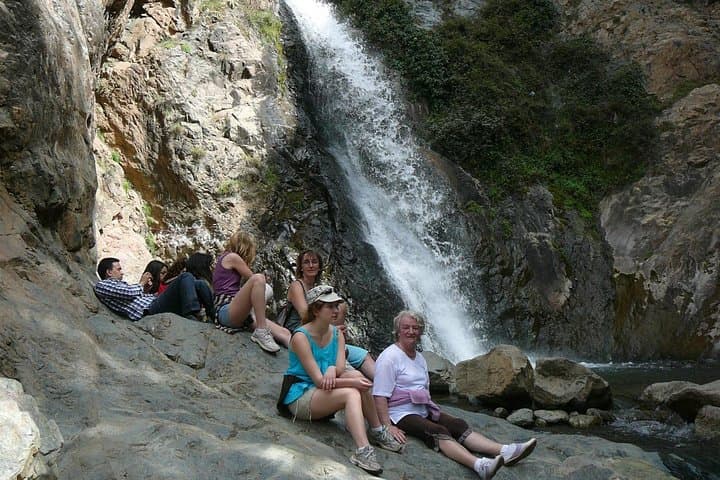
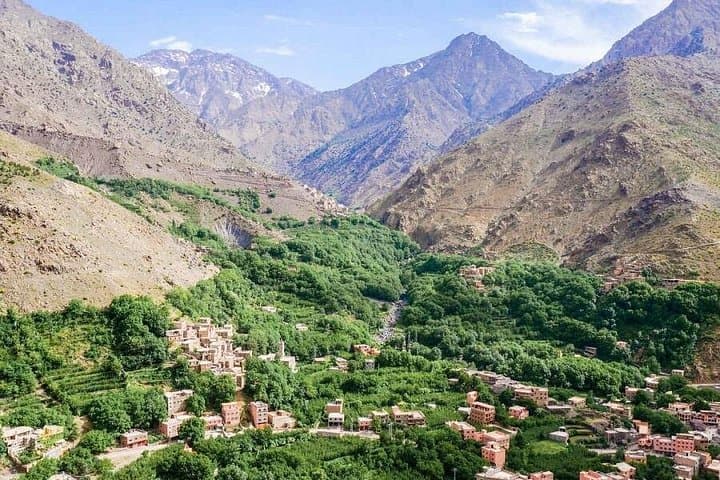
Geology here is recent uplifted schist and limestone, carved by seasonal flows that feed a string of waterfalls near the village of Setti Fatma. The valley has long been home to Amazigh (Berber) communities; houses built of local stone and mud show vernacular techniques suited to the steep slopes and stark winters. You'll meet guides whose families have farmed these slopes for generations and who point out rare endemic plants and the occasional Barbary macaque that moves through cedar pockets.
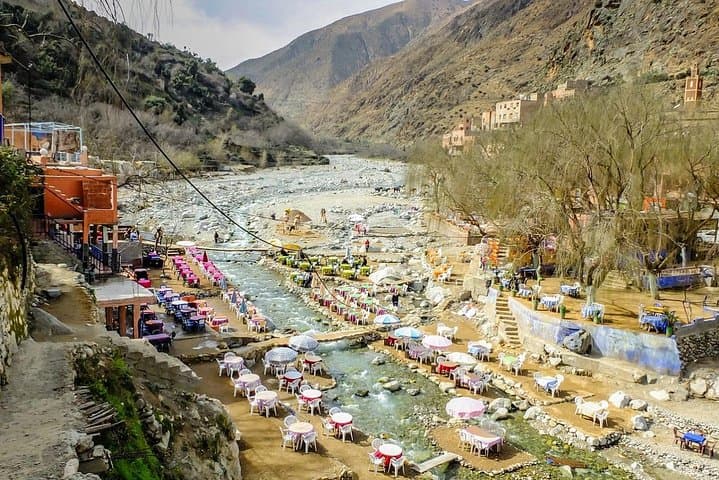
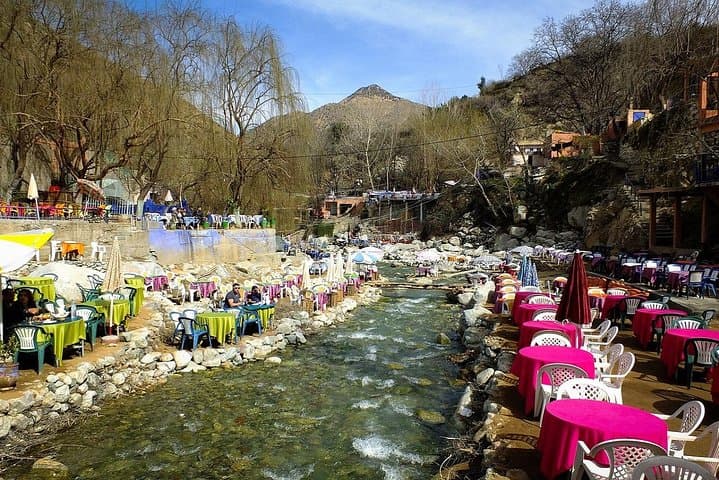
The tour includes a 1–1.5 hour guided hike from Setti Fatma up to the waterfall cluster — rocky, sometimes slick trails with short steep pitches — then a riverside Berber tagine lunch before the return to Marrakech. Expect a mix of cultural observation and active walking: photo stops, a village visit, and a mid-day meal that showcases local flavors.
Practical notes: start early, wear good footwear, carry water and sun protection, and be prepared for loose terrain and local livestock on the path. The route is family-friendly but uneven; a local guide improves safety and insight into plants, animals, and village life.
moderate.
8–10 hours.
Good for anyone who can manage a 1–1.5 hour uphill walk on uneven terrain and a full day of travel.
The guided hike from Setti Fatma to the main waterfall cluster takes about 1 to 1.5 hours round-trip depending on pace and stops.
Yes — the tour is family-friendly, but expect uneven terrain; small children may need to be carried on steeper sections.
Local guides commonly speak Arabic and French; many operators also provide English-speaking guides for tourist groups.
Yes — a traditional Berber tagine lunch by the river is typically included in the day trip itinerary.
The Ourika Valley has been inhabited by Amazigh (Berber) communities for centuries; terraces and irrigation systems reflect traditional mountain agriculture.
The valley hosts rare plant species and sensitive habitats; visitors should stick to trails, avoid feeding wildlife, and minimize waste to reduce pressure on local ecosystems.
Snoubi Travelling operates guided outdoor trips and adventures with an emphasis on safety, stewardship, and memorable experiences.
The morning air out of Marrakech tastes of dust and citrus as the minivan peels away from the red city and climbs toward the High Atlas. Valleys open like pages; the Ourika River threads the floor, daring you to follow. Small farms and terraced slopes slip by, then the road narrows and the mountains feel closer — sharper rock faces, scents of thyme on the wind.
The morning air out of Marrakech tastes of dust and citrus as the minivan peels away from the red city and climbs toward the High Atlas. Valleys open like pages; the Ourika River threads the floor, daring you to follow. Small farms and terraced slopes slip by, then the road narrows and the mountains feel closer — sharper rock faces, scents of thyme on the wind.
Geology here is recent uplifted schist and limestone, carved by seasonal flows that feed a string of waterfalls near the village of Setti Fatma. The valley has long been home to Amazigh (Berber) communities; houses built of local stone and mud show vernacular techniques suited to the steep slopes and stark winters. You'll meet guides whose families have farmed these slopes for generations and who point out rare endemic plants and the occasional Barbary macaque that moves through cedar pockets.
The tour includes a 1–1.5 hour guided hike from Setti Fatma up to the waterfall cluster — rocky, sometimes slick trails with short steep pitches — then a riverside Berber tagine lunch before the return to Marrakech. Expect a mix of cultural observation and active walking: photo stops, a village visit, and a mid-day meal that showcases local flavors.
Practical notes: start early, wear good footwear, carry water and sun protection, and be prepared for loose terrain and local livestock on the path. The route is family-friendly but uneven; a local guide improves safety and insight into plants, animals, and village life.