THE ADVENTURE COLLECTIVE® · Independent discovery and booking for outdoor travel

Escape Marrakech for a day in the Ourika Valley to hike to Setti Fatma’s waterfalls, visit small Berber villages and watch Barbary macaques. This practical day trip combines short mountain walks, river crossings and cultural stops—ideal for travelers who want accessible Atlas scenery without overnight camping.
Escape Marrakech for a day in the Ourika Valley to hike to Setti Fatma’s waterfalls, visit small Berber villages and watch Barbary macaques. This practical day trip combines short mountain walks, river crossings and cultural stops—ideal for travelers who want accessible Atlas scenery without overnight camping.
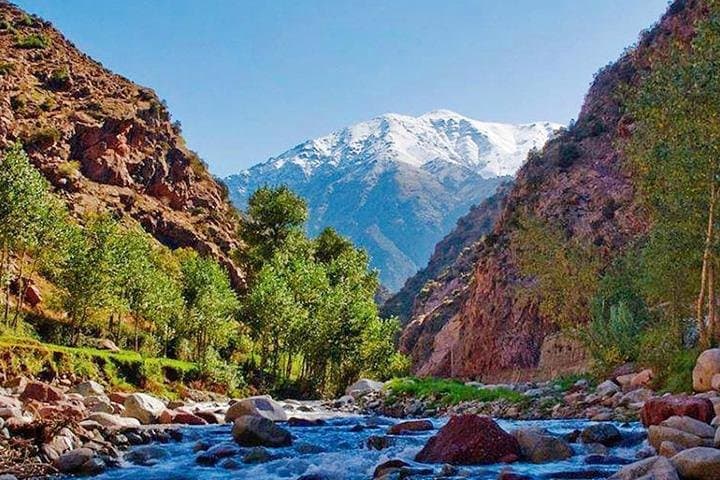
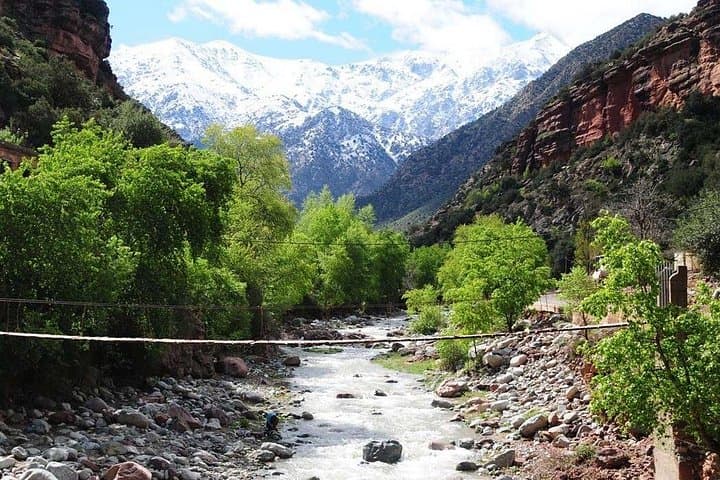
You step out of Marrakech’s bustle into a cooling ribbon of river and pines as the minivan climbs toward the High Atlas. The road narrows, olive terraces appear, and the air smells of dust and thyme; ahead, Setti Fatma’s waterfalls call with the steady hiss of falling water.
Verified experiences and guided adventures in the surrounding area.
Operated by Planificador de Viajes Marruecos · Setti Fatma, Marrakech-Safi
You step out of Marrakech’s bustle into a cooling ribbon of river and pines as the minivan climbs toward the High Atlas. The road narrows, olive terraces appear, and the air smells of dust and thyme; ahead, Setti Fatma’s waterfalls call with the steady hiss of falling water.
Geology here is honest — rugged schist and sandstone carved by centuries of runoff from the Atlas peaks. The valley has long been a seasonal corridor for Berber communities; small villages cling to slopes, their terraces and flat-roofed houses reflecting a way of life tied to irrigation and goat herding.
On a typical group walk you’ll cover rolling dirt and stone paths, short steep sections and the stepped tracks that lead to several cascades. Expect total walking distance of roughly 2–6 km depending on how far you go, with cumulative elevation gain commonly between 150–400 m if you climb to upper falls. Rivers will test balance on mossy rocks; Barbary macaques sometimes watch from nearby oaks.
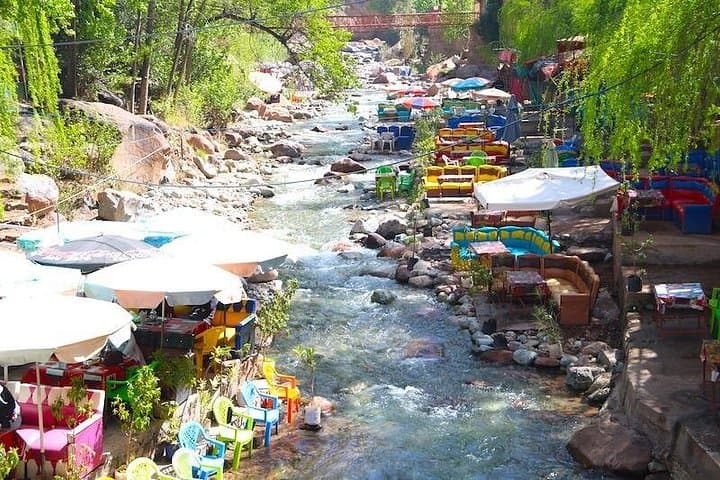
Practical guidance: leave Marrakech early to avoid midday heat, wear grippy shoes for wet stones, and carry 1–2 liters of water. Local guides translate and point out hidden viewpoints, and tipping for guides and drivers is customary. Cash is useful in villages and for small teahouse lunches. The trip is suitable for most fitness levels but involves uneven terrain and short, steep scrambles. Return to Marrakech in the late afternoon with photos of tumbling water, terraced fields, and a clearer sense of Atlas foothill life.
easy.
6–7 hours.
Suitable for most people who can handle short steep sections and uneven terrain; some brisk walking required.
The round-trip drive is about 45–70 minutes each way depending on traffic and your exact pickup point in Marrakech.
There is no formal entrance fee for the valley, but some guides or local stewards may request a small contribution at viewpoints; carry local currency.
Yes—short sections are steep but many families and older travelers complete the main falls walk; expect to adjust pace and avoid higher cascades if mobility is limited.
Yes, the valley is accessible independently, but local guides add cultural context and knowledge of safer routes to upper falls.
The Ourika Valley has been inhabited by Amazigh (Berber) communities for centuries and served as a supply and grazing area linked to Marrakech’s markets.
Tourism supports local livelihoods but increases pressure on water and trails; stick to paths, avoid litter, and use local guides to minimize impact.
Planificador de Viajes Marruecos operates guided outdoor trips and adventures with an emphasis on safety, stewardship, and memorable experiences.

You step out of Marrakech’s bustle into a cooling ribbon of river and pines as the minivan climbs toward the High Atlas. The road narrows, olive terraces appear, and the air smells of dust and thyme; ahead, Setti Fatma’s waterfalls call with the steady hiss of falling water.
You step out of Marrakech’s bustle into a cooling ribbon of river and pines as the minivan climbs toward the High Atlas. The road narrows, olive terraces appear, and the air smells of dust and thyme; ahead, Setti Fatma’s waterfalls call with the steady hiss of falling water.
Geology here is honest — rugged schist and sandstone carved by centuries of runoff from the Atlas peaks. The valley has long been a seasonal corridor for Berber communities; small villages cling to slopes, their terraces and flat-roofed houses reflecting a way of life tied to irrigation and goat herding.
On a typical group walk you’ll cover rolling dirt and stone paths, short steep sections and the stepped tracks that lead to several cascades. Expect total walking distance of roughly 2–6 km depending on how far you go, with cumulative elevation gain commonly between 150–400 m if you climb to upper falls. Rivers will test balance on mossy rocks; Barbary macaques sometimes watch from nearby oaks.
Practical guidance: leave Marrakech early to avoid midday heat, wear grippy shoes for wet stones, and carry 1–2 liters of water. Local guides translate and point out hidden viewpoints, and tipping for guides and drivers is customary. Cash is useful in villages and for small teahouse lunches. The trip is suitable for most fitness levels but involves uneven terrain and short, steep scrambles. Return to Marrakech in the late afternoon with photos of tumbling water, terraced fields, and a clearer sense of Atlas foothill life.