THE ADVENTURE COLLECTIVE® · Independent discovery and booking for outdoor travel

See Marrakech’s highlights in a single, organized day trip from Casablanca: Koutoubia, Saadian Tombs, Palmeraie camel rides and the bustling Jemaa el-Fnaa. A local guide navigates the medina’s maze so you can focus on the sights and flavors.
See Marrakech’s highlights in a single, organized day trip from Casablanca: Koutoubia, Saadian Tombs, Palmeraie camel rides and the bustling Jemaa el-Fnaa. A local guide navigates the medina’s maze so you can focus on the sights and flavors.
The morning begins before dawn on the road between Casablanca and Marrakech: the city lights shrink and the Atlantic plain gives way to ochre fields and distant foothills of the High Atlas. By midmorning the palms of the Palmeraie rise like a green tide, and the slow sway of a camel’s gait sets the pace for a day of compact discovery.
Verified experiences and guided adventures in the surrounding area.
Operated by TOP TRIP MOROCCO · Marrakech, Marrakesh-Safi
The morning begins before dawn on the road between Casablanca and Marrakech: the city lights shrink and the Atlantic plain gives way to ochre fields and distant foothills of the High Atlas. By midmorning the palms of the Palmeraie rise like a green tide, and the slow sway of a camel’s gait sets the pace for a day of compact discovery.
Marrakech’s medina grew under the Almoravids in the 11th century; its walled streets and monumental minarets reflect centuries of trade and craftsmanship. The Koutoubia’s 77-meter tower anchors the skyline while the Saadian Tombs and Madrasa Ben Youssef reveal the decorative artistry—intricate zellij tilework and carved cedar—that defines the city. Geologically, the red clay of Marrakech ties the urban palette to the Atlas Mountains’ eroded sediments; that iron-rich soil is the reason the “Red City” glows at sunset.
Culturally, the medina is a living marketplace: spice merchants, metalworkers and storytellers converge at Jemaa el-Fnaa, where food stalls and performers create an ever-changing stage. A short camel ride in the Palmeraie offers a different tempo—quiet palms and horizon views—before heading into packed souks where bargaining is part of the experience.
Practical guidance: expect 10–12 hours door-to-door, significant walking on uneven stone, and many short photo stops rather than long museum stays. Bring comfortable shoes, a refillable water bottle, sun protection and a light scarf for respectful entry near religious sites. If you prefer a slower pace, consider an overnight stay in Marrakech instead of a same-day roundtrip from Casablanca.
easy.
10–12 hours.
Suitable for most fitness levels but expect multiple short walks and standing; basic mobility required.
The drive typically takes about 2.5–3 hours each way depending on traffic, making the full day about 10–12 hours door-to-door.
This shared tour includes guided visits and photo stops; confirm which specific admission fees (e.g., Madrasa Ben Youssef) are covered when booking as options can vary.
Yes—this tour is rated easy and accessible, but it involves walking over uneven surfaces; wheelchair access may be limited inside some historic sites.
Yes—pickup and drop-off from Casablanca hotels, ports or Airbnbs are offered; confirm pickup location and any luggage restrictions when you book.
Founded in the 11th century by the Almoravid dynasty, Marrakech became a major trans-Saharan trade and cultural center; the medina is a UNESCO World Heritage Site.
Support local artisans and avoid single-use plastics; stick to marked paths in historic sites to protect fragile tilework and courtyards.
TOP TRIP MOROCCO operates guided outdoor trips and adventures with an emphasis on safety, stewardship, and memorable experiences.


The morning begins before dawn on the road between Casablanca and Marrakech: the city lights shrink and the Atlantic plain gives way to ochre fields and distant foothills of the High Atlas. By midmorning the palms of the Palmeraie rise like a green tide, and the slow sway of a camel’s gait sets the pace for a day of compact discovery.
The morning begins before dawn on the road between Casablanca and Marrakech: the city lights shrink and the Atlantic plain gives way to ochre fields and distant foothills of the High Atlas. By midmorning the palms of the Palmeraie rise like a green tide, and the slow sway of a camel’s gait sets the pace for a day of compact discovery.
Marrakech’s medina grew under the Almoravids in the 11th century; its walled streets and monumental minarets reflect centuries of trade and craftsmanship. The Koutoubia’s 77-meter tower anchors the skyline while the Saadian Tombs and Madrasa Ben Youssef reveal the decorative artistry—intricate zellij tilework and carved cedar—that defines the city. Geologically, the red clay of Marrakech ties the urban palette to the Atlas Mountains’ eroded sediments; that iron-rich soil is the reason the “Red City” glows at sunset.
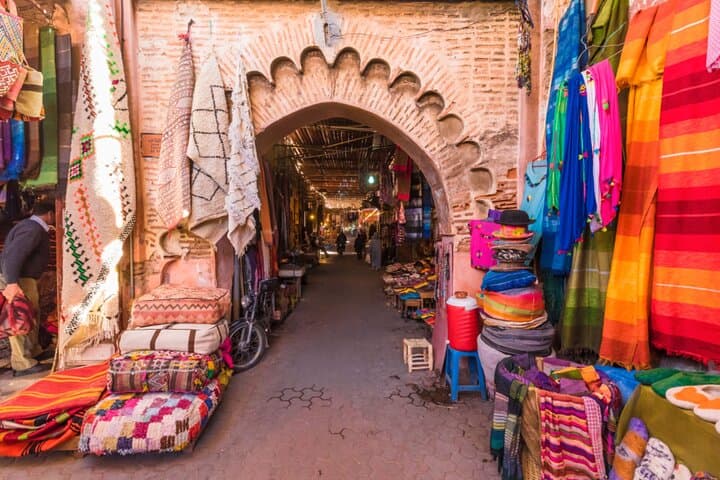
Culturally, the medina is a living marketplace: spice merchants, metalworkers and storytellers converge at Jemaa el-Fnaa, where food stalls and performers create an ever-changing stage. A short camel ride in the Palmeraie offers a different tempo—quiet palms and horizon views—before heading into packed souks where bargaining is part of the experience.
Practical guidance: expect 10–12 hours door-to-door, significant walking on uneven stone, and many short photo stops rather than long museum stays. Bring comfortable shoes, a refillable water bottle, sun protection and a light scarf for respectful entry near religious sites. If you prefer a slower pace, consider an overnight stay in Marrakech instead of a same-day roundtrip from Casablanca.