THE ADVENTURE COLLECTIVE® · Independent discovery and booking for outdoor travel

Glide through Marrakech’s old and new neighborhoods aboard a traditional horse-drawn carriage. This one-hour tour pairs relaxed sightseeing with stops at Jemaa el-Fna, Koutoubia Mosque, Majorelle Garden and the modern Guéliz district.
Glide through Marrakech’s old and new neighborhoods aboard a traditional horse-drawn carriage. This one-hour tour pairs relaxed sightseeing with stops at Jemaa el-Fna, Koutoubia Mosque, Majorelle Garden and the modern Guéliz district.
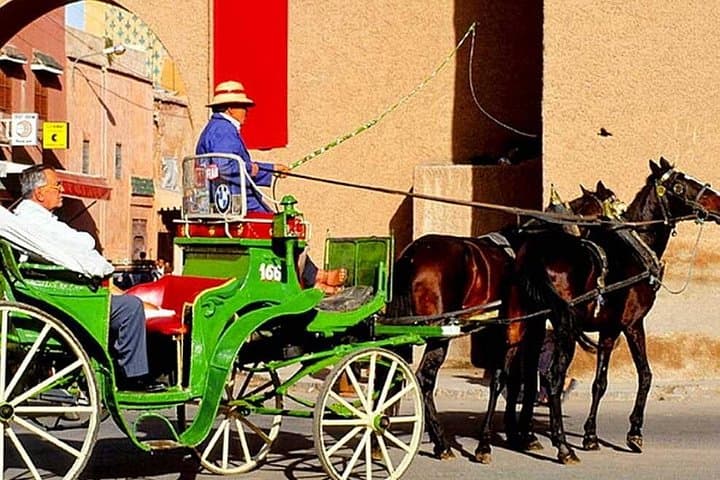
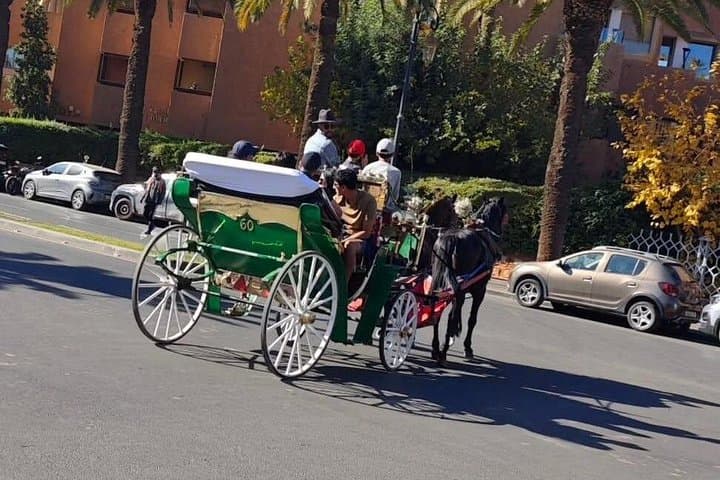
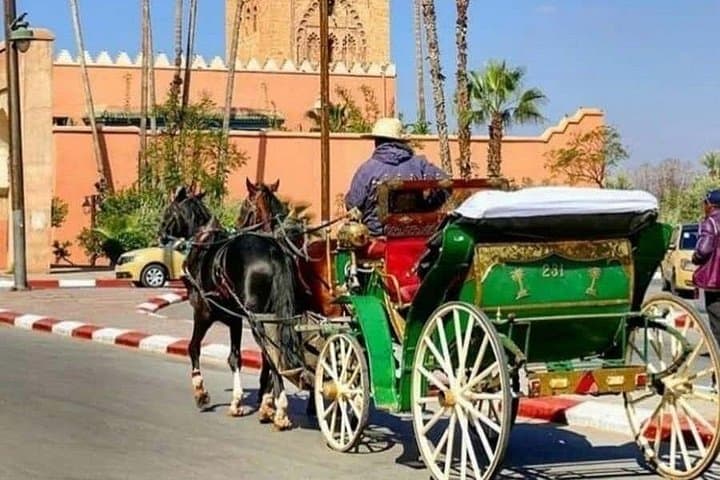
A slow clip-clop pulls you away from the crush of scooters and market stalls. In a shaded, varnished carriage you glide under palm avenues, the city’s ochre walls sliding past like pages of history. The hour moves at a human pace — long enough to breathe the jasmine-scented air, short enough to leave you wanting more.
Verified experiences and guided adventures in the surrounding area.
Operated by TGM tours · Marrakech, Marrakech-Safi
A slow clip-clop pulls you away from the crush of scooters and market stalls. In a shaded, varnished carriage you glide under palm avenues, the city’s ochre walls sliding past like pages of history. The hour moves at a human pace — long enough to breathe the jasmine-scented air, short enough to leave you wanting more.
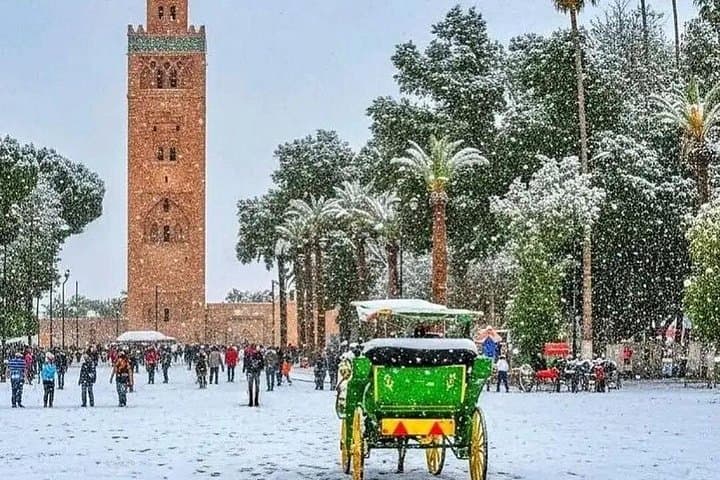
The route threads the old and new: Jemaa el-Fna’s open-air theater, the 12th-century Koutoubia minaret rising as an Almohad landmark, then the tree-lined boulevards of Hivernage and the French-influenced grid of Guéliz. Marrakech sits on the Haouz plain with the High Atlas visible on clear days; the city’s red earth comes from local sandstone and clay that gave the medina its characteristic hue. Along the way a guide will point out Majorelle Garden’s cobalt walls and explain how European artists like Jacques Majorelle and Yves Saint Laurent shaped parts of the modern city.
Practical rhythm: the carriage is a gentle, accessible way to cover classic photo points without the fatigue of walking cobbled lanes. Expect frequent stops for pictures but plan minimal walking—this is a sit-and-view experience. Dress for sun and dust: light layers, sun protection, and comfortable shoes for any short dismounts.
Respect is part of the ride: choose licensed operators, ask about animal care, and carry small change for local staff. Morning or late afternoon departures reduce heat and improve light for photography. In sixty minutes you’ll leave with a clearer map of Marrakech’s neighborhoods and the names of places you’ll want to return to on foot.
easy.
1 hour.
Suitable for all fitness levels; minimal walking required but expect short cobbled surfaces if disembarking.
Yes—carriages are family-friendly; infants should sit on an adult’s lap and operators can advise on seating.
Minimal; the experience is primarily seated, with occasional short walks at photo stops or to view exteriors like Koutoubia.
Most traditional carriages are not wheelchair accessible; check with the operator ahead of booking for alternatives or tailored transfers.
Tipping for drivers and guides is customary but discretionary—small amounts in dirhams are appropriate for good service.
Marrakech was founded in the 11th century and its medina and Koutoubia minaret grew under Almohad rule; the city later absorbed French colonial urban plans that shaped Guéliz and Hivernage.
Support licensed operators who follow local animal-welfare practices, carry out waste responsibly, and respect protected garden sites like Majorelle.
TGM tours operates guided outdoor trips and adventures with an emphasis on safety, stewardship, and memorable experiences.
A slow clip-clop pulls you away from the crush of scooters and market stalls. In a shaded, varnished carriage you glide under palm avenues, the city’s ochre walls sliding past like pages of history. The hour moves at a human pace — long enough to breathe the jasmine-scented air, short enough to leave you wanting more.
A slow clip-clop pulls you away from the crush of scooters and market stalls. In a shaded, varnished carriage you glide under palm avenues, the city’s ochre walls sliding past like pages of history. The hour moves at a human pace — long enough to breathe the jasmine-scented air, short enough to leave you wanting more.
The route threads the old and new: Jemaa el-Fna’s open-air theater, the 12th-century Koutoubia minaret rising as an Almohad landmark, then the tree-lined boulevards of Hivernage and the French-influenced grid of Guéliz. Marrakech sits on the Haouz plain with the High Atlas visible on clear days; the city’s red earth comes from local sandstone and clay that gave the medina its characteristic hue. Along the way a guide will point out Majorelle Garden’s cobalt walls and explain how European artists like Jacques Majorelle and Yves Saint Laurent shaped parts of the modern city.
Practical rhythm: the carriage is a gentle, accessible way to cover classic photo points without the fatigue of walking cobbled lanes. Expect frequent stops for pictures but plan minimal walking—this is a sit-and-view experience. Dress for sun and dust: light layers, sun protection, and comfortable shoes for any short dismounts.
Respect is part of the ride: choose licensed operators, ask about animal care, and carry small change for local staff. Morning or late afternoon departures reduce heat and improve light for photography. In sixty minutes you’ll leave with a clearer map of Marrakech’s neighborhoods and the names of places you’ll want to return to on foot.