THE ADVENTURE COLLECTIVE® · Independent discovery and booking for outdoor travel

Explore Marrakech’s medina with a licensed local guide on a 3-hour walking tour that threads through Jamaa el-Fna, the Bahia Palace, and bustling souks. Expect close-up looks at Moorish and Andalusian architecture, market culture, and practical tips for navigating narrow alleys.
Explore Marrakech’s medina with a licensed local guide on a 3-hour walking tour that threads through Jamaa el-Fna, the Bahia Palace, and bustling souks. Expect close-up looks at Moorish and Andalusian architecture, market culture, and practical tips for navigating narrow alleys.
The crowd of Jamaa el-Fna presses and parts like water around a rock as your guide gestures toward the copper lamps and saffron stalls. Narrow alleys funnel the city's noise into tight, fragrant channels; tile-work peeks from shaded riads and the Koutoubia’s minaret keeps a steady, unobtrusive watch over the medina.
Verified experiences and guided adventures in the surrounding area.
Operated by Take your guide · Marrakech, Marrakech-Safi
The crowd of Jamaa el-Fna presses and parts like water around a rock as your guide gestures toward the copper lamps and saffron stalls. Narrow alleys funnel the city's noise into tight, fragrant channels; tile-work peeks from shaded riads and the Koutoubia’s minaret keeps a steady, unobtrusive watch over the medina.
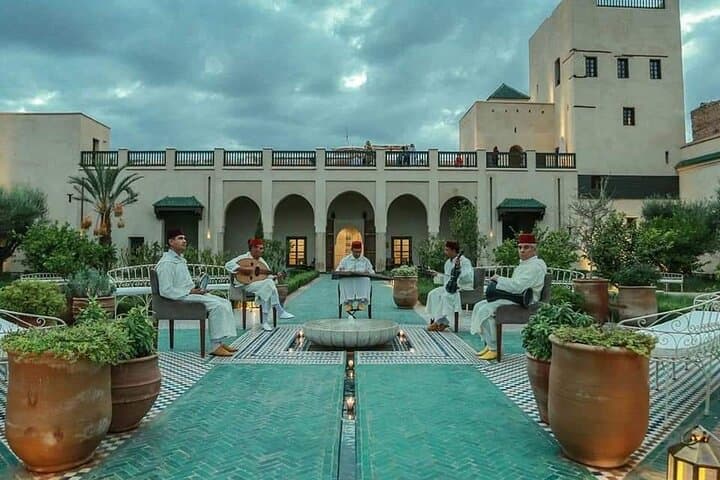
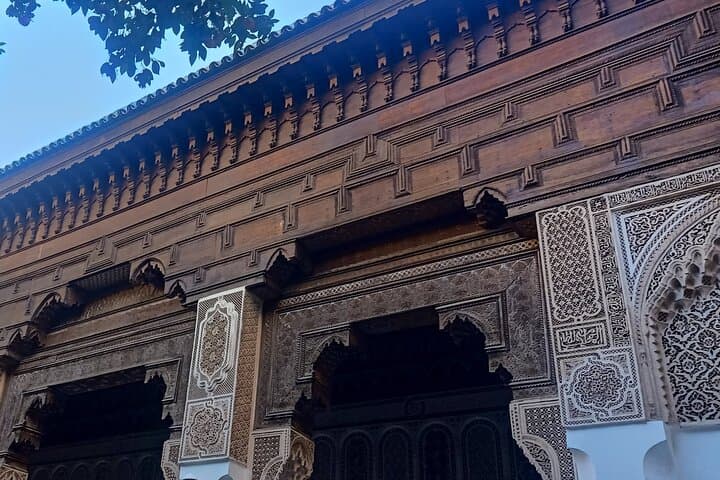
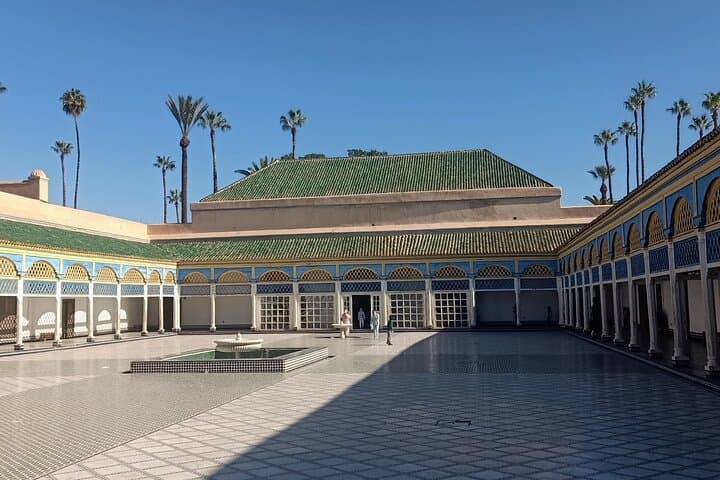
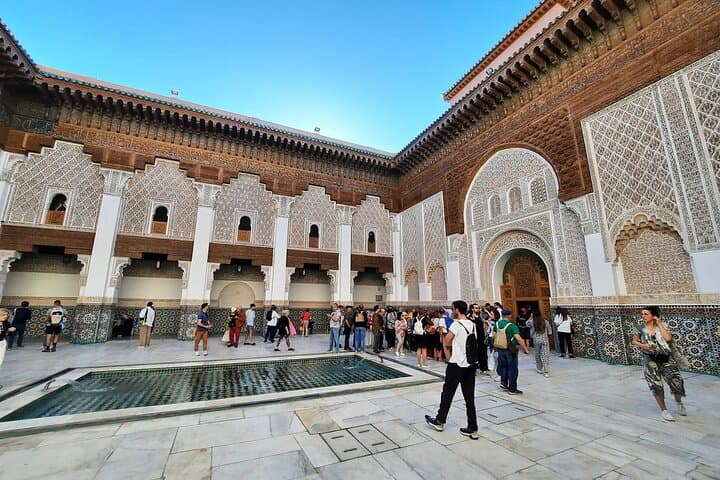
Marrakech began as an 11th-century imperial stronghold and still wears that layered past: Almoravid foundations under modern cafés, Saadian tombs near 19th-century palaces. The Bahia Palace shows late-19th-century Andalusian influence in its carved cedar and mosaic floors, while the Ben Youssef Madrasa’s central courtyard reveals classic Moroccan geometry.
A walking tour unpacks these threads—architecture, market trading patterns, and the living craft economy—while a licensed local guide translates ornament into history and points out subtle details visitors often miss.
Practical guide: tours run about three hours through mostly flat, paved lanes with occasional uneven flagstones; expect frequent stops for orientation and photos. Comfortable shoes and a modest dress code are wise—many sites are active religious or residential spaces. Midday heat can be intense from late spring through early autumn; plan to start early or late afternoon to avoid peak sun. Bring small bills for purchases and tipping, and allow time to wander a few alleys after the official route to see artisans at work. The experience is low-impact physically but high on sensory density: be ready for color, sound, and the persistent scent of spices that seems to tug you along the route.
easy.
3 hours.
Suitable for most fitness levels; requires standing and walking on uneven surfaces for several hours.
Most tours meet near Jamaa el-Fna square; the confirmation will list an exact meeting point and local landmark for easy identification.
Some tours include admission to specified sites; check the itinerary—this tour includes entrance to select monuments and the guide will confirm which are covered.
Yes; the tour is rated easy with frequent stops, but consider pace and sun exposure for very young or less-mobile participants.
Guides commonly speak English and French; confirm language availability when booking if you require another language.
Marrakech was founded in the 11th century by the Almoravids and later became a political and cultural center, with the Bahia Palace reflecting 19th-century courtly life.
The medina faces tourist pressure—support local artisans by buying small, crafted goods and avoid single-use plastics to reduce waste in congested alleyways.
Take your guide operates guided outdoor trips and adventures with an emphasis on safety, stewardship, and memorable experiences.
The crowd of Jamaa el-Fna presses and parts like water around a rock as your guide gestures toward the copper lamps and saffron stalls. Narrow alleys funnel the city's noise into tight, fragrant channels; tile-work peeks from shaded riads and the Koutoubia’s minaret keeps a steady, unobtrusive watch over the medina.
The crowd of Jamaa el-Fna presses and parts like water around a rock as your guide gestures toward the copper lamps and saffron stalls. Narrow alleys funnel the city's noise into tight, fragrant channels; tile-work peeks from shaded riads and the Koutoubia’s minaret keeps a steady, unobtrusive watch over the medina.
Marrakech began as an 11th-century imperial stronghold and still wears that layered past: Almoravid foundations under modern cafés, Saadian tombs near 19th-century palaces. The Bahia Palace shows late-19th-century Andalusian influence in its carved cedar and mosaic floors, while the Ben Youssef Madrasa’s central courtyard reveals classic Moroccan geometry.
A walking tour unpacks these threads—architecture, market trading patterns, and the living craft economy—while a licensed local guide translates ornament into history and points out subtle details visitors often miss.
Practical guide: tours run about three hours through mostly flat, paved lanes with occasional uneven flagstones; expect frequent stops for orientation and photos. Comfortable shoes and a modest dress code are wise—many sites are active religious or residential spaces. Midday heat can be intense from late spring through early autumn; plan to start early or late afternoon to avoid peak sun. Bring small bills for purchases and tipping, and allow time to wander a few alleys after the official route to see artisans at work. The experience is low-impact physically but high on sensory density: be ready for color, sound, and the persistent scent of spices that seems to tug you along the route.