THE ADVENTURE COLLECTIVE® · Independent discovery and booking for outdoor travel

Spend a day leaving Marrakech for mountain paths, Berber hospitality and the rocky sweep of the Agafay Desert. Combine a short Imlil valley hike with a family lunch, a camel ride and sunset views over the Atlas.
Spend a day leaving Marrakech for mountain paths, Berber hospitality and the rocky sweep of the Agafay Desert. Combine a short Imlil valley hike with a family lunch, a camel ride and sunset views over the Atlas.
You step out of Marrakech’s early heat into a ribbon of asphalt that climbs toward the High Atlas; eucalyptus scent sharpens, and the city’s dust loosens behind you. By mid-morning the road narrows into a valley where stone terraces stack like steps, a distant waterfall calls, and local children wave from terraces stacked with barley and walnut trees. Later, the Agafay’s stony plain spreads like a shallow sea of ochre, its winds shaping the skyline around sunset.
Verified experiences and guided adventures in the surrounding area.
Operated by Things To Do From Marrakech · Marrakech, Marrakech-Safi
You step out of Marrakech’s early heat into a ribbon of asphalt that climbs toward the High Atlas; eucalyptus scent sharpens, and the city’s dust loosens behind you. By mid-morning the road narrows into a valley where stone terraces stack like steps, a distant waterfall calls, and local children wave from terraces stacked with barley and walnut trees. Later, the Agafay’s stony plain spreads like a shallow sea of ochre, its winds shaping the skyline around sunset.
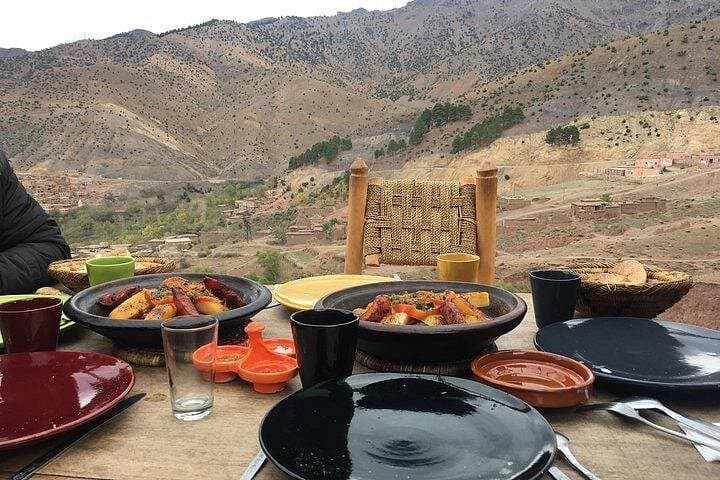
The High Atlas sections trace millennia of human engineering—irrigation channels and terraced fields carved by Amazigh (Berber) communities—while the Agafay is a geologic mosaic of weathered sandstone and compacted earth, a low desert that behaves like a high plateau. Cultural touchstones are immediate: mint tea hospitality, a shared tagine in a family home, and simple villages that still orient life around seasonal water.
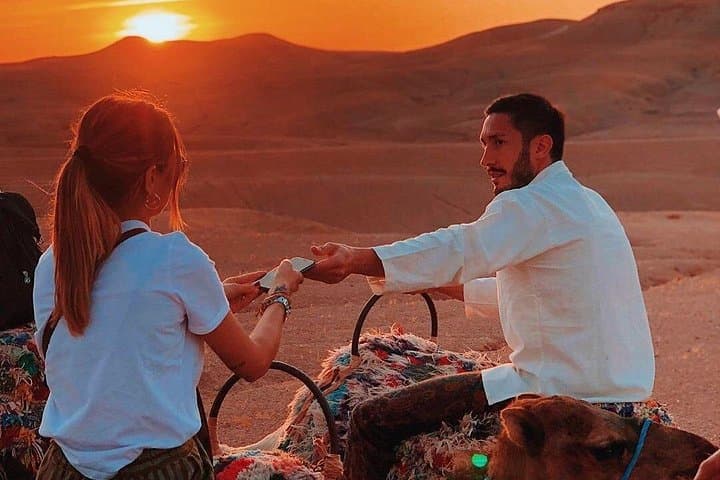
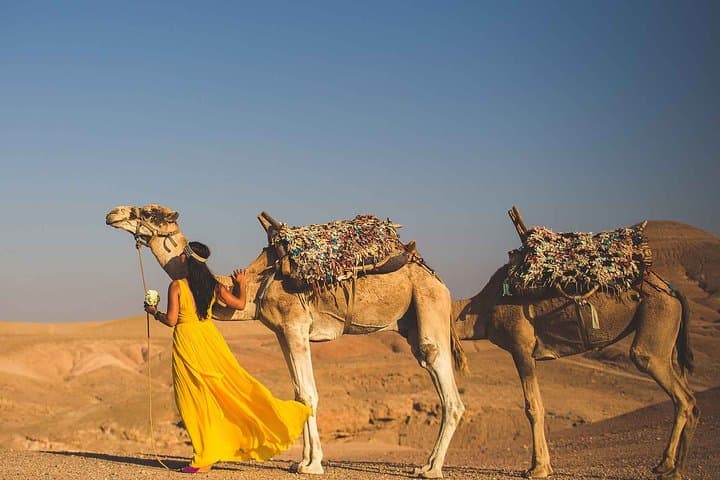
Practically, expect a full but accessible day: a guided walk from Imlil (choose 1–2 hours), village visits, lunch with a Berber family, a short camel ride and a sunset stop at Agafay before returning to Marrakech. Trails are rocky and can be steep in places; paths can be muddy after rain. Bring sun protection, layered clothing for cooler mountain breezes, a reusable water bottle, and modest dress for village visits. Timing favors morning mountain walks and late-afternoon desert light; the guide coordinates transport and local introductions so the day feels connected rather than rushed.
moderate.
6–7 hours.
Suitable for travelers in regular physical condition who can handle short uphill walks and uneven terrain.
It takes about 1–1.5 hours each way depending on traffic and your pick-up location in Marrakech.
Yes—walks can be tailored to 1 or 2 hours on moderate terrain; inform the operator of mobility needs so they can adjust the route.
Yes, a traditional lunch is included and typically served in a family home or local guesthouse as part of the itinerary.
Yes—activities are adaptable; let your guide know if you prefer additional walking time or more village exploring instead.
The villages in the Imlil valley are part of Amazigh (Berber) cultural landscapes shaped by terraced agriculture and mountain trade routes for centuries.
Water is scarce in this region—minimize single-use plastics, follow local trail etiquette, and support village-run services and family meals to keep economic benefits local.
Things To Do From Marrakech operates guided outdoor trips and adventures with an emphasis on safety, stewardship, and memorable experiences.
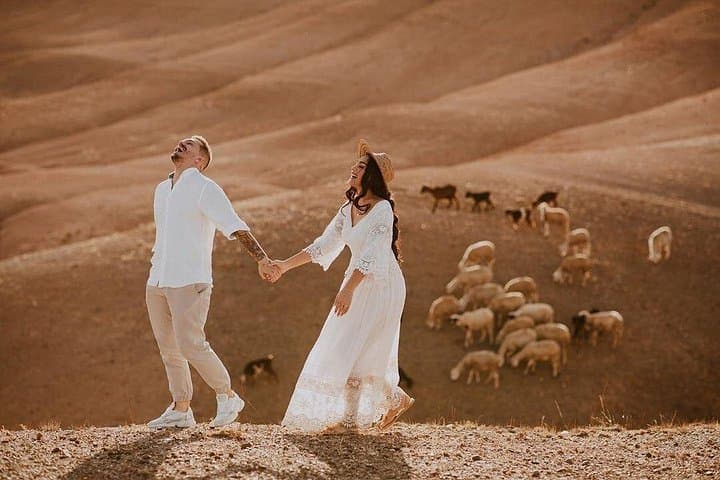
You step out of Marrakech’s early heat into a ribbon of asphalt that climbs toward the High Atlas; eucalyptus scent sharpens, and the city’s dust loosens behind you. By mid-morning the road narrows into a valley where stone terraces stack like steps, a distant waterfall calls, and local children wave from terraces stacked with barley and walnut trees. Later, the Agafay’s stony plain spreads like a shallow sea of ochre, its winds shaping the skyline around sunset.
You step out of Marrakech’s early heat into a ribbon of asphalt that climbs toward the High Atlas; eucalyptus scent sharpens, and the city’s dust loosens behind you. By mid-morning the road narrows into a valley where stone terraces stack like steps, a distant waterfall calls, and local children wave from terraces stacked with barley and walnut trees. Later, the Agafay’s stony plain spreads like a shallow sea of ochre, its winds shaping the skyline around sunset.
The High Atlas sections trace millennia of human engineering—irrigation channels and terraced fields carved by Amazigh (Berber) communities—while the Agafay is a geologic mosaic of weathered sandstone and compacted earth, a low desert that behaves like a high plateau. Cultural touchstones are immediate: mint tea hospitality, a shared tagine in a family home, and simple villages that still orient life around seasonal water.
Practically, expect a full but accessible day: a guided walk from Imlil (choose 1–2 hours), village visits, lunch with a Berber family, a short camel ride and a sunset stop at Agafay before returning to Marrakech. Trails are rocky and can be steep in places; paths can be muddy after rain. Bring sun protection, layered clothing for cooler mountain breezes, a reusable water bottle, and modest dress for village visits. Timing favors morning mountain walks and late-afternoon desert light; the guide coordinates transport and local introductions so the day feels connected rather than rushed.