THE ADVENTURE COLLECTIVE® · Independent discovery and booking for outdoor travel

A three-hour guided walk through Marrakech’s medina, from the charged energy of Jemaa el-Fnaa to the quiet ornamented rooms of Bahia Palace. Learn history, crafts, and daily life with an accredited local guide.
A three-hour guided walk through Marrakech’s medina, from the charged energy of Jemaa el-Fnaa to the quiet ornamented rooms of Bahia Palace. Learn history, crafts, and daily life with an accredited local guide.
You arrive at dusk and the main square breathes — stalls flicker, spices perfume the air, and the sound of bargaining threads through alleys that have held traders for centuries.
Verified experiences and guided adventures in the surrounding area.
Operated by Reiseführer Abdoo · Marrakech, Marrakesh-Safi
You arrive at dusk and the main square breathes — stalls flicker, spices perfume the air, and the sound of bargaining threads through alleys that have held traders for centuries.
This three-hour guided circuit moves from the vast pulse of Jemaa el-Fnaa to the calm courtyards of Bahia Palace and the tile-studded Madrasa Ben Youssef. The route traces Marrakech’s layered history: a medieval hub on trans-Saharan trade routes, later shaped by Andalusian artisans and Saadian patrons. Geologically, the city sits on the red ochre plain at the edge of the High Atlas foothills, the earth’s iron-rich soils giving the medina its ochre tone.
Culturally the tour centers on daily life — souk craftsmen hammering metal, dyers steeping wool, and vendors wrapping spices in paper cones. Your accredited guide interprets family traditions, religious practices, language usage (Darija, French, Amazigh), and the contemporary rhythms of the city.
Practical guidance: expect uneven cobblestones and narrow passages; allow 3 hours with frequent stops. Comfortable closed-toe shoes are essential; carry sunscreen and a refillable water bottle (bottled water is usually provided). Peak visiting windows are early morning for cooler air and late afternoon when light softens the palace courtyards.
Accessibility: the itinerary notes wheelchair- and stroller-accessible options, but check specific entrance ramps for historic sites. Tips: bring small bills for local purchases and photography permissions, and arrive 10–15 minutes early to meet the guide. The tour is a compact, sensory primer on Marrakech — efficient for first-time visitors and vivid for return travelers.
easy.
3 hours.
Suitable for general fitness; involves several short walks and standing periods.
Most historic sites visited on the tour are viewed externally or explained by the guide; verify with the operator whether specific entrance fees (Bahia Palace, Madrasa) are included.
The listing indicates wheelchair- and stroller-accessible options, but access to certain historic interiors may be limited—confirm accessibility details when booking.
Guides on these shared tours commonly speak English and French; confirm available languages when you book to ensure a good match.
Expect light to moderate walking across cobbled streets and within market lanes over roughly three hours, with regular stops for explanation and visits.
Marrakech was founded in the 11th century by the Almoravids and grew as a political and trading center; many palaces and madrasas reflect periods of Saadian and Alaouite patronage.
Touring responsibly—using refilled water, avoiding single-use plastics, and respecting artisan workspace boundaries—helps preserve neighborhoods and supports local livelihoods.
Reiseführer Abdoo operates guided outdoor trips and adventures with an emphasis on safety, stewardship, and memorable experiences.
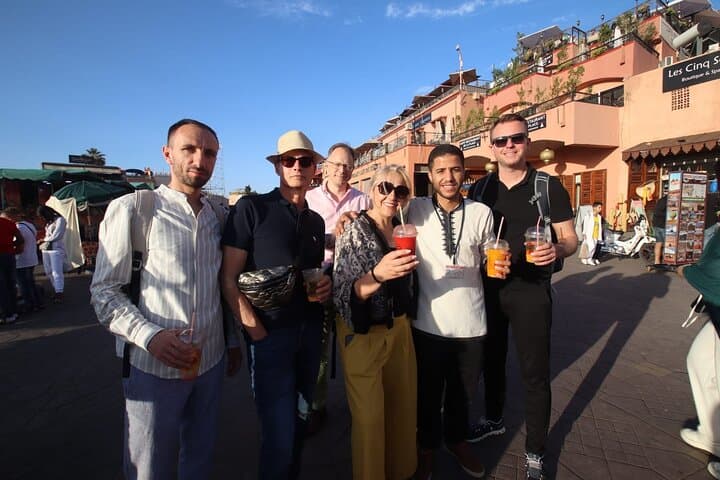
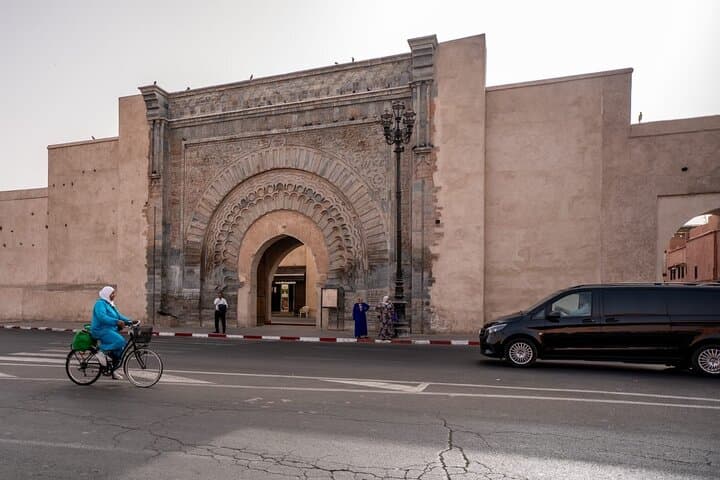
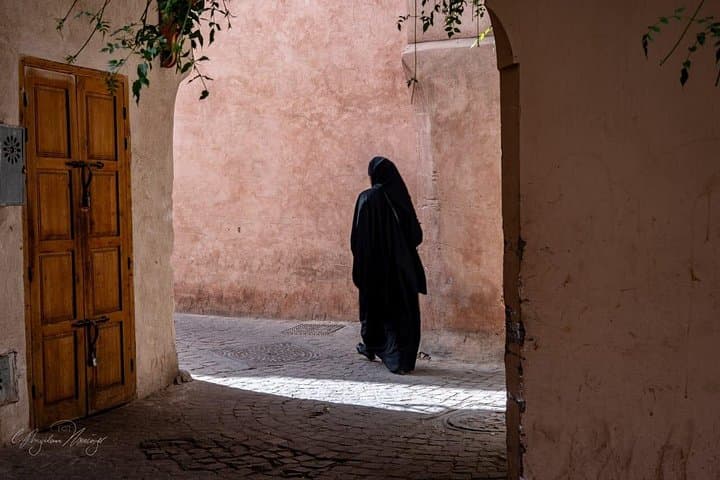
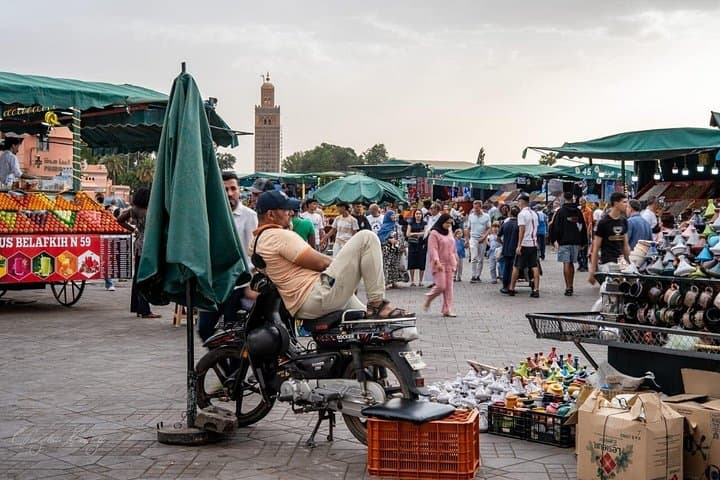
You arrive at dusk and the main square breathes — stalls flicker, spices perfume the air, and the sound of bargaining threads through alleys that have held traders for centuries.
You arrive at dusk and the main square breathes — stalls flicker, spices perfume the air, and the sound of bargaining threads through alleys that have held traders for centuries.
This three-hour guided circuit moves from the vast pulse of Jemaa el-Fnaa to the calm courtyards of Bahia Palace and the tile-studded Madrasa Ben Youssef. The route traces Marrakech’s layered history: a medieval hub on trans-Saharan trade routes, later shaped by Andalusian artisans and Saadian patrons. Geologically, the city sits on the red ochre plain at the edge of the High Atlas foothills, the earth’s iron-rich soils giving the medina its ochre tone.
Culturally the tour centers on daily life — souk craftsmen hammering metal, dyers steeping wool, and vendors wrapping spices in paper cones. Your accredited guide interprets family traditions, religious practices, language usage (Darija, French, Amazigh), and the contemporary rhythms of the city.
Practical guidance: expect uneven cobblestones and narrow passages; allow 3 hours with frequent stops. Comfortable closed-toe shoes are essential; carry sunscreen and a refillable water bottle (bottled water is usually provided). Peak visiting windows are early morning for cooler air and late afternoon when light softens the palace courtyards.
Accessibility: the itinerary notes wheelchair- and stroller-accessible options, but check specific entrance ramps for historic sites. Tips: bring small bills for local purchases and photography permissions, and arrive 10–15 minutes early to meet the guide. The tour is a compact, sensory primer on Marrakech — efficient for first-time visitors and vivid for return travelers.