THE ADVENTURE COLLECTIVE® · Independent discovery and booking for outdoor travel

Walk the Medina at dusk and eat your way through Marrakech’s most iconic food stalls and hidden kitchens. This practical evening tour blends local history, herbal traditions and a curated tasting route through Jemaa el-Fnaa and Mouassine.
Walk the Medina at dusk and eat your way through Marrakech’s most iconic food stalls and hidden kitchens. This practical evening tour blends local history, herbal traditions and a curated tasting route through Jemaa el-Fnaa and Mouassine.
The air thickens with spice as the sun slides behind ochre walls and the Medina shifts into motion — grills spit, tea kettles sing, and a labyrinth of alleys funnels you toward Jemaa el-Fnaa.
Verified experiences and guided adventures in the surrounding area.
Operated by Authentic Marrakech Guided Tours · Marrakech, Marrakech-Safi
The air thickens with spice as the sun slides behind ochre walls and the Medina shifts into motion — grills spit, tea kettles sing, and a labyrinth of alleys funnels you toward Jemaa el-Fnaa.
This guided food walk moves through Souk Semmarine, Mouassine and the night market, where recipes carry histories: the Almoravid-era medina shaped city life, caravan spices from the Sahara altered local palates, and herbalists still trade remedies in aromatic stalls. Expect a mix of street classics and home-style dishes — olives, spiced nuts, layered msemen, b’ghrir pancakes and harira — punctuated by a stop with a traditional herbalist for mint tea.
Geology and climate shape everything here: red sandstone walls store heat, narrow streets offer shade, and the proximity to the Atlas foothills influences seasonal produce on offer. Cultural cues are constant — bargaining rhythms, the cadence of tea pouring, and the communal style of Moroccan dining.
Practically: the tour runs about 2–3 hours, suitable for most fitness levels with light walking and standing. Groups are small (up to 15); inclusions typically cover tastings, bottled water and a three-course dinner. Bring small-denomination dirhams, communicate dietary restrictions before booking, and be prepared for lively crowds and intermittent traffic in the square. Evening departures catch the market at its most animated and the food at its freshest. Move deliberately, taste boldly, and leave room for the shared dish that tells the story of Marrakech.
easy.
2–3 hours.
Light walking ability and comfort standing for short periods; suitable for most fitness levels.
Most offerings on the tour follow local halal practices, but ask the guide about specific meat dishes if this is important to you.
Yes — guides can point out vegetarian options, but notify the operator in advance so tastings can be adjusted.
Expect 2–3 hours of walking across varied surfaces including cobbles, short alleys and market steps — roughly 2–4 km at a leisurely pace.
Tours typically begin near a central Medina entry point close to Jemaa el-Fnaa and end with a sit-down dinner in the Mouassine or Medina area; confirm exact meeting details on booking.
Marrakech’s medina dates to the 11th century under the Almoravids; Jemaa el-Fnaa has long been a commercial and social hub where traders and storytellers gathered.
Tourists can reduce impact by using refillable water bottles when possible, buying from local artisans to support livelihoods, and avoiding single-use plastics in the souks.
Authentic Marrakech Guided Tours operates guided outdoor trips and adventures with an emphasis on safety, stewardship, and memorable experiences.
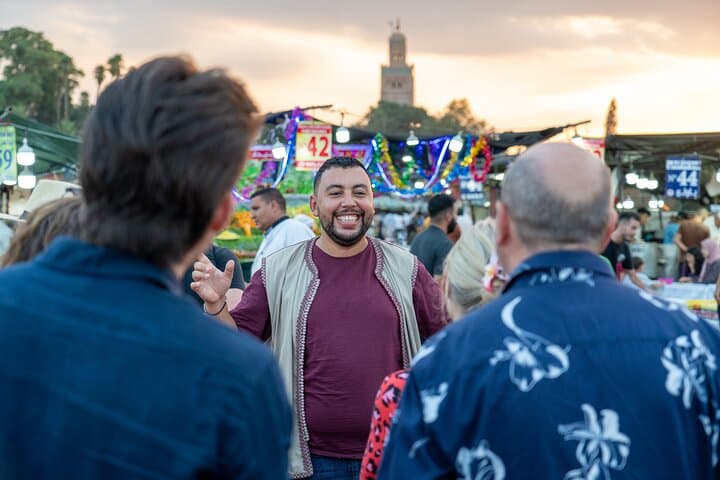


The air thickens with spice as the sun slides behind ochre walls and the Medina shifts into motion — grills spit, tea kettles sing, and a labyrinth of alleys funnels you toward Jemaa el-Fnaa.
The air thickens with spice as the sun slides behind ochre walls and the Medina shifts into motion — grills spit, tea kettles sing, and a labyrinth of alleys funnels you toward Jemaa el-Fnaa.
This guided food walk moves through Souk Semmarine, Mouassine and the night market, where recipes carry histories: the Almoravid-era medina shaped city life, caravan spices from the Sahara altered local palates, and herbalists still trade remedies in aromatic stalls. Expect a mix of street classics and home-style dishes — olives, spiced nuts, layered msemen, b’ghrir pancakes and harira — punctuated by a stop with a traditional herbalist for mint tea.
Geology and climate shape everything here: red sandstone walls store heat, narrow streets offer shade, and the proximity to the Atlas foothills influences seasonal produce on offer. Cultural cues are constant — bargaining rhythms, the cadence of tea pouring, and the communal style of Moroccan dining.
Practically: the tour runs about 2–3 hours, suitable for most fitness levels with light walking and standing. Groups are small (up to 15); inclusions typically cover tastings, bottled water and a three-course dinner. Bring small-denomination dirhams, communicate dietary restrictions before booking, and be prepared for lively crowds and intermittent traffic in the square. Evening departures catch the market at its most animated and the food at its freshest. Move deliberately, taste boldly, and leave room for the shared dish that tells the story of Marrakech.