THE ADVENTURE COLLECTIVE® · Independent discovery and booking for outdoor travel

Spend a private day on Morocco’s Atlantic edge—walk 18th‑century ramparts, watch the fish market’s morning trade, and browse Essaouira’s compact medina. This private transfer from Marrakech packs coastal history, wind-sculpted beaches, and fresh seafood into a relaxed day.
Spend a private day on Morocco’s Atlantic edge—walk 18th‑century ramparts, watch the fish market’s morning trade, and browse Essaouira’s compact medina. This private transfer from Marrakech packs coastal history, wind-sculpted beaches, and fresh seafood into a relaxed day.
You arrive on a bright Atlantic morning: salt on the air, gulls circling over a ring of weathered ramparts and the low, steady ripple of waves against the port’s fishing boats. The town that once called itself Mogador opens slowly—whitewashed houses, wooden doors cracked by wind, and narrow alleys that deliver spices, rope-smelling souks, and the sizzle of fresh fish over coals.
Verified experiences and guided adventures in the surrounding area.
Operated by Morocco Road Trips · Essaouira, Marrakesh-Safi
You arrive on a bright Atlantic morning: salt on the air, gulls circling over a ring of weathered ramparts and the low, steady ripple of waves against the port’s fishing boats. The town that once called itself Mogador opens slowly—whitewashed houses, wooden doors cracked by wind, and narrow alleys that deliver spices, rope-smelling souks, and the sizzle of fresh fish over coals.
Essaouira’s stone walls date to the 18th century when a French military engineer reshaped the port to defend trade routes; beneath those walls the coastline is older still, carved from limestone and coastal sands that funnel the strong Atlantic winds. Culture here mixes Berber, Arab, European and sub-Saharan influences—Gnawa rhythms, argan oil cooperatives, and a medina built for trade rather than labyrinthine hiding.
On a private day tour from Marrakech you’ll move efficiently: a photo stop at the ramparts, a walk through the fish market as fishermen sell the morning’s catch, and two hours to browse the compact medina. The port and beach are ideal for watching kites and windsurfers; the wind that pushes them also scours the dunes and keeps summer temperatures pleasant.
Practical notes: plan for wind and sun, wear sturdy shoes for cobbled streets, and allow time for a relaxed seafood lunch at the harbor. Expect minimal hiking but lots of walking on uneven ground. Bring cash for small shops and local co-ops, and leave space in your bag for a hand-carved souvenir or a jar of argan oil—this trip balances history, coastal geology, and easy, sensory exploration.
easy.
4–5 hours.
Light walking fitness—comfortable standing and short walks on uneven cobbles; no steep climbs.
Typical travel time is about 2 to 2.5 hours each way by air‑conditioned vehicle, depending on traffic and stops.
Yes—itinerary usually includes roughly two hours of independent exploration in Essaouira’s medina and seafront.
Yes—this private tour is family‑friendly; infants must sit on laps unless an infant seat is requested in advance.
The town is a major windsurfing hub, but lessons or gear rental require additional time and booking—your day trip focuses on sightseeing and walking.
Essaouira (formerly Mogador) developed as a strategic Atlantic port in the 18th century; its ramparts were reshaped by a French military architect and the town became a mix-point for trans-Saharan trade and Atlantic fisheries.
The argan ecosystem is fragile—buying from women’s cooperatives supports sustainable livelihoods; avoid trampling dunes and leave seafood bones for local waste bins rather than the shore.
Morocco Road Trips operates guided outdoor trips and adventures with an emphasis on safety, stewardship, and memorable experiences.
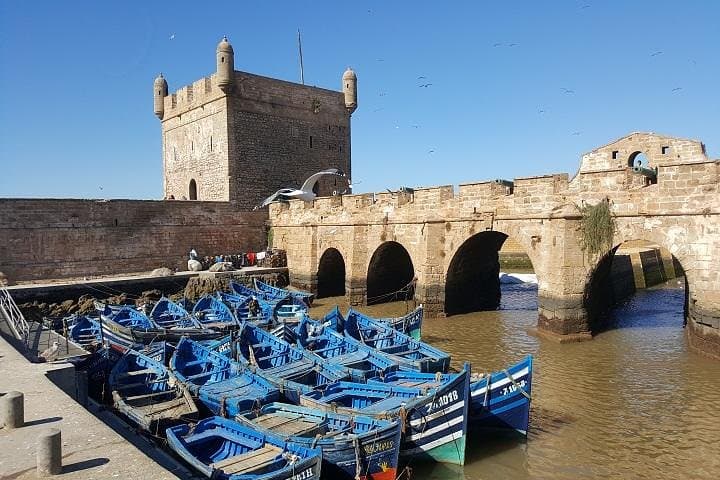
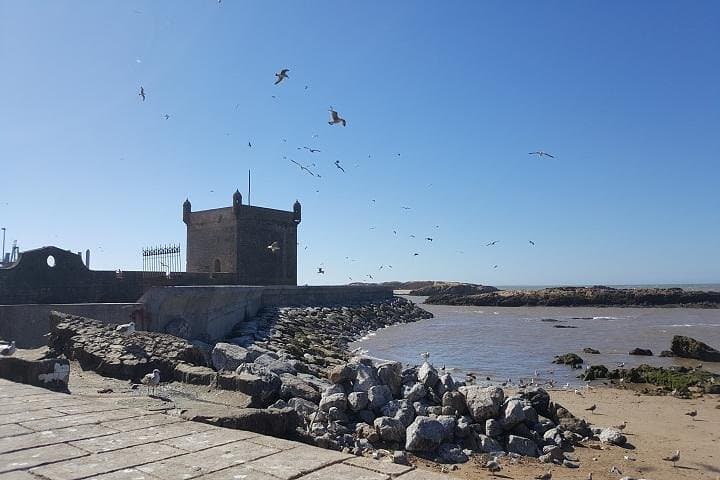
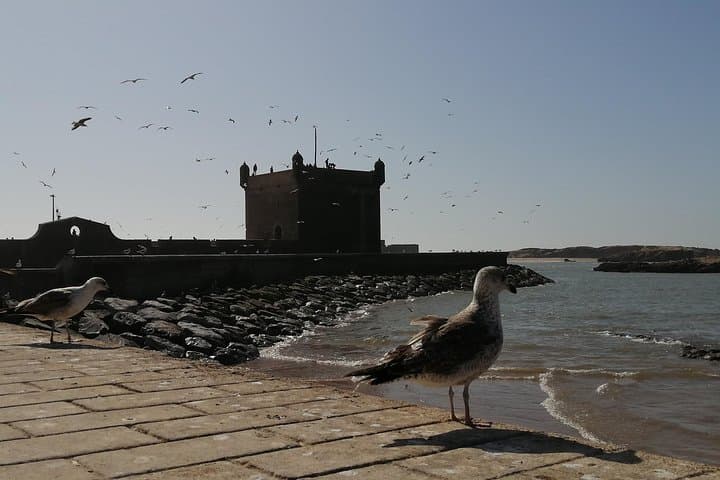
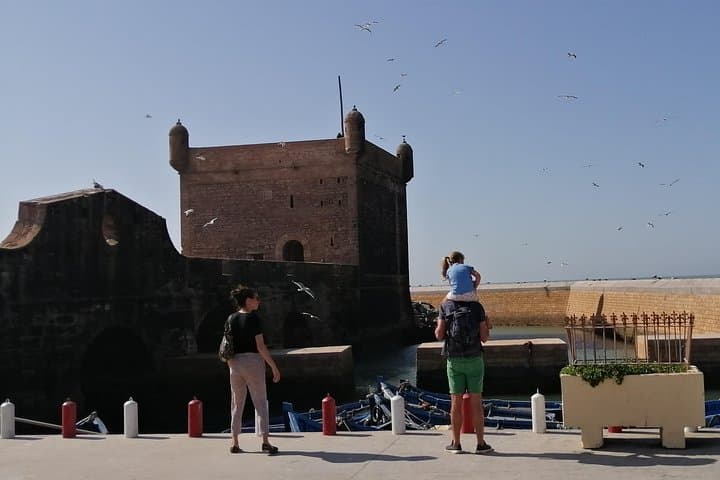
You arrive on a bright Atlantic morning: salt on the air, gulls circling over a ring of weathered ramparts and the low, steady ripple of waves against the port’s fishing boats. The town that once called itself Mogador opens slowly—whitewashed houses, wooden doors cracked by wind, and narrow alleys that deliver spices, rope-smelling souks, and the sizzle of fresh fish over coals.
You arrive on a bright Atlantic morning: salt on the air, gulls circling over a ring of weathered ramparts and the low, steady ripple of waves against the port’s fishing boats. The town that once called itself Mogador opens slowly—whitewashed houses, wooden doors cracked by wind, and narrow alleys that deliver spices, rope-smelling souks, and the sizzle of fresh fish over coals.
Essaouira’s stone walls date to the 18th century when a French military engineer reshaped the port to defend trade routes; beneath those walls the coastline is older still, carved from limestone and coastal sands that funnel the strong Atlantic winds. Culture here mixes Berber, Arab, European and sub-Saharan influences—Gnawa rhythms, argan oil cooperatives, and a medina built for trade rather than labyrinthine hiding.
On a private day tour from Marrakech you’ll move efficiently: a photo stop at the ramparts, a walk through the fish market as fishermen sell the morning’s catch, and two hours to browse the compact medina. The port and beach are ideal for watching kites and windsurfers; the wind that pushes them also scours the dunes and keeps summer temperatures pleasant.
Practical notes: plan for wind and sun, wear sturdy shoes for cobbled streets, and allow time for a relaxed seafood lunch at the harbor. Expect minimal hiking but lots of walking on uneven ground. Bring cash for small shops and local co-ops, and leave space in your bag for a hand-carved souvenir or a jar of argan oil—this trip balances history, coastal geology, and easy, sensory exploration.