THE ADVENTURE COLLECTIVE® · Independent discovery and booking for outdoor travel

A private full-day escape from Marrakech to Essaouira that combines UNESCO-listed medina lanes, a working fishing port, argan cooperatives and a windswept Atlantic beach. Expect a long but easy day with time for a seafood lunch and coastal photos.
A private full-day escape from Marrakech to Essaouira that combines UNESCO-listed medina lanes, a working fishing port, argan cooperatives and a windswept Atlantic beach. Expect a long but easy day with time for a seafood lunch and coastal photos.
Morning light hits the red city as you roll out of Marrakech and the road opens toward the Atlantic—three and a half hours of wide skies, grazing goats and low argan brush. By the time the ocean wind reaches the minibus, Essaouira’s blue doors and whitewashed ramparts come into view, and the town’s drafty fortifications seem to breathe with the sea.
Verified experiences and guided adventures in the surrounding area.
Operated by Barbaro Tours Morocco · Essaouira, Marrakesh-Safi
Morning light hits the red city as you roll out of Marrakech and the road opens toward the Atlantic—three and a half hours of wide skies, grazing goats and low argan brush. By the time the ocean wind reaches the minibus, Essaouira’s blue doors and whitewashed ramparts come into view, and the town’s drafty fortifications seem to breathe with the sea.
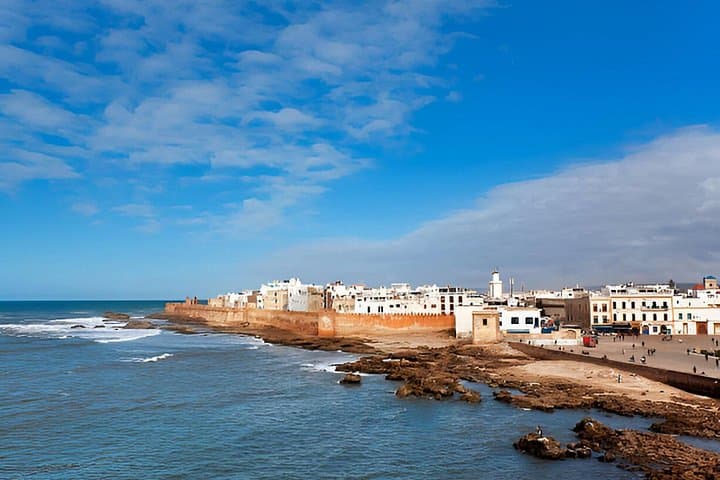
Essaouira’s medina is a UNESCO World Heritage site shaped by Phoenician trade routes, Portuguese fort design and centuries of Atlantic commerce. Geologically, the coast is flat, exposed sandstone and sand blown inland; the beach stretches almost six kilometers and the cold Atlantic current (around 18°C) sculpts consistent surf and strong rip currents that attract wind- and kite-surfers.
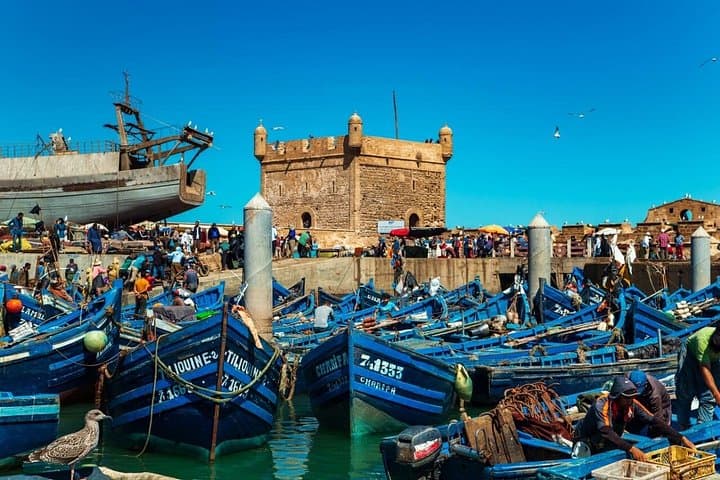
Culturally the town retains a working fishing port, open-air cafés, and craft cooperatives—argan oil collectives run by local women produce a nutty oil used in kitchens and cosmetics. If your day aligns with Monday, a regional souk paints a livelier, more local face of market trade.
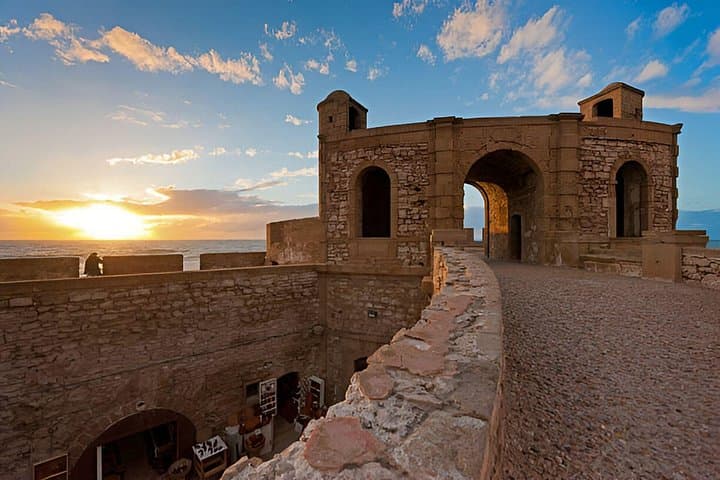
Practical guidance: the tour typically allows about five hours on-site—enough for the medina, port, and a seafood lunch but not for lengthy beach time. Wear comfortable walking shoes for cobbled lanes, bring a windproof layer and sunscreen, and carry local dirhams for small purchases and cooperative visits. Expect a long but gentle day: most of the activity is strolling, shopping, and short photo stops. For photographers, the ramparts at golden hour deliver the clearest light; for food lovers, the fish stalls near the quay serve the freshest catch. Return to Marrakech in the evening, with the Atlantic’s salt and the medina’s color still in your pockets.
easy.
8–10 hours.
Suitable for most fitness levels; long seated drive plus several hours of walking on uneven cobbles requires basic mobility and endurance.
The journey is roughly 176 km and typically takes about 3.5 hours each way, depending on traffic and stops.
Yes — most itineraries allow about five hours in Essaouira, enough for the medina, port, a cooperative visit and a relaxed lunch.
Swimming is not recommended for casual visitors due to cold water (around 18°C) and strong rip currents; the beach is best for walks or for surfers with appropriate gear and local guidance.
Cooperative visits are commonly included as a stop or optional extra; purchases are voluntary and usually paid in cash.
Essaouira’s layout reflects 18th-century Portuguese and French military planning layered atop older Berber and trading influences; its port and medina have long been hubs for Atlantic trade.
Argan forests are a protected endemic ecosystem; supporting women’s cooperatives and buying sustainably produced argan oil helps local economies and forest stewardship.
Barbaro Tours Morocco operates guided outdoor trips and adventures with an emphasis on safety, stewardship, and memorable experiences.
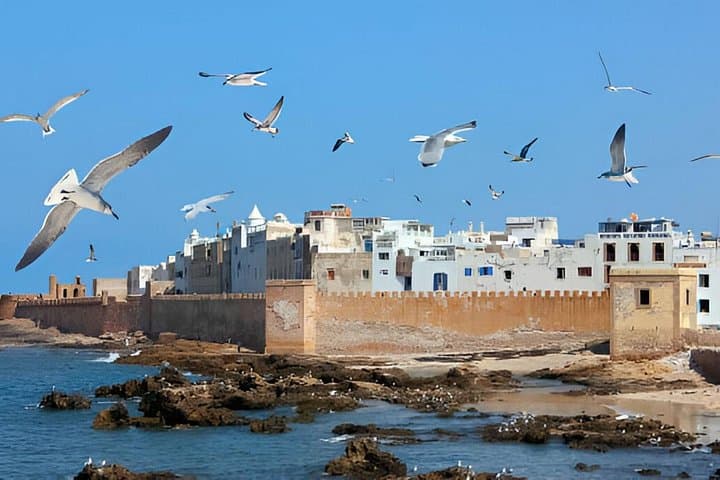
Morning light hits the red city as you roll out of Marrakech and the road opens toward the Atlantic—three and a half hours of wide skies, grazing goats and low argan brush. By the time the ocean wind reaches the minibus, Essaouira’s blue doors and whitewashed ramparts come into view, and the town’s drafty fortifications seem to breathe with the sea.
Morning light hits the red city as you roll out of Marrakech and the road opens toward the Atlantic—three and a half hours of wide skies, grazing goats and low argan brush. By the time the ocean wind reaches the minibus, Essaouira’s blue doors and whitewashed ramparts come into view, and the town’s drafty fortifications seem to breathe with the sea.
Essaouira’s medina is a UNESCO World Heritage site shaped by Phoenician trade routes, Portuguese fort design and centuries of Atlantic commerce. Geologically, the coast is flat, exposed sandstone and sand blown inland; the beach stretches almost six kilometers and the cold Atlantic current (around 18°C) sculpts consistent surf and strong rip currents that attract wind- and kite-surfers.
Culturally the town retains a working fishing port, open-air cafés, and craft cooperatives—argan oil collectives run by local women produce a nutty oil used in kitchens and cosmetics. If your day aligns with Monday, a regional souk paints a livelier, more local face of market trade.
Practical guidance: the tour typically allows about five hours on-site—enough for the medina, port, and a seafood lunch but not for lengthy beach time. Wear comfortable walking shoes for cobbled lanes, bring a windproof layer and sunscreen, and carry local dirhams for small purchases and cooperative visits. Expect a long but gentle day: most of the activity is strolling, shopping, and short photo stops. For photographers, the ramparts at golden hour deliver the clearest light; for food lovers, the fish stalls near the quay serve the freshest catch. Return to Marrakech in the evening, with the Atlantic’s salt and the medina’s color still in your pockets.