THE ADVENTURE COLLECTIVE® · Independent discovery and booking for outdoor travel

Explore Marrakech by electric bike—ride the medina alleys, pause at Koutoubia and Jemaa el‑Fnaa, visit a riad and end in the Palmeraie with a traditional outfit photoshoot. This 3–4 hour tour blends urban cycling with cultural stops and a relaxed oasis finish.
Explore Marrakech by electric bike—ride the medina alleys, pause at Koutoubia and Jemaa el‑Fnaa, visit a riad and end in the Palmeraie with a traditional outfit photoshoot. This 3–4 hour tour blends urban cycling with cultural stops and a relaxed oasis finish.
The ride begins before the medina’s pulse picks up: dawn light slants across ochre walls, and the city seems to breathe around the scooter hum of electric bikes. Riders move through narrow alleys where the souk dares you to look closer—metal traders clanging, spice stalls perfuming the air—and spill out onto wide boulevards by the Koutoubia, its minaret a quiet landmark guiding the route.
Verified experiences and guided adventures in the surrounding area.
Operated by Trips Marrakech · Marrakech, Marrakech-Safi
The ride begins before the medina’s pulse picks up: dawn light slants across ochre walls, and the city seems to breathe around the scooter hum of electric bikes. Riders move through narrow alleys where the souk dares you to look closer—metal traders clanging, spice stalls perfuming the air—and spill out onto wide boulevards by the Koutoubia, its minaret a quiet landmark guiding the route.
Marrakech was founded in the 11th century and shaped by Almoravid and Almohad dynasties; the tour threads that history visibly—from the 12th‑century Bab Agnaou gate to the layered architecture of riads and public squares. Geologically the city sits on a plateau at the edge of the High Atlas foothills; the Palmeraie offers an abrupt change in texture, palms rising like a managed oasis where old irrigation practices still shape life.
Culturally the route balances market life, religious sites, and modern Gueliz—allowing a snapshot of contemporary Moroccan rhythms. Guides typically explain etiquette, tea rituals, and the meanings behind riad courtyards.
Practical guidance: expect 3–4 hours of mostly flat, urban riding with brief walking segments in crowded alleys. Helmets and a safety briefing are provided; wear closed‑toe shoes, bring sun protection and water, and plan modest dress for riad and mosque areas. The Palmeraie stop includes a mint‑tea break and an optional camel ride (extra cost). Charge devices before departure and secure valuables; medina traffic can be sudden. Timing your tour for early morning or late afternoon reduces heat and the thickest crowds.
easy.
3–4 hours.
Suitable for most fitness levels; basic bike handling and ability to stand and walk short stretches required.
Yes—electric assist does most of the work and guides give a safety briefing; riders should be comfortable balancing on a bike and following traffic directions.
The tour lasts about 3–4 hours and typically includes helmet, e‑bike, guide, tea, riad and medina stops, and the traditional outfit photoshoot; optional camel rides cost extra.
Yes—small purchases, additional snacks, tips, and optional extras like camel rides or printed photos are usually cash or local‑card friendly.
Children can join with specialized seats available; the tour is not recommended for people with serious back or heart problems or for late‑stage pregnancy.
Marrakech grew in the 11th century under the Almoravids and later expanded under the Almohads; landmarks like Bab Agnaou reflect 12th‑century Almohad architecture.
The Palmeraie is an irrigated oasis under development pressure—stick to established paths, avoid single‑use plastics, and respect privately managed groves.
Trips Marrakech operates guided outdoor trips and adventures with an emphasis on safety, stewardship, and memorable experiences.
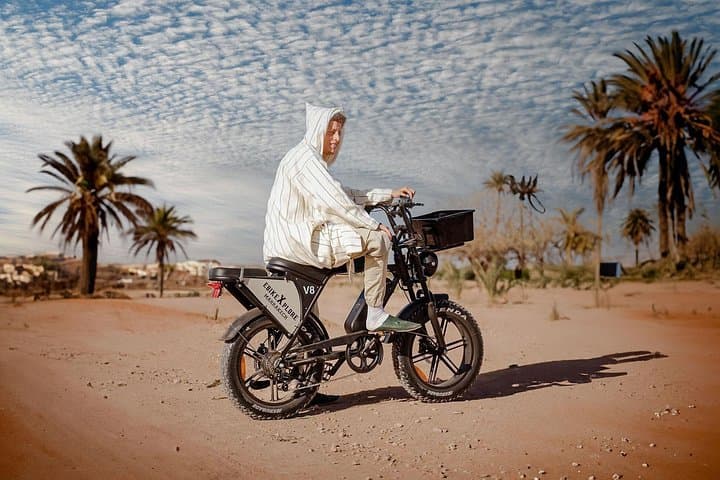
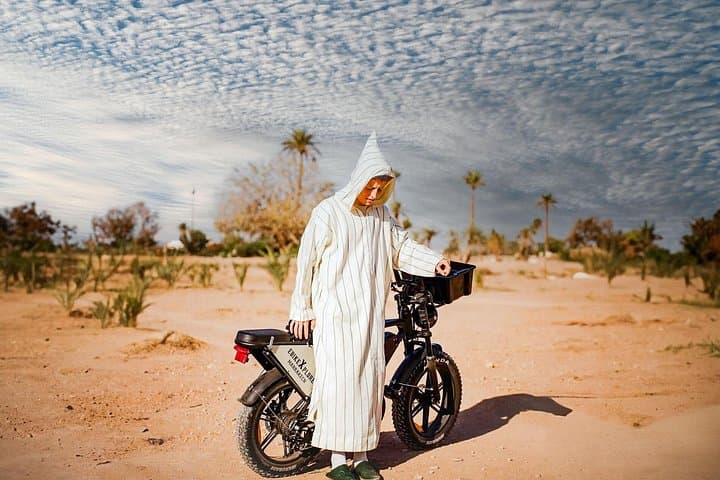
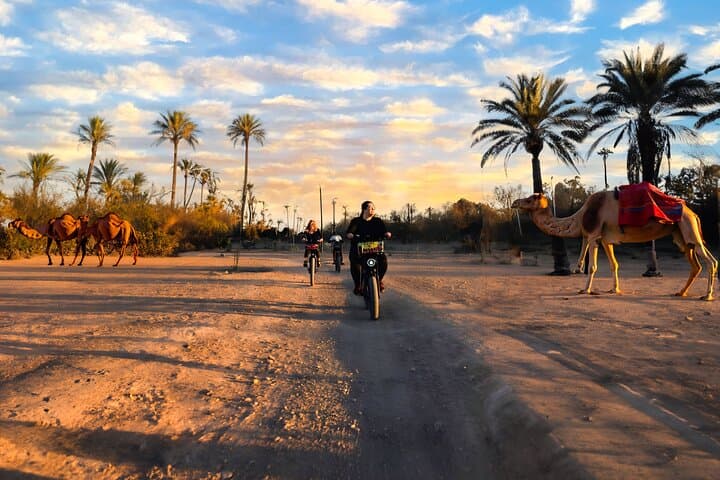
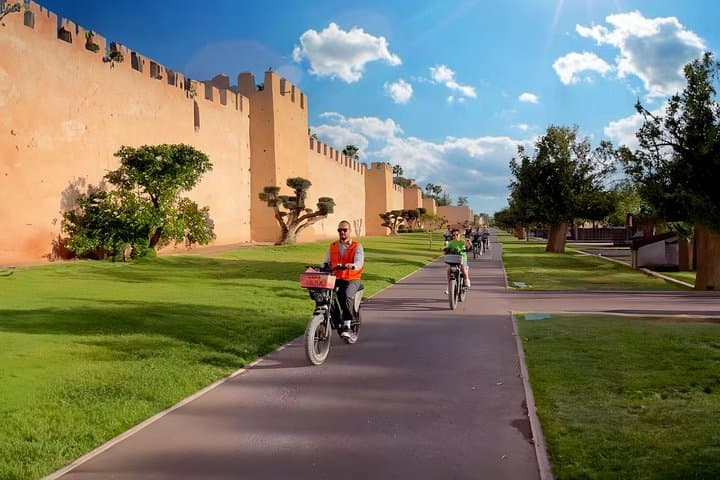
The ride begins before the medina’s pulse picks up: dawn light slants across ochre walls, and the city seems to breathe around the scooter hum of electric bikes. Riders move through narrow alleys where the souk dares you to look closer—metal traders clanging, spice stalls perfuming the air—and spill out onto wide boulevards by the Koutoubia, its minaret a quiet landmark guiding the route.
The ride begins before the medina’s pulse picks up: dawn light slants across ochre walls, and the city seems to breathe around the scooter hum of electric bikes. Riders move through narrow alleys where the souk dares you to look closer—metal traders clanging, spice stalls perfuming the air—and spill out onto wide boulevards by the Koutoubia, its minaret a quiet landmark guiding the route.
Marrakech was founded in the 11th century and shaped by Almoravid and Almohad dynasties; the tour threads that history visibly—from the 12th‑century Bab Agnaou gate to the layered architecture of riads and public squares. Geologically the city sits on a plateau at the edge of the High Atlas foothills; the Palmeraie offers an abrupt change in texture, palms rising like a managed oasis where old irrigation practices still shape life.
Culturally the route balances market life, religious sites, and modern Gueliz—allowing a snapshot of contemporary Moroccan rhythms. Guides typically explain etiquette, tea rituals, and the meanings behind riad courtyards.
Practical guidance: expect 3–4 hours of mostly flat, urban riding with brief walking segments in crowded alleys. Helmets and a safety briefing are provided; wear closed‑toe shoes, bring sun protection and water, and plan modest dress for riad and mosque areas. The Palmeraie stop includes a mint‑tea break and an optional camel ride (extra cost). Charge devices before departure and secure valuables; medina traffic can be sudden. Timing your tour for early morning or late afternoon reduces heat and the thickest crowds.