THE ADVENTURE COLLECTIVE® · Independent discovery and booking for outdoor travel

A day trip from Marrakech that feels like a short pilgrimage: Cascades d'Ouzoud drops over 100 meters through olive terraces and basalt cliffs, with viewpoints, boat rides and resident macaques. Read this practical guide before you go.
A day trip from Marrakech that feels like a short pilgrimage: Cascades d'Ouzoud drops over 100 meters through olive terraces and basalt cliffs, with viewpoints, boat rides and resident macaques. Read this practical guide before you go.
You round a final bend in the foothills of the Middle Atlas and the road drops away — not with a cinematic reveal but with a slow, steady unfolding: olive terraces, a scatter of flat-roofed village houses and, finally, a band of white spray rising into the air. Up close, the Cascades d'Ouzoud are less a single curtain and more a series of steps and ledges, water tumbling roughly 100 meters into a carved basin that glitters green in the bright Moroccan light.
Verified experiences and guided adventures in the surrounding area.
Operated by Truly Morocco · Ouzoud, Béni Mellal-Khénifra
You round a final bend in the foothills of the Middle Atlas and the road drops away — not with a cinematic reveal but with a slow, steady unfolding: olive terraces, a scatter of flat-roofed village houses and, finally, a band of white spray rising into the air. Up close, the Cascades d'Ouzoud are less a single curtain and more a series of steps and ledges, water tumbling roughly 100 meters into a carved basin that glitters green in the bright Moroccan light.
The falls sit where the El Abid River negotiates resistant rock, carving channels and plunge pools through layers of sandstone and limestone. For centuries local Berber communities have farmed the slopes, pressing olives and guiding the inevitable seasonal visitors. The name Ouzoud comes from the Amazigh word for “grinder,” a nod to historic watermills that once clustered along the river; today small craftspeople and cafés line the clifftops, offering mint tea with an uninterrupted view.
Wildlife here is conspicuous: Barbary macaques move like gossip along branches and ledges, and the river corridor attracts kingfishers and herons. Geologically the falls are young — a network of terraces and cliffs shaped by repeated floods and sediment deposits — which makes the landscape changeable and photogenic in ways a static canyon rarely is.
Practically, Ouzoud is an easy full-day escape from Marrakech: most transfers run 2.5–3 hours each way, so expect a 8–10 hour outing. The core loop around the falls is compact — roughly 2–4 km depending on side trails — but it’s deceptively vertical in places: stone steps, slick paths and short descents to the pool. There are options to hire a small motorized boat to pass under the cascades for a different vantage; be prepared to get wet and bring cash.
Guides and small cafés make the site accessible; many operators include bottled water, snacks and an air-conditioned vehicle. Respect local customs — modest swimwear if you’re planning a dip — and don’t feed the monkeys (it alters their behavior and health). For photographers, dawn and late afternoon light add depth to the falls and long shadows to the olive groves.
If you’re organizing this as a day trip, book early in high season, pack good non-slip shoes, and treat the place like a working landscape as much as a postcard: support village vendors, keep to paths, and leave the soundscape intact for the next visitor. Ouzoud rewards simple curiosity — a steep-sided river that keeps daring you to follow it down, one wet step at a time.
easy.
8–10 hours.
Suitable for most fitness levels; expect short steep sections and uneven steps — basic stamina and balance recommended
Expect roughly 2.5–3 hours each way depending on traffic — most day trips run 8–10 hours total including transfers.
Yes — there are natural pools at the base where locals and visitors swim, but currents and slippery rocks mean caution and basic swimming ability are advisable.
Small motorized or row boats operate below the main drop; they are paid locally and can get you close to the spray — bring waterproof protection for gear.
The upper viewpoints and cafés are accessible; descending to the pool involves stairs and uneven paths that may be challenging for mobility-limited travelers.
Barbary macaques are commonly sighted around the cliffs and paths — they are habituated to people, so observe from a distance and do not feed them.
Yes — several small cafés and vendors serve mint tea, snacks and light meals; prices are tourist-friendly but have cash on hand.
Local Berber communities have farmed the El Abid valley for generations; the area’s mills and terraces reflect a long history of olive cultivation and water management.
Tourist pressure and feeding of macaques are local concerns; support small businesses, avoid leaving litter, and follow posted rules to protect the river corridor.
Truly Morocco operates guided outdoor trips and adventures with an emphasis on safety, stewardship, and memorable experiences.
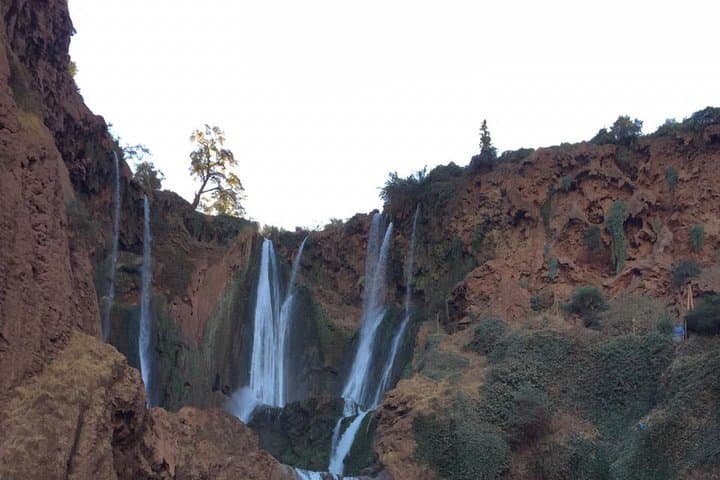
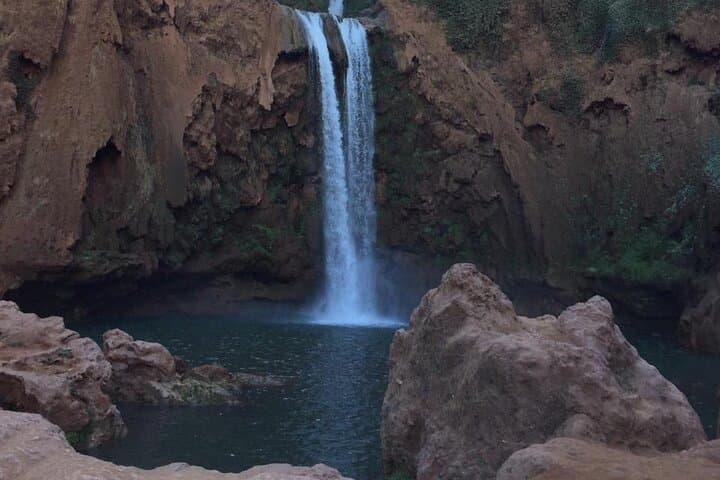
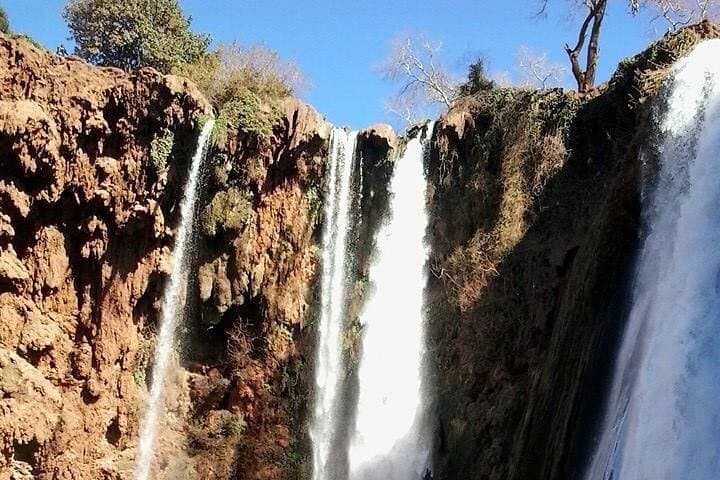
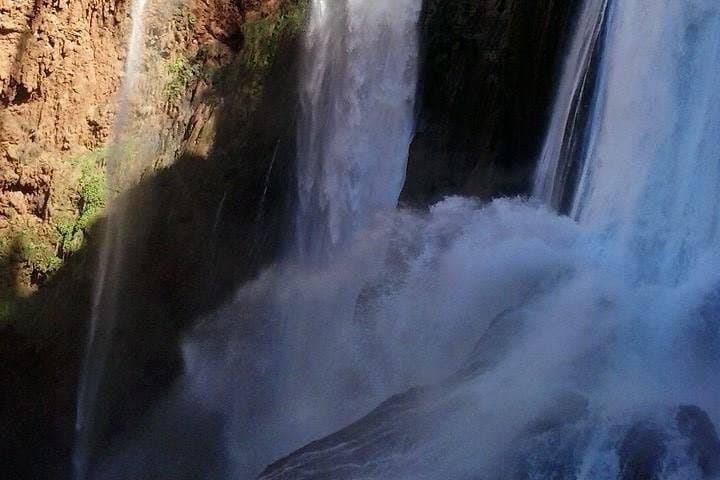
You round a final bend in the foothills of the Middle Atlas and the road drops away — not with a cinematic reveal but with a slow, steady unfolding: olive terraces, a scatter of flat-roofed village houses and, finally, a band of white spray rising into the air. Up close, the Cascades d'Ouzoud are less a single curtain and more a series of steps and ledges, water tumbling roughly 100 meters into a carved basin that glitters green in the bright Moroccan light.
You round a final bend in the foothills of the Middle Atlas and the road drops away — not with a cinematic reveal but with a slow, steady unfolding: olive terraces, a scatter of flat-roofed village houses and, finally, a band of white spray rising into the air. Up close, the Cascades d'Ouzoud are less a single curtain and more a series of steps and ledges, water tumbling roughly 100 meters into a carved basin that glitters green in the bright Moroccan light.
The falls sit where the El Abid River negotiates resistant rock, carving channels and plunge pools through layers of sandstone and limestone. For centuries local Berber communities have farmed the slopes, pressing olives and guiding the inevitable seasonal visitors. The name Ouzoud comes from the Amazigh word for “grinder,” a nod to historic watermills that once clustered along the river; today small craftspeople and cafés line the clifftops, offering mint tea with an uninterrupted view.
Wildlife here is conspicuous: Barbary macaques move like gossip along branches and ledges, and the river corridor attracts kingfishers and herons. Geologically the falls are young — a network of terraces and cliffs shaped by repeated floods and sediment deposits — which makes the landscape changeable and photogenic in ways a static canyon rarely is.
Practically, Ouzoud is an easy full-day escape from Marrakech: most transfers run 2.5–3 hours each way, so expect a 8–10 hour outing. The core loop around the falls is compact — roughly 2–4 km depending on side trails — but it’s deceptively vertical in places: stone steps, slick paths and short descents to the pool. There are options to hire a small motorized boat to pass under the cascades for a different vantage; be prepared to get wet and bring cash.
Guides and small cafés make the site accessible; many operators include bottled water, snacks and an air-conditioned vehicle. Respect local customs — modest swimwear if you’re planning a dip — and don’t feed the monkeys (it alters their behavior and health). For photographers, dawn and late afternoon light add depth to the falls and long shadows to the olive groves.
If you’re organizing this as a day trip, book early in high season, pack good non-slip shoes, and treat the place like a working landscape as much as a postcard: support village vendors, keep to paths, and leave the soundscape intact for the next visitor. Ouzoud rewards simple curiosity — a steep-sided river that keeps daring you to follow it down, one wet step at a time.