THE ADVENTURE COLLECTIVE® · Independent discovery and booking for outdoor travel

Swap Marrakech’s medina for the stone plains near Jbilets on a compact 3-hour combo: a guided quad-bike loop and a gentle camel ride. Expect panoramic Atlas views, a Berber tea stop, and hands-on instruction for first-time riders.
Swap Marrakech’s medina for the stone plains near Jbilets on a compact 3-hour combo: a guided quad-bike loop and a gentle camel ride. Expect panoramic Atlas views, a Berber tea stop, and hands-on instruction for first-time riders.
A low sun paints the stone plains gold as an air-conditioned van pulls away from Marrakech’s ochre walls. Thirty minutes later the city’s bustle thins and the Jbilets / Agafay-style desert opens: rocky ground, scrub, and the High Atlas etched on the horizon. Guests swap traffic for the steady rhythm of quad engines and the slow sway of camels, a hands-on way to test Morocco’s contrasting landscapes.
Verified experiences and guided adventures in the surrounding area.
Operated by Morocco Tour Marrakech · Marrakech, Marrakech-Safi
A low sun paints the stone plains gold as an air-conditioned van pulls away from Marrakech’s ochre walls. Thirty minutes later the city’s bustle thins and the Jbilets / Agafay-style desert opens: rocky ground, scrub, and the High Atlas etched on the horizon. Guests swap traffic for the steady rhythm of quad engines and the slow sway of camels, a hands-on way to test Morocco’s contrasting landscapes.
The area around Marrakech has long been a crossroads for Berber communities and caravan traffic moving between the Atlas and the plains. Geologically it’s a stony desert—weathered volcanic and sedimentary rocks rather than the Sahara’s sand—so tracks are firm, dusty, and often riven by drainage lines carved during winter rains. Guides commonly stop at a village for mint tea, a clear reminder of the region’s living culture.
Expect a mix of short off-road stretches and open, panoramic runs that offer tight views of the mountains. The guides usually provide a briefing and basic ATV instruction before riders head out; camels are managed by handlers and move at a deliberate pace suited to first-time riders.
Practical notes: bring layered clothing for big temperature swings, sun protection, and a small daypack for camera and water. Footwear should be closed-toe with some tread for getting on and off vehicles and animals. Mornings and late afternoons are best for cooler temperatures and stronger light for photos. Respect local customs at village stops and follow guides’ route advice to avoid fragile areas.
easy.
3 hours.
Suitable for most fitness levels—participants should be able to mount a camel and handle a quad for short bursts while seated.
Most operators reach the Jbilets/Agafay-style desert in about 25–40 minutes by air-conditioned vehicle depending on traffic and exact route.
No—briefing and basic training are typically provided; the routes are chosen for beginner to intermediate riders.
Camel segments are usually short and at a slow walking pace, suitable for first-time riders and those with basic mobility.
Guides commonly speak English, French, and Arabic; confirm language needs when booking for any special requests.
The rocky plains south of Marrakech were traditional transit zones for Berber communities and small-scale trade routes linking mountain and plains settlements.
This stone desert is fragile—stay on established tracks, avoid disturbing vegetation and livestock areas, and pack out all trash to protect the landscape.
Morocco Tour Marrakech operates guided outdoor trips and adventures with an emphasis on safety, stewardship, and memorable experiences.
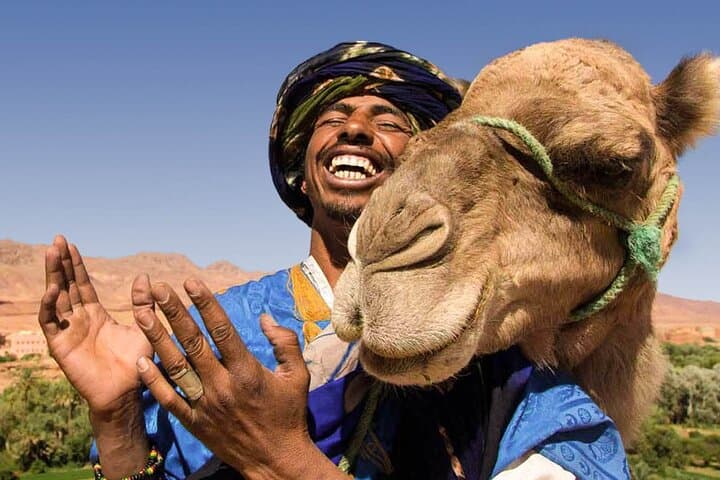
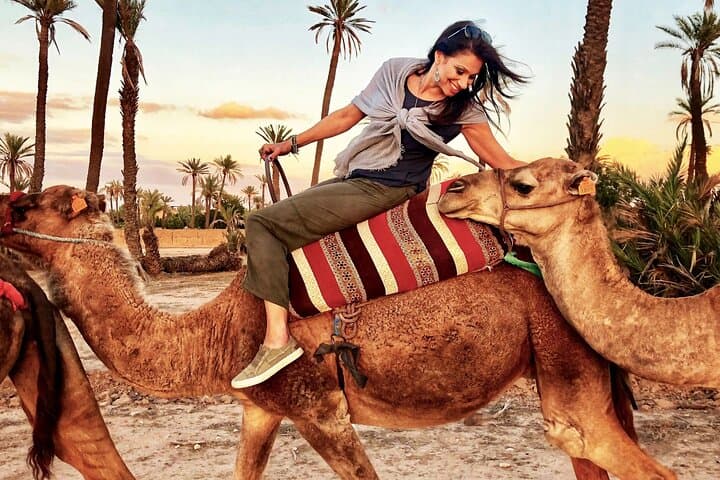
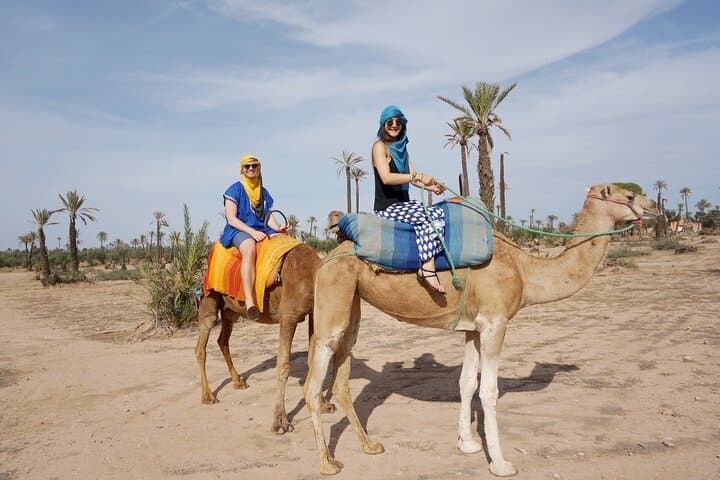
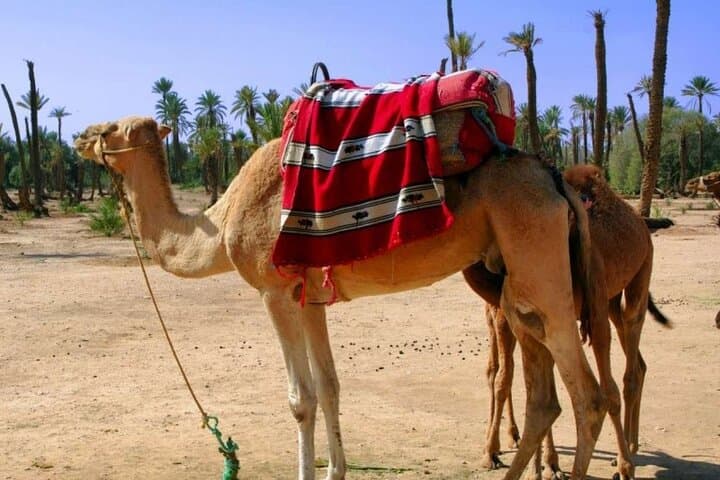
A low sun paints the stone plains gold as an air-conditioned van pulls away from Marrakech’s ochre walls. Thirty minutes later the city’s bustle thins and the Jbilets / Agafay-style desert opens: rocky ground, scrub, and the High Atlas etched on the horizon. Guests swap traffic for the steady rhythm of quad engines and the slow sway of camels, a hands-on way to test Morocco’s contrasting landscapes.
A low sun paints the stone plains gold as an air-conditioned van pulls away from Marrakech’s ochre walls. Thirty minutes later the city’s bustle thins and the Jbilets / Agafay-style desert opens: rocky ground, scrub, and the High Atlas etched on the horizon. Guests swap traffic for the steady rhythm of quad engines and the slow sway of camels, a hands-on way to test Morocco’s contrasting landscapes.
The area around Marrakech has long been a crossroads for Berber communities and caravan traffic moving between the Atlas and the plains. Geologically it’s a stony desert—weathered volcanic and sedimentary rocks rather than the Sahara’s sand—so tracks are firm, dusty, and often riven by drainage lines carved during winter rains. Guides commonly stop at a village for mint tea, a clear reminder of the region’s living culture.
Expect a mix of short off-road stretches and open, panoramic runs that offer tight views of the mountains. The guides usually provide a briefing and basic ATV instruction before riders head out; camels are managed by handlers and move at a deliberate pace suited to first-time riders.
Practical notes: bring layered clothing for big temperature swings, sun protection, and a small daypack for camera and water. Footwear should be closed-toe with some tread for getting on and off vehicles and animals. Mornings and late afternoons are best for cooler temperatures and stronger light for photos. Respect local customs at village stops and follow guides’ route advice to avoid fragile areas.