THE ADVENTURE COLLECTIVE® · Independent discovery and booking for outdoor travel

Taste Marrakech after dark on a guided walking tour through Djemaa El-Fna. Sample snail soup, mechoui, pastries, and spices while your guide explains the medina’s market history and culinary traditions.
Taste Marrakech after dark on a guided walking tour through Djemaa El-Fna. Sample snail soup, mechoui, pastries, and spices while your guide explains the medina’s market history and culinary traditions.
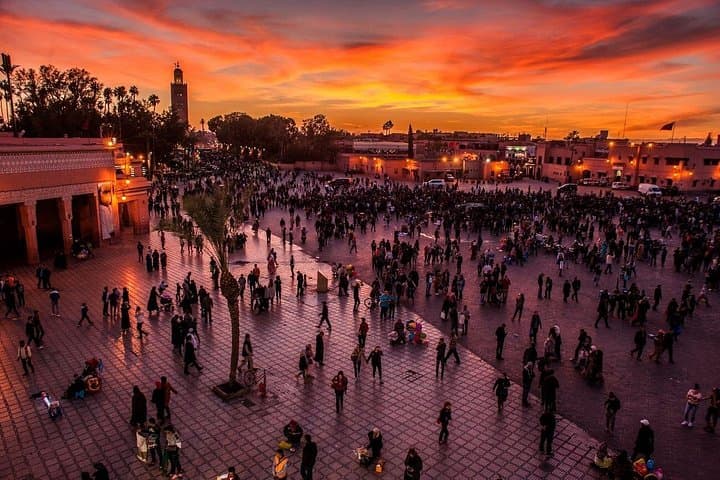
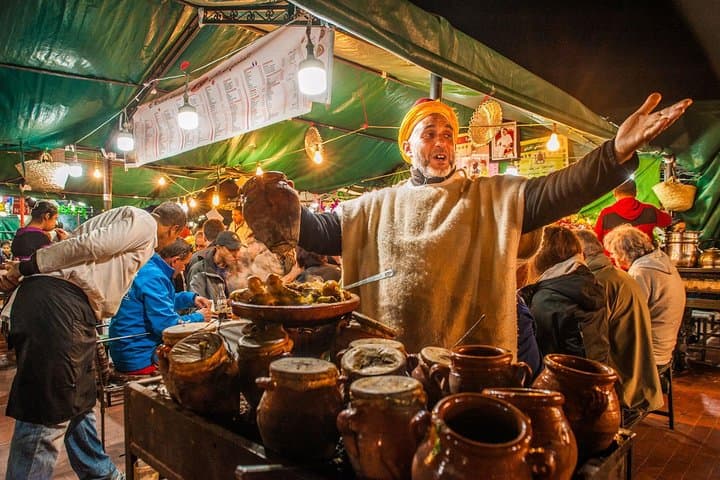
Lantern light and steam collide in Djemaa El-Fna as dusk folds into night. The square’s clamor—drums, haggling, the rattle of tagines—pulls you down alleys lined with spice stalls where cumin and saffron hang heavy in the air. A local guide threads the way, stopping where smoke signals the best street cooks and where a heap of sheep’s heads glints under lamplight.
Verified experiences and guided adventures in the surrounding area.
Operated by Intrepid Urban Adventures - Morocco · Marrakech, Marrakech-Safi
Lantern light and steam collide in Djemaa El-Fna as dusk folds into night. The square’s clamor—drums, haggling, the rattle of tagines—pulls you down alleys lined with spice stalls where cumin and saffron hang heavy in the air. A local guide threads the way, stopping where smoke signals the best street cooks and where a heap of sheep’s heads glints under lamplight.
Djemaa El-Fna has been Marrakech’s central market and performance stage since at least the 11th century; UNESCO recognizes its role in living cultural traditions. The medina’s fabric is carved from red-earth ramparts and centuries of trade—you’ll pass the old Mellah, riad courtyards, and souk arteries that once serviced caravan traffic. Food here reflects that history: Berber techniques, Andalusian influence, and West African spices converge in dishes like mechoui, preserved meats, ghoulal (snail soup), and slow-cooked tangia.
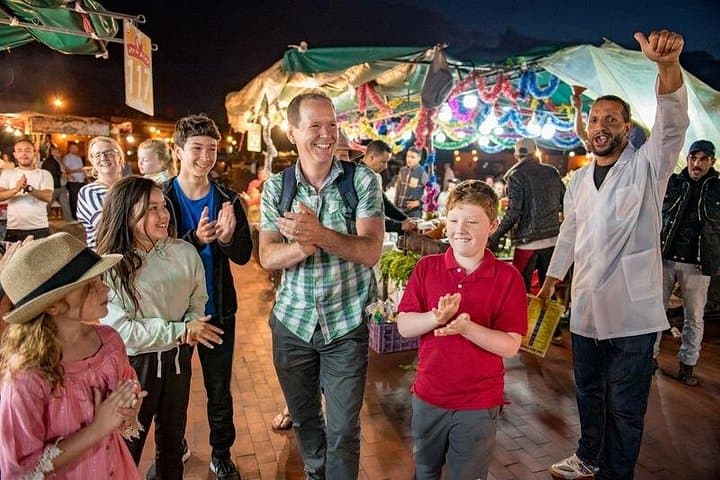
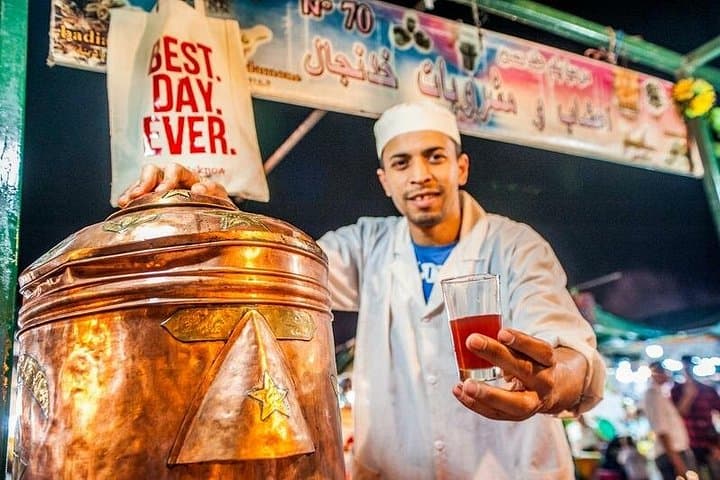
Expect close-up food theater: meat markets where butchers display whole cuts, stalls simmering snail broth, and family-run stands serving tangy salads, olives, and pastries. The tour runs about 3.5 hours, capped at 12 people to keep it personal and mobile.
Practical guidance: wear sturdy walking shoes, carry small-denomination dirhams for purchases and tips, and bring a jacket—night temperatures drop quickly. Ask guides about ingredients if you have dietary restrictions; vegetarian and vegan options can be arranged with advance notice. Photograph respectfully, avoid touching performing animals, and let vendors finish their trade—haggling is part of the rhythm, but polite offers work best.
This is a sensory, sociable evening that blends streetwise eating with cultural context—ideal for travelers who want flavor, history, and the heartbeat of Marrakech after dark.
easy.
3–3.5 hours.
Suitable for most fitness levels; involves sustained walking on uneven, cobbled surfaces.
Street food in Djemaa El-Fna is generally safe when prepared hot by busy stalls; follow your guide’s leads to reputable vendors and choose freshly cooked items.
Yes—operators can accommodate vegetarians and vegans with advance notice so they can include appropriate stops.
Meetings typically start at or near the edge of Djemaa El-Fna square; your confirmation will list the exact meeting point and local contact details.
Tipping is customary for guides and appreciated by stall vendors; bring small notes to tip guides and servers individually.
Djemaa El-Fna has been Marrakech’s public square for centuries and is recognized by UNESCO for its living cultural heritage of storytelling, music, and market traditions.
Support sustainability by minimizing plastic, using refillable water bottles, respecting performers’ space, and purchasing from local family-run stalls.
Intrepid Urban Adventures - Morocco operates guided outdoor trips and adventures with an emphasis on safety, stewardship, and memorable experiences.
Lantern light and steam collide in Djemaa El-Fna as dusk folds into night. The square’s clamor—drums, haggling, the rattle of tagines—pulls you down alleys lined with spice stalls where cumin and saffron hang heavy in the air. A local guide threads the way, stopping where smoke signals the best street cooks and where a heap of sheep’s heads glints under lamplight.
Lantern light and steam collide in Djemaa El-Fna as dusk folds into night. The square’s clamor—drums, haggling, the rattle of tagines—pulls you down alleys lined with spice stalls where cumin and saffron hang heavy in the air. A local guide threads the way, stopping where smoke signals the best street cooks and where a heap of sheep’s heads glints under lamplight.
Djemaa El-Fna has been Marrakech’s central market and performance stage since at least the 11th century; UNESCO recognizes its role in living cultural traditions. The medina’s fabric is carved from red-earth ramparts and centuries of trade—you’ll pass the old Mellah, riad courtyards, and souk arteries that once serviced caravan traffic. Food here reflects that history: Berber techniques, Andalusian influence, and West African spices converge in dishes like mechoui, preserved meats, ghoulal (snail soup), and slow-cooked tangia.
Expect close-up food theater: meat markets where butchers display whole cuts, stalls simmering snail broth, and family-run stands serving tangy salads, olives, and pastries. The tour runs about 3.5 hours, capped at 12 people to keep it personal and mobile.
Practical guidance: wear sturdy walking shoes, carry small-denomination dirhams for purchases and tips, and bring a jacket—night temperatures drop quickly. Ask guides about ingredients if you have dietary restrictions; vegetarian and vegan options can be arranged with advance notice. Photograph respectfully, avoid touching performing animals, and let vendors finish their trade—haggling is part of the rhythm, but polite offers work best.
This is a sensory, sociable evening that blends streetwise eating with cultural context—ideal for travelers who want flavor, history, and the heartbeat of Marrakech after dark.