THE ADVENTURE COLLECTIVE® · Independent discovery and booking for outdoor travel

Escape Marrakech for an eight-hour Atlas Mountains day trip that combines a calm camel ride, a short waterfall walk, a visit to an argan cooperative and a home-cooked Berber lunch in Imlil. Practical, scenic and culturally rich for first-time visitors.
Escape Marrakech for an eight-hour Atlas Mountains day trip that combines a calm camel ride, a short waterfall walk, a visit to an argan cooperative and a home-cooked Berber lunch in Imlil. Practical, scenic and culturally rich for first-time visitors.
You leave Marrakech as the city’s heat thins and the road climbs into the High Atlas, cedar-scented air pushing past the van’s windows. By midmorning the valley opens—a patchwork of terraced fields, mud-brick Berber villages and a ribbon of water that dares you to follow it upstream. The first stop is a brief camel ride across scrubland, a slow, rhythmic introduction before mountain roads take you higher.
Verified experiences and guided adventures in the surrounding area.
Operated by Marrakech Outdoor Trips · Imlil, Marrakesh-Safi
You leave Marrakech as the city’s heat thins and the road climbs into the High Atlas, cedar-scented air pushing past the van’s windows. By midmorning the valley opens—a patchwork of terraced fields, mud-brick Berber villages and a ribbon of water that dares you to follow it upstream. The first stop is a brief camel ride across scrubland, a slow, rhythmic introduction before mountain roads take you higher.
Geology here is blunt and old: the High Atlas rose when Africa pushed into Europe, folding hard limestone and schist into sharp ridgelines and steep-sided valleys. Human history rides those slopes too—Amazigh (Berber) villages have farmed these terraces for centuries, and women’s argan cooperatives have modernized traditional oil production without losing the craft.
You’ll visit a waterfall—cool spray and a short walk on uneven paths—then a cooperative to see argan nuts turned into oil, and finally a family home in Imlil for a lunch of tagine and mint tea. The route spends time at roughly 1,800 meters and includes short walks on dirt tracks and stone steps; the pace is relaxed but the terrain is rocky.
Practical guide: plan for an eight-hour day, start early to avoid afternoon crowds, bring cash for small purchases and coop souvenirs, and wear layered clothing and solid footwear for uneven surfaces. Hydrate at regular intervals; mountain air can feel dry and sun intense even when cool. The trip balances cultural insight with accessible outdoor time—ideal for travelers wanting a single-day Atlas immersion without technical hiking.
moderate.
8 hours.
Suitable for people in light to moderate shape who can walk short stretches on uneven ground and climb steps; not strenuous
Most tours depart from central Marrakech; pickup is typically included—confirm your pickup point when booking and expect a morning departure.
Yes—camel rides on this itinerary are short and managed by guides, but mounting can be awkward; ask for assistance if needed.
Many cooperatives prefer cash (Moroccan dirham); cards are increasingly accepted but bring cash for purchases and small tips.
It’s not recommended for travelers with serious spinal issues due to the camel ride and some uneven walking surfaces.
The High Atlas has long been inhabited by Amazigh (Berber) communities whose terrace farming and stone architecture reflect centuries of adaptation to steep terrain.
Support local cooperatives and stay on paths to limit erosion; water is scarce in the region—use it sparingly and avoid single-use plastics.
Marrakech Outdoor Trips operates guided outdoor trips and adventures with an emphasis on safety, stewardship, and memorable experiences.
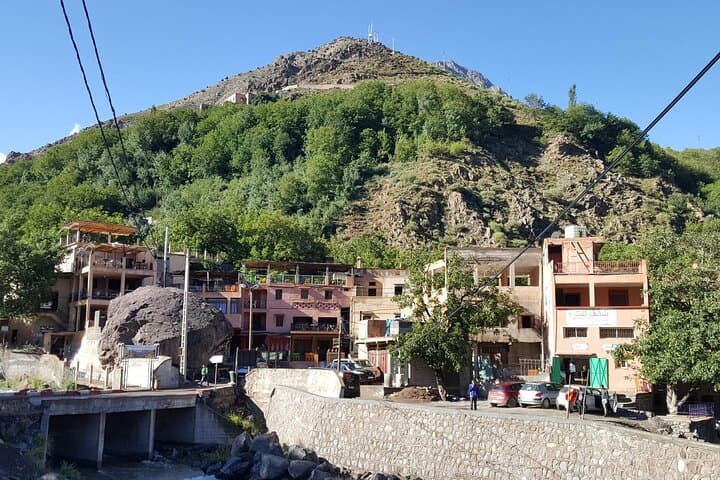
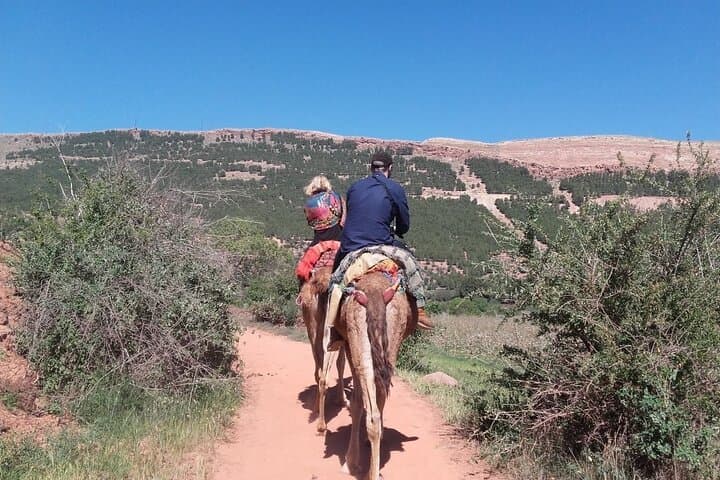
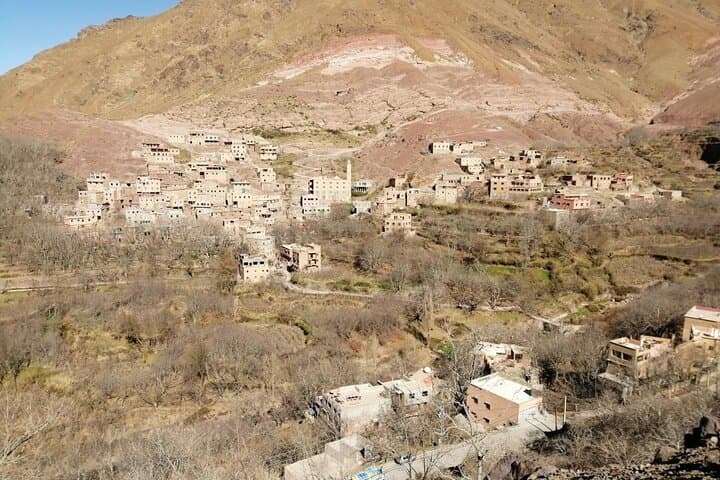
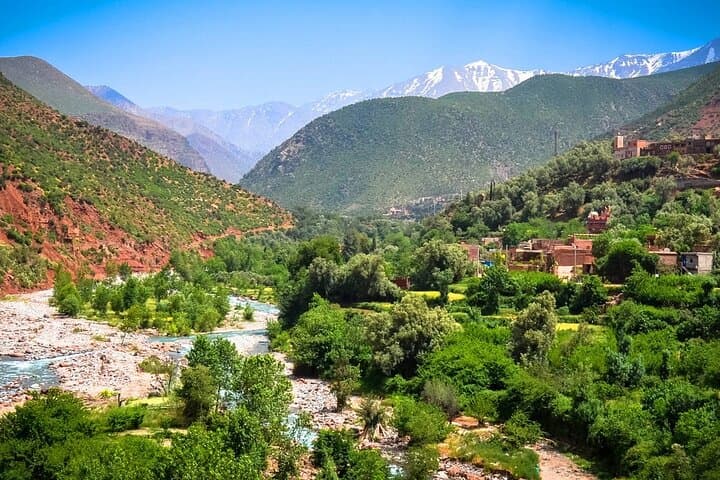
You leave Marrakech as the city’s heat thins and the road climbs into the High Atlas, cedar-scented air pushing past the van’s windows. By midmorning the valley opens—a patchwork of terraced fields, mud-brick Berber villages and a ribbon of water that dares you to follow it upstream. The first stop is a brief camel ride across scrubland, a slow, rhythmic introduction before mountain roads take you higher.
You leave Marrakech as the city’s heat thins and the road climbs into the High Atlas, cedar-scented air pushing past the van’s windows. By midmorning the valley opens—a patchwork of terraced fields, mud-brick Berber villages and a ribbon of water that dares you to follow it upstream. The first stop is a brief camel ride across scrubland, a slow, rhythmic introduction before mountain roads take you higher.
Geology here is blunt and old: the High Atlas rose when Africa pushed into Europe, folding hard limestone and schist into sharp ridgelines and steep-sided valleys. Human history rides those slopes too—Amazigh (Berber) villages have farmed these terraces for centuries, and women’s argan cooperatives have modernized traditional oil production without losing the craft.
You’ll visit a waterfall—cool spray and a short walk on uneven paths—then a cooperative to see argan nuts turned into oil, and finally a family home in Imlil for a lunch of tagine and mint tea. The route spends time at roughly 1,800 meters and includes short walks on dirt tracks and stone steps; the pace is relaxed but the terrain is rocky.
Practical guide: plan for an eight-hour day, start early to avoid afternoon crowds, bring cash for small purchases and coop souvenirs, and wear layered clothing and solid footwear for uneven surfaces. Hydrate at regular intervals; mountain air can feel dry and sun intense even when cool. The trip balances cultural insight with accessible outdoor time—ideal for travelers wanting a single-day Atlas immersion without technical hiking.