THE ADVENTURE COLLECTIVE® · Independent discovery and booking for outdoor travel

Escape Marrakech for a full-day venture into the High Atlas: three valleys, a waterfall walk, a Berber tea, a camel ride and a tagine lunch. This accessible day trip blends short hikes with cultural stops ideal for active travelers wanting a taste of mountain life.
Escape Marrakech for a full-day venture into the High Atlas: three valleys, a waterfall walk, a Berber tea, a camel ride and a tagine lunch. This accessible day trip blends short hikes with cultural stops ideal for active travelers wanting a taste of mountain life.
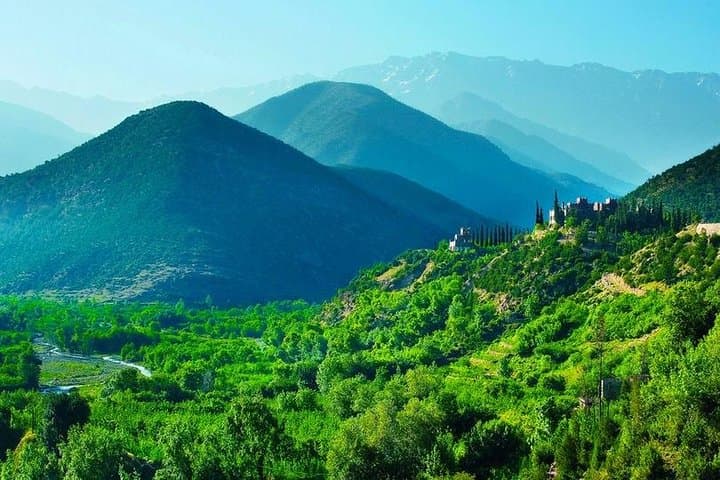
Morning light slices the jagged ridgelines of the High Atlas as a minibus leaves Marrakech and climbs toward the villages east of Toubkal. By midmorning you’re walking narrow mule tracks through Imlil’s terraced gardens, the air cooler and smelling of cedar and tea; a distant stream dares you to follow it upstream toward a small cascade.
Verified experiences and guided adventures in the surrounding area.
Operated by Ando Travel SARL · Imlil, Marrakech-Safi
Morning light slices the jagged ridgelines of the High Atlas as a minibus leaves Marrakech and climbs toward the villages east of Toubkal. By midmorning you’re walking narrow mule tracks through Imlil’s terraced gardens, the air cooler and smelling of cedar and tea; a distant stream dares you to follow it upstream toward a small cascade.
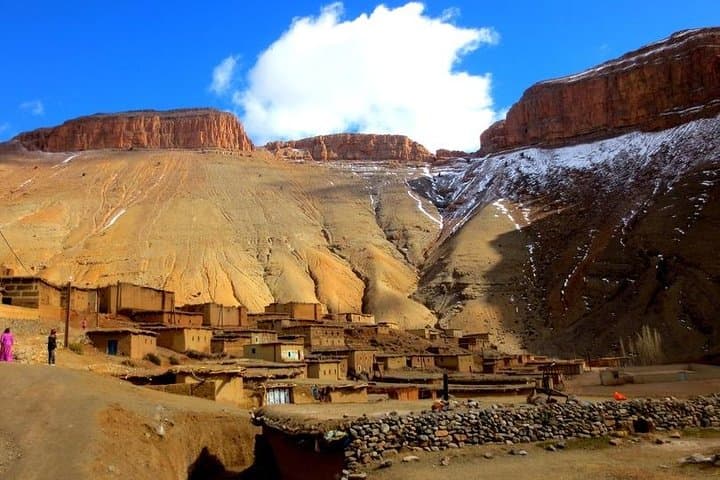
The route threads through the Asni, Moulay Brahim and Amizmiz valleys—zones shaped by glacial carving and centuries of terracing that support Amazigh (Berber) communities. Imlil sits around 1,740 meters while the Toubkal massif towers to 4,167 meters, a reminder of rapid elevation changes and hard, ancient rock. Local villages have long traded livestock and argan oil; today small cooperatives and teahouses preserve those links while welcoming visitors.
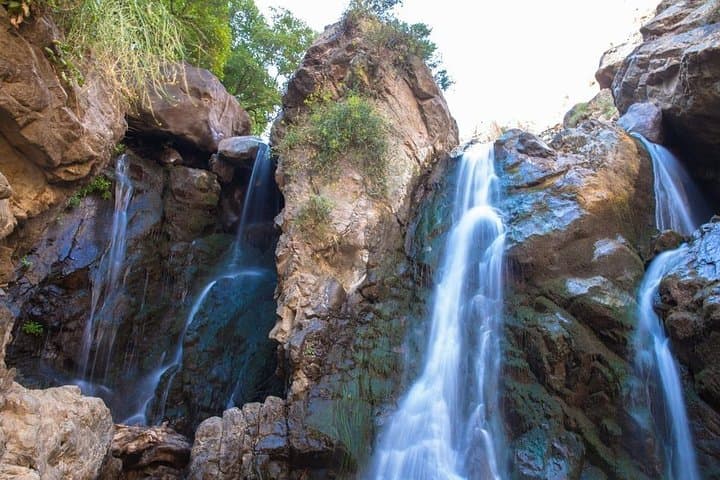
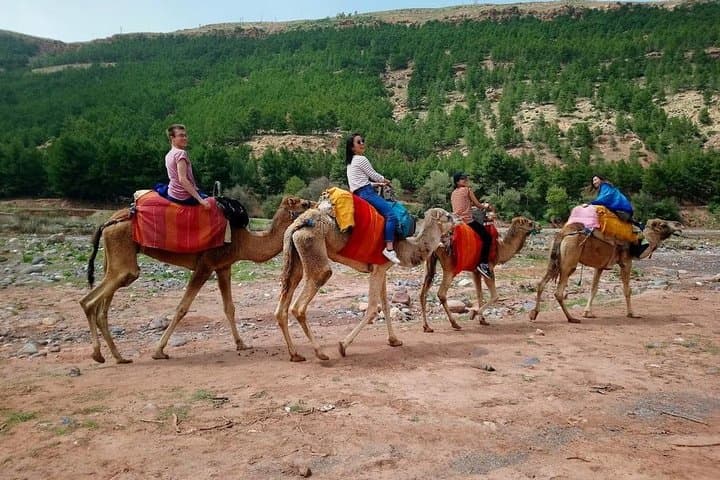
Expect short village walks (15–60 minutes each), a 20–30 minute walk to the main waterfall, and a brief camel ride that’s more novelty than long-distance travel. Terrain varies from paved village lanes to rocky, uneven footpaths; loose scree appears on steeper flanks. Guides typically include a tea visit with a Berber family and a tagine lunch stop.
Practical side: wear broken-in hiking shoes, carry 1–2 liters of water, and pack sun protection and a light insulating layer for higher elevations. Start early to avoid midafternoon heat and give yourself time for photo stops and the cooperative visit. Cash is useful for small purchases and tipping. With moderate walking and cultural stops, the day balances scenery, short hikes and hands-on local encounters.
moderate.
8 hours.
Suitable for travelers who can walk up to 2–4 miles total on uneven ground and tolerate short uphill sections
Walking is intermittent: short village strolls, a 20–30 minute approach to the main waterfall, and easy paths totaling roughly 2–4 miles spread across the day.
No—the camel ride is a short, guided experience near the cooperative or valley edges intended for photos and novelty rather than long treks.
A traditional tagine or couscous lunch is offered on the route (often at an extra cost); tea with a Berber family is usually included—confirm when booking.
The tour is family-friendly for children who can manage short walks; it’s not recommended for pregnant travelers due to uneven terrain and the camel ride.
The valleys are traditional Amazigh (Berber) lands shaped by centuries of terrace farming and trade routes around Toubkal, Morocco’s highest peak.
Respect trail routes and local water sources; support village cooperatives and avoid single-use plastics to reduce visitor impact.
Ando Travel SARL operates guided outdoor trips and adventures with an emphasis on safety, stewardship, and memorable experiences.
Morning light slices the jagged ridgelines of the High Atlas as a minibus leaves Marrakech and climbs toward the villages east of Toubkal. By midmorning you’re walking narrow mule tracks through Imlil’s terraced gardens, the air cooler and smelling of cedar and tea; a distant stream dares you to follow it upstream toward a small cascade.
Morning light slices the jagged ridgelines of the High Atlas as a minibus leaves Marrakech and climbs toward the villages east of Toubkal. By midmorning you’re walking narrow mule tracks through Imlil’s terraced gardens, the air cooler and smelling of cedar and tea; a distant stream dares you to follow it upstream toward a small cascade.
The route threads through the Asni, Moulay Brahim and Amizmiz valleys—zones shaped by glacial carving and centuries of terracing that support Amazigh (Berber) communities. Imlil sits around 1,740 meters while the Toubkal massif towers to 4,167 meters, a reminder of rapid elevation changes and hard, ancient rock. Local villages have long traded livestock and argan oil; today small cooperatives and teahouses preserve those links while welcoming visitors.
Expect short village walks (15–60 minutes each), a 20–30 minute walk to the main waterfall, and a brief camel ride that’s more novelty than long-distance travel. Terrain varies from paved village lanes to rocky, uneven footpaths; loose scree appears on steeper flanks. Guides typically include a tea visit with a Berber family and a tagine lunch stop.
Practical side: wear broken-in hiking shoes, carry 1–2 liters of water, and pack sun protection and a light insulating layer for higher elevations. Start early to avoid midafternoon heat and give yourself time for photo stops and the cooperative visit. Cash is useful for small purchases and tipping. With moderate walking and cultural stops, the day balances scenery, short hikes and hands-on local encounters.