THE ADVENTURE COLLECTIVE® · Independent discovery and booking for outdoor travel

A full-day escape from Marrakech into the High Atlas: meet Berber villagers, ride a camel, visit an argan cooperative and hike to waterfalls and ridge-top views. Practical for fit beginners and rich in cultural contact.
A full-day escape from Marrakech into the High Atlas: meet Berber villagers, ride a camel, visit an argan cooperative and hike to waterfalls and ridge-top views. Practical for fit beginners and rich in cultural contact.
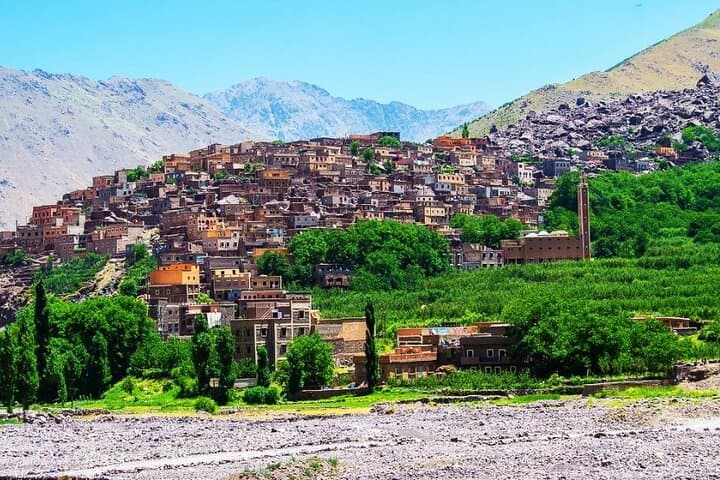
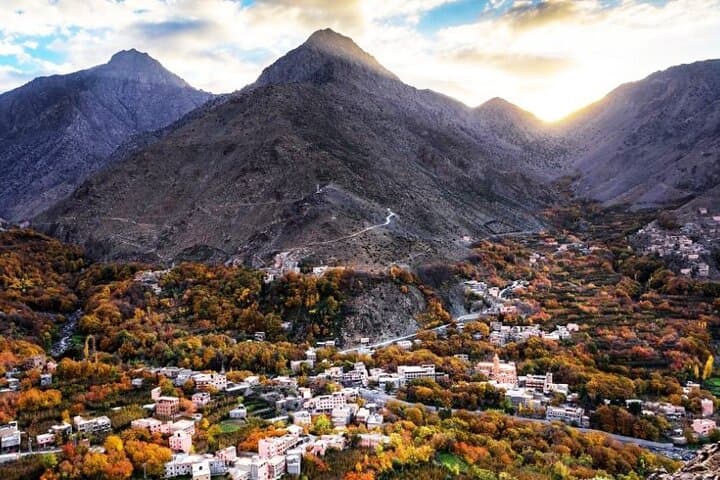
You step out of the air-conditioned van and the air shifts—drier, threaded with thyme smoke and the low murmur of a valley. The High Atlas rises in layered ridges, light sliding off shale and scree as you follow a narrow track into villages that still mark time by livestock and market days.
Verified experiences and guided adventures in the surrounding area.
Operated by Marrakech Outdoor Trips · Imlil, Marrakech-Safi
You step out of the air-conditioned van and the air shifts—drier, threaded with thyme smoke and the low murmur of a valley. The High Atlas rises in layered ridges, light sliding off shale and scree as you follow a narrow track into villages that still mark time by livestock and market days.
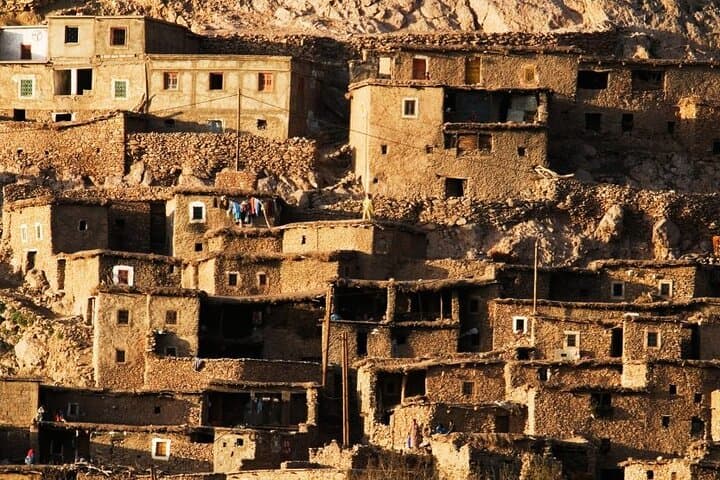
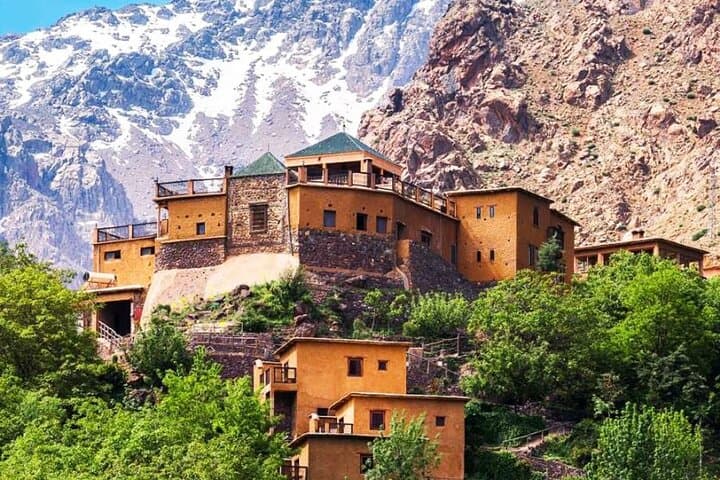
The route traces centuries of transhumance and local commerce: Berber (Amazigh) communities shaped these slopes with terraced fields and stone homes. Geologically, the High Atlas is a young fold mountain range—steep valleys and quick elevation gain produce sudden viewpoints and pockets of cedar and almond orchards. Cultural touchstones are immediate: an argan cooperative where women press oil, a weekly souk of Aroumd where trade remains face-to-face, and a rooftop lunch that turns a family kitchen into a theater of mint tea and tagine.
On the trail expect mixed terrain—packed dirt, rocky switchbacks, and small streams that will dare you to cross on stepping-stones. The guided hike to roughly 1,950 m is steady rather than technical; the camel ride adds a short, photogenic flavor of desert-adapted transport.
Practical guidance: start early to avoid mid-afternoon heat, carry 1–1.5 liters of water and a sun layer, and bring cash for small purchases at cooperatives and the market. Respect local customs—ask before photographing people—and keep to worn paths to limit erosion. The day trip balances cultural immersion with accessible mountain hiking, making it a compact, rewarding escape from Marrakech.
moderate.
7–8 hours.
Suitable for hikers with moderate fitness—expect steady uphill walking and uneven terrain; not technical but involves altitude gain.
The guided hike portion typically takes 1.5–2 hours one way with steady uphill walking to about 1,950 m; it's non-technical but requires a moderate level of fitness.
Yes—pick-up and drop-off in Marrakech are standard; the full day is about 7–8 hours including driving time.
The advertised camel experience is short—around 20–30 minutes—primarily for photos and a different perspective, not long-distance travel.
Lunch with a local Berber family is included; guides can often accommodate common dietary requests if notified in advance.
The High Atlas has long been home to Amazigh (Berber) communities; villages and market patterns reflect centuries of mountain agriculture and seasonal trade.
This region's fragile soil and limited water mean stick-to-trails practices matter; support local cooperatives to keep tourism benefits in-community.
Marrakech Outdoor Trips operates guided outdoor trips and adventures with an emphasis on safety, stewardship, and memorable experiences.
You step out of the air-conditioned van and the air shifts—drier, threaded with thyme smoke and the low murmur of a valley. The High Atlas rises in layered ridges, light sliding off shale and scree as you follow a narrow track into villages that still mark time by livestock and market days.
You step out of the air-conditioned van and the air shifts—drier, threaded with thyme smoke and the low murmur of a valley. The High Atlas rises in layered ridges, light sliding off shale and scree as you follow a narrow track into villages that still mark time by livestock and market days.
The route traces centuries of transhumance and local commerce: Berber (Amazigh) communities shaped these slopes with terraced fields and stone homes. Geologically, the High Atlas is a young fold mountain range—steep valleys and quick elevation gain produce sudden viewpoints and pockets of cedar and almond orchards. Cultural touchstones are immediate: an argan cooperative where women press oil, a weekly souk of Aroumd where trade remains face-to-face, and a rooftop lunch that turns a family kitchen into a theater of mint tea and tagine.
On the trail expect mixed terrain—packed dirt, rocky switchbacks, and small streams that will dare you to cross on stepping-stones. The guided hike to roughly 1,950 m is steady rather than technical; the camel ride adds a short, photogenic flavor of desert-adapted transport.
Practical guidance: start early to avoid mid-afternoon heat, carry 1–1.5 liters of water and a sun layer, and bring cash for small purchases at cooperatives and the market. Respect local customs—ask before photographing people—and keep to worn paths to limit erosion. The day trip balances cultural immersion with accessible mountain hiking, making it a compact, rewarding escape from Marrakech.