THE ADVENTURE COLLECTIVE® · Independent discovery and booking for outdoor travel

Escape Marrakech for an evening in the Agafay Desert — a sunset camel ride across rocky plains followed by a traditional Berber dinner and live music beneath the stars. Practical, atmospheric, and family-friendly, this half-day trip highlights desert views without overnight camping.
Escape Marrakech for an evening in the Agafay Desert — a sunset camel ride across rocky plains followed by a traditional Berber dinner and live music beneath the stars. Practical, atmospheric, and family-friendly, this half-day trip highlights desert views without overnight camping.
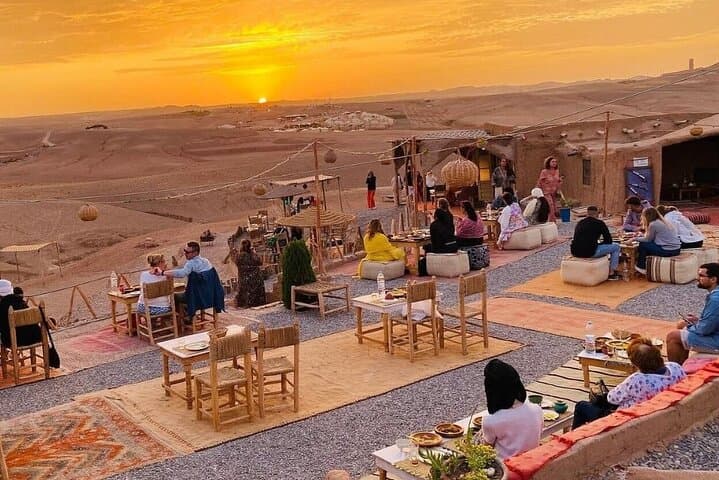
The road out of Marrakech gives up its bustle and, within an hour, the city’s noise thins to a steady hum. You arrive at Agafay — a pale, rocky expanse where low hills catch the sun and the air cools fast once the light slips. Camels line up like patient collectors of footprints; their slow sway becomes the evening’s metronome as you cross the stony dunes and watch the skyline paint itself in ochre and gold.
Verified experiences and guided adventures in the surrounding area.
Operated by Atlas trails · Marrakech, Marrakech-Safi
The road out of Marrakech gives up its bustle and, within an hour, the city’s noise thins to a steady hum. You arrive at Agafay — a pale, rocky expanse where low hills catch the sun and the air cools fast once the light slips. Camels line up like patient collectors of footprints; their slow sway becomes the evening’s metronome as you cross the stony dunes and watch the skyline paint itself in ochre and gold.
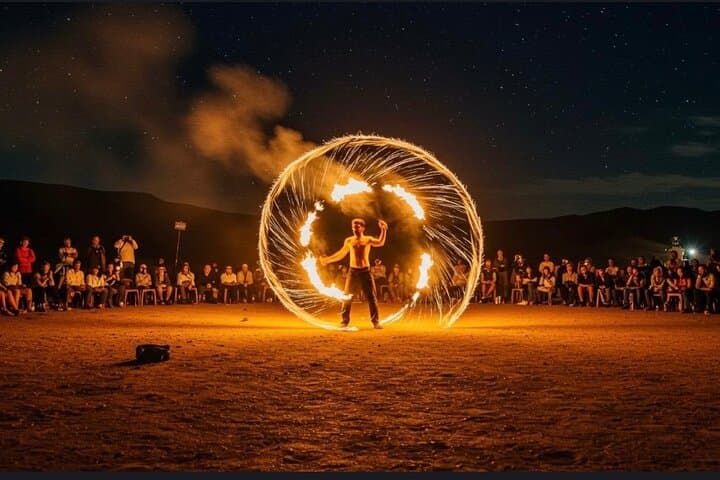
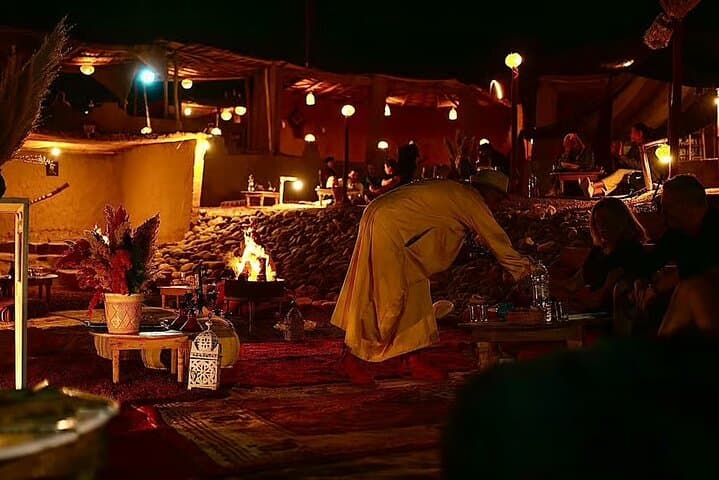
Geologically the Agafay is a reg — a stone desert formed by ancient alluvial deposits rather than soft sand dunes, so the surface is compact and peppered with scrub. Culturally, this is Berber country: hosts serve mint tea and tagine beneath nomadic tents, and the musical rhythms you hear around the fire are regional folk traditions adapted for visitors.
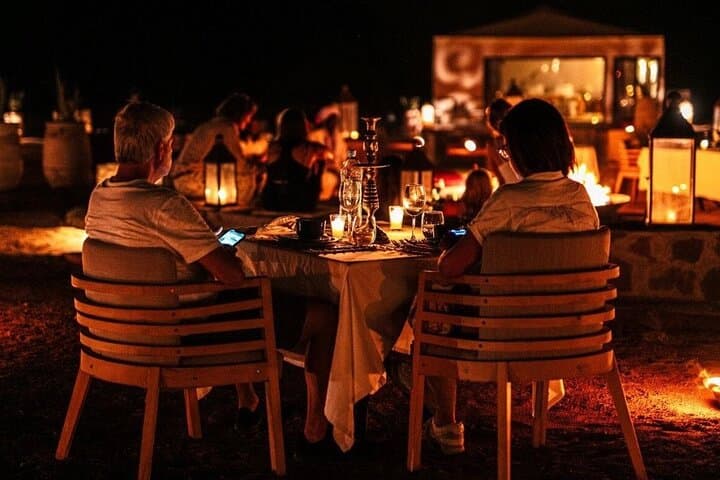
The experience balances easy motion with sensory richness: short camel saddles, a communal meal under the stars, and live music that warms the camp as temperatures dip. Expect pastoral vistas rather than wide sea-like dunes; the desert’s quiet pushes conversations softer and leaves room for stargazing.
Practical guidance: wear closed-toe shoes for the camel mount and bring a light layer — desert nights get chilly. Hydrate before departure; there’s tea and water at camp, but the transfer is about an hour each way. If you’re photographing the sunset, arrive early to scout low-angle compositions and be prepared for dust. The operation typically returns to Marrakech around 22:00, making this an accessible, low-effort evening escape from the city.
easy.
6 hours.
Suitable for most fitness levels; involves short periods of mounting and riding a camel and light walking at camp.
Transfer time is roughly 40–60 minutes each way depending on traffic and whether the tour stops at Takerkoust Lake.
Yes—children can ride, but infants should sit on laps and operators may have age or weight limits for safety.
Yes—most operators can accommodate vegetarian requests if notified in advance through booking questions.
The rocky approach and camel mounting make full wheelchair access limited; contact the operator to discuss accommodations.
The Agafay region sits on the fringes of the High Atlas’ erosional plains and has long hosted nomadic routes and seasonal grazing used by Berber communities.
Water is scarce and the landscape is fragile—support local operators who minimize waste, avoid off-track driving, and respect grazing lands.
Atlas trails operates guided outdoor trips and adventures with an emphasis on safety, stewardship, and memorable experiences.
The road out of Marrakech gives up its bustle and, within an hour, the city’s noise thins to a steady hum. You arrive at Agafay — a pale, rocky expanse where low hills catch the sun and the air cools fast once the light slips. Camels line up like patient collectors of footprints; their slow sway becomes the evening’s metronome as you cross the stony dunes and watch the skyline paint itself in ochre and gold.
The road out of Marrakech gives up its bustle and, within an hour, the city’s noise thins to a steady hum. You arrive at Agafay — a pale, rocky expanse where low hills catch the sun and the air cools fast once the light slips. Camels line up like patient collectors of footprints; their slow sway becomes the evening’s metronome as you cross the stony dunes and watch the skyline paint itself in ochre and gold.
Geologically the Agafay is a reg — a stone desert formed by ancient alluvial deposits rather than soft sand dunes, so the surface is compact and peppered with scrub. Culturally, this is Berber country: hosts serve mint tea and tagine beneath nomadic tents, and the musical rhythms you hear around the fire are regional folk traditions adapted for visitors.
The experience balances easy motion with sensory richness: short camel saddles, a communal meal under the stars, and live music that warms the camp as temperatures dip. Expect pastoral vistas rather than wide sea-like dunes; the desert’s quiet pushes conversations softer and leaves room for stargazing.
Practical guidance: wear closed-toe shoes for the camel mount and bring a light layer — desert nights get chilly. Hydrate before departure; there’s tea and water at camp, but the transfer is about an hour each way. If you’re photographing the sunset, arrive early to scout low-angle compositions and be prepared for dust. The operation typically returns to Marrakech around 22:00, making this an accessible, low-effort evening escape from the city.