THE ADVENTURE COLLECTIVE® · Independent discovery and booking for outdoor travel

Watch the sun slide behind the Atlas on a gentle camel ride across the stony Agafay plateau, then settle into a traditional dinner as the desert cools. This accessible evening trip combines short desert exploration, local cuisine, and sunset photography opportunities.
Watch the sun slide behind the Atlas on a gentle camel ride across the stony Agafay plateau, then settle into a traditional dinner as the desert cools. This accessible evening trip combines short desert exploration, local cuisine, and sunset photography opportunities.
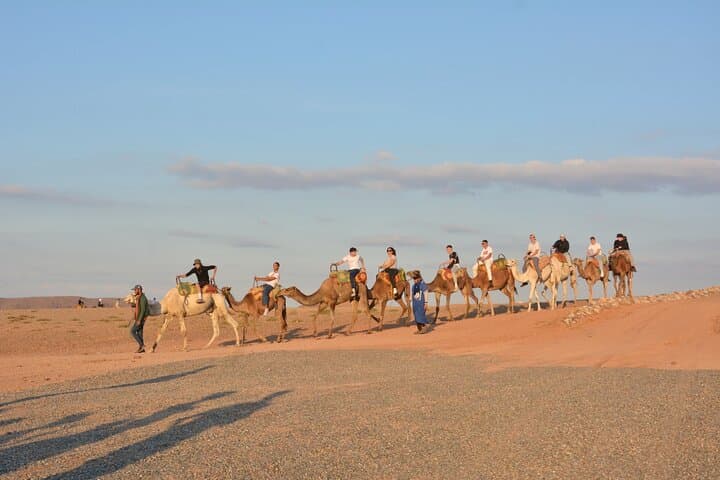
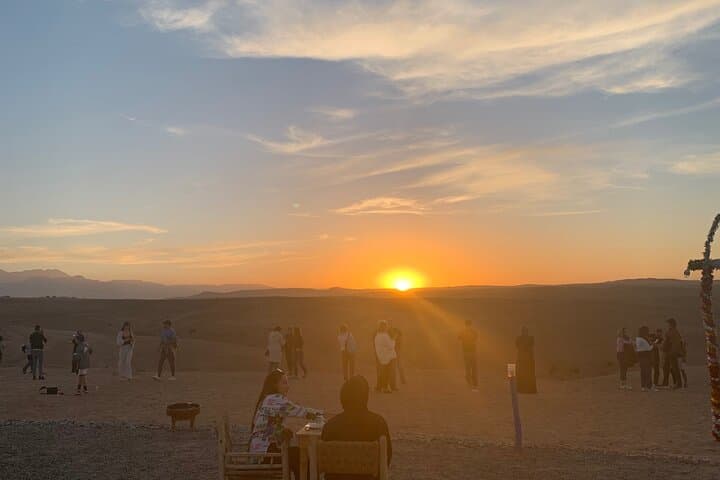
A low, pale sun slides behind the Atlas foothills as your convoy leaves Marrakech; the Agafay’s stony plains stretch out like a muted ocean, and the camel’s slow sway sets the rhythm. The first steps across the hamada—hard-packed rock and peppered scrub—feel deliberate: wind nudges the dust, and the horizon pulls you westward.
Verified experiences and guided adventures in the surrounding area.
Operated by Tours Around Morocco · Marrakech, Marrakesh-Safi
A low, pale sun slides behind the Atlas foothills as your convoy leaves Marrakech; the Agafay’s stony plains stretch out like a muted ocean, and the camel’s slow sway sets the rhythm. The first steps across the hamada—hard-packed rock and peppered scrub—feel deliberate: wind nudges the dust, and the horizon pulls you westward.
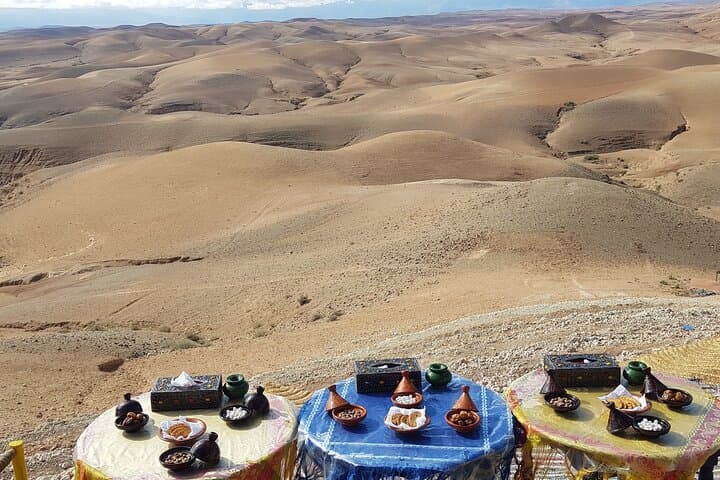
Geologically the Agafay is not sand dunes but a stony desert carved by wind and ancient rivers, an expanse of weathered rocks and terraces. Culturally, it has long supported seasonal grazing and is a canvas for local Berber hospitality—many sunset camps and dinners use traditional tagines, music, and mint tea to frame the experience.
Expect an accessible, sensory evening: camels for a short guided ride, a sunset viewpoint that washes the plateau in warm light, then a seated dinner in a fenced camp beneath a wide sky. Conversation often drifts to Atlas peaks now darkening to the south while local musicians play.
Practical guidance: plan for temperature swings—hot days and chilly desert nights—bring layers and closed-toe shoes for uneven ground. Hydrate before you go; rides are gentle but require steady footing mounting and dismounting. If you want photographs, aim for the last 20 minutes of light when colors peak. Respect private camp areas, accept local customs at meal times, and follow guides’ briefings on camel handling. The whole outing typically runs four to five hours and is suitable for most travelers seeking an evening outdoors with cultural flavors and uncomplicated adventure.
easy.
4–5 hours.
Minimal fitness required—able to mount a camel and walk short distances unassisted
Yes—rides are short and paced slowly; operators typically provide assistance mounting and dismounting, but check age or weight limits when booking.
Dinner usually features Moroccan dishes such as tagine, salads, bread, and mint tea; vegetarian options are commonly available with prior notice.
Most tours time departure from Marrakech to arrive roughly 45–60 minutes before sunset to allow a short ride and a prime viewpoint for photographs.
Many operators include round-trip air-conditioned transport; confirm pick-up/drop-off details and meeting point when booking.
The Agafay is a rocky 'hamada' shaped by erosion rather than a sand dune desert; its proximity to Marrakech made it traditional grazing land and, more recently, a site for evening camps and tourism.
Water is scarce—use supplies responsibly, avoid single-use plastics, and follow guides’ instructions to minimize impact on vegetation and local sites.
Tours Around Morocco operates guided outdoor trips and adventures with an emphasis on safety, stewardship, and memorable experiences.
A low, pale sun slides behind the Atlas foothills as your convoy leaves Marrakech; the Agafay’s stony plains stretch out like a muted ocean, and the camel’s slow sway sets the rhythm. The first steps across the hamada—hard-packed rock and peppered scrub—feel deliberate: wind nudges the dust, and the horizon pulls you westward.
A low, pale sun slides behind the Atlas foothills as your convoy leaves Marrakech; the Agafay’s stony plains stretch out like a muted ocean, and the camel’s slow sway sets the rhythm. The first steps across the hamada—hard-packed rock and peppered scrub—feel deliberate: wind nudges the dust, and the horizon pulls you westward.
Geologically the Agafay is not sand dunes but a stony desert carved by wind and ancient rivers, an expanse of weathered rocks and terraces. Culturally, it has long supported seasonal grazing and is a canvas for local Berber hospitality—many sunset camps and dinners use traditional tagines, music, and mint tea to frame the experience.
Expect an accessible, sensory evening: camels for a short guided ride, a sunset viewpoint that washes the plateau in warm light, then a seated dinner in a fenced camp beneath a wide sky. Conversation often drifts to Atlas peaks now darkening to the south while local musicians play.
Practical guidance: plan for temperature swings—hot days and chilly desert nights—bring layers and closed-toe shoes for uneven ground. Hydrate before you go; rides are gentle but require steady footing mounting and dismounting. If you want photographs, aim for the last 20 minutes of light when colors peak. Respect private camp areas, accept local customs at meal times, and follow guides’ briefings on camel handling. The whole outing typically runs four to five hours and is suitable for most travelers seeking an evening outdoors with cultural flavors and uncomplicated adventure.