THE ADVENTURE COLLECTIVE® · Independent discovery and booking for outdoor travel

Escape Marrakech for a five‑hour evening in the rocky Agafay Desert: a short camel trek at sunset, a three‑course Moroccan dinner in a nomad tent, and live Berber music beneath the stars. Practical pickup, simple terrain, and a culture‑forward finale make it an easy desert introduction.
Escape Marrakech for a five‑hour evening in the rocky Agafay Desert: a short camel trek at sunset, a three‑course Moroccan dinner in a nomad tent, and live Berber music beneath the stars. Practical pickup, simple terrain, and a culture‑forward finale make it an easy desert introduction.
The sun sits low over the Agafay’s stony plains as a column of dust marks the road back to Marrakech. Guests arrive by air‑conditioned vehicle and step into a different pace: hard-packed earth, skeletal scrub, and the distant silhouette of the High Atlas. A short camel trek guides visitors across the rocky hamada just before color drains from the sky, then the group settles into a camp tent for a three‑course Moroccan dinner and live Berber music.
Verified experiences and guided adventures in the surrounding area.
Operated by Go Discover Morocco · Marrakech, Marrakech-Safi
The sun sits low over the Agafay’s stony plains as a column of dust marks the road back to Marrakech. Guests arrive by air‑conditioned vehicle and step into a different pace: hard-packed earth, skeletal scrub, and the distant silhouette of the High Atlas. A short camel trek guides visitors across the rocky hamada just before color drains from the sky, then the group settles into a camp tent for a three‑course Moroccan dinner and live Berber music.
Geologically the Agafay is a rocky desert of compacted alluvial deposits rather than sand dunes, shaped by millennia of erosion and the Atlas watershed. Culturally it’s a modern waypoint for travelers seeking a taste of Amazigh (Berber) hospitality—many camps partner with local cooperatives, showcasing crafts and cuisine that draw on village traditions outside Marrakech.
Practical notes: the experience runs about five hours with hotel pickup and drop‑off; timing is arranged to catch sunset, so plan for evening temperatures to drop. Footwear should be sturdy and closed‑toe for mounting camels and walking on uneven rock; layers are necessary once night falls. Bring water, a small headlamp or flashlight, a camera with spare battery, and modest clothing that respects local norms.
The outing is low‑impact and accessible to most fitness levels, though it includes short camel handling and low walking. Support local vendors, avoid single‑use plastics at camp, and keep noise low to preserve night wildlife and the camp’s atmosphere.
easy.
5 hours.
Suitable for most travelers; requires short camel mounting and light walking on uneven rocky terrain.
Pickup from central Marrakech typically takes 30–60 minutes depending on traffic and exact meeting point.
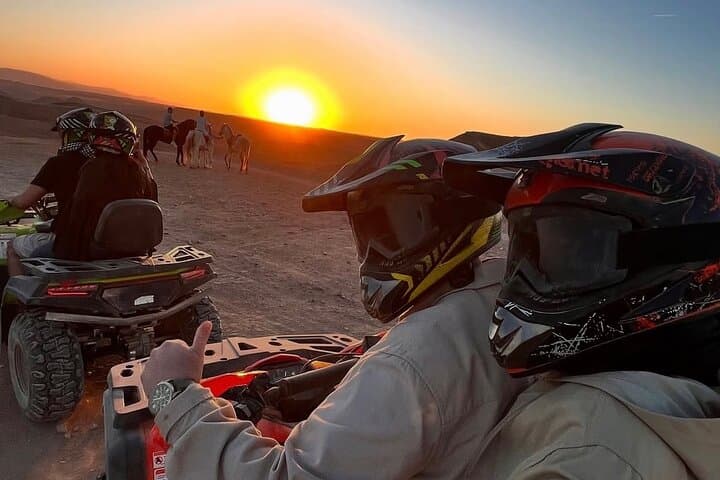
Camel rides are commonly included; quad biking may be offered as an optional activity at some camps—confirm availability when booking.
Yes; the tour is low intensity and wheelchair‑accessible facilities are often available, but camel mounting may require assistance for some guests.
A three‑course Moroccan dinner is provided along with Moroccan tea and water; alcohol availability varies by operator.
The Agafay area is a stony hamada shaped by ancient alluvial deposits; modern camps draw on Amazigh (Berber) cultural traditions that have long populated the Atlas foothills.
Camps vary in sustainability practices—choose operators who minimize single‑use plastics, manage water carefully, and support local cooperatives to reduce tourism impact.
Go Discover Morocco operates guided outdoor trips and adventures with an emphasis on safety, stewardship, and memorable experiences.
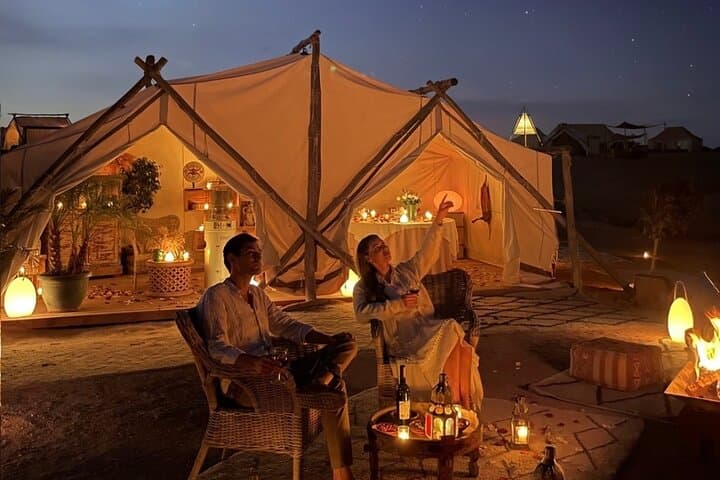
The sun sits low over the Agafay’s stony plains as a column of dust marks the road back to Marrakech. Guests arrive by air‑conditioned vehicle and step into a different pace: hard-packed earth, skeletal scrub, and the distant silhouette of the High Atlas. A short camel trek guides visitors across the rocky hamada just before color drains from the sky, then the group settles into a camp tent for a three‑course Moroccan dinner and live Berber music.
The sun sits low over the Agafay’s stony plains as a column of dust marks the road back to Marrakech. Guests arrive by air‑conditioned vehicle and step into a different pace: hard-packed earth, skeletal scrub, and the distant silhouette of the High Atlas. A short camel trek guides visitors across the rocky hamada just before color drains from the sky, then the group settles into a camp tent for a three‑course Moroccan dinner and live Berber music.
Geologically the Agafay is a rocky desert of compacted alluvial deposits rather than sand dunes, shaped by millennia of erosion and the Atlas watershed. Culturally it’s a modern waypoint for travelers seeking a taste of Amazigh (Berber) hospitality—many camps partner with local cooperatives, showcasing crafts and cuisine that draw on village traditions outside Marrakech.
Practical notes: the experience runs about five hours with hotel pickup and drop‑off; timing is arranged to catch sunset, so plan for evening temperatures to drop. Footwear should be sturdy and closed‑toe for mounting camels and walking on uneven rock; layers are necessary once night falls. Bring water, a small headlamp or flashlight, a camera with spare battery, and modest clothing that respects local norms.
The outing is low‑impact and accessible to most fitness levels, though it includes short camel handling and low walking. Support local vendors, avoid single‑use plastics at camp, and keep noise low to preserve night wildlife and the camp’s atmosphere.