THE ADVENTURE COLLECTIVE® · Independent discovery and booking for outdoor travel

Ride a camel across the rocky Agafay Desert at sunset, then settle into a desert camp for authentic Moroccan dinner and optional live music. This half-day excursion pairs dramatic views of the Atlas with accessible desert hospitality.
Ride a camel across the rocky Agafay Desert at sunset, then settle into a desert camp for authentic Moroccan dinner and optional live music. This half-day excursion pairs dramatic views of the Atlas with accessible desert hospitality.
The sun drops behind the Atlas, and the stone plains of the Agafay Desert glow like warmed ochre under a widening sky. You climb a low dune onto a wooden saddle, the camel rising with a patient heave; the town lights of Marrakech fade, and the horizon tightens to a ribbon of mountain and dust.
Verified experiences and guided adventures in the surrounding area.
Operated by Luxury Quad Agafay · Marrakech, Marrakech-Safi
The sun drops behind the Atlas, and the stone plains of the Agafay Desert glow like warmed ochre under a widening sky. You climb a low dune onto a wooden saddle, the camel rising with a patient heave; the town lights of Marrakech fade, and the horizon tightens to a ribbon of mountain and dust.
Geology here is hardpan and scattered gravel rather than Sahara sand—an austere, wind-sculpted landscape formed by river deposits and millennia of erosion. Historically the area sits on the margins of Berber lands; tonight’s meal and music are local expressions of that culture—harira or tagine warmed by communal stoves, and optional drumming or fire displays that give a modern stage to age-old rhythms.
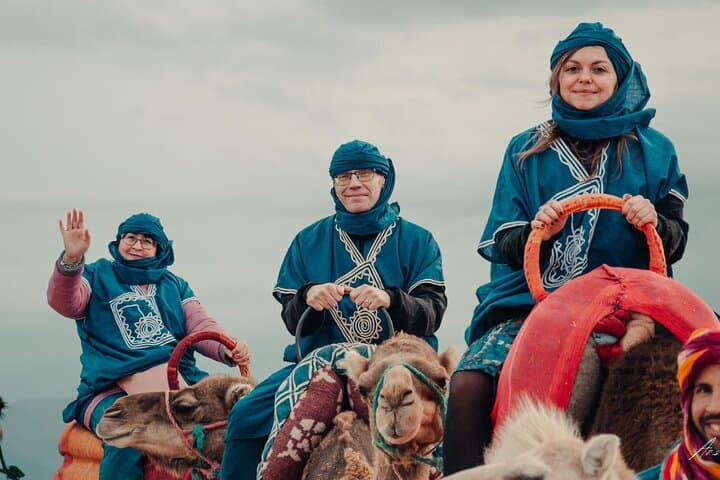
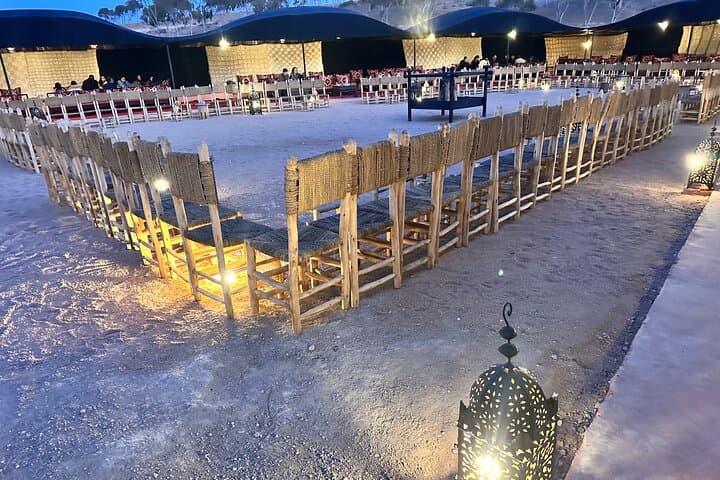
The typical excursion runs about 6–7 hours with round-trip transfer from Marrakech (roughly 45 minutes each way). Expect a gentle camel ride timed for sunset then a stroll to a camp for dinner under open sky. Entertainment varies by provider—some include Berber drumming or fire shows; others keep the night quiet with mint tea and stargazing. The terrain is rocky and uneven, so stable footwear and a steady core make the ride comfortable. Guides will often provide simple Sahrawi robes for photos and sun protection.
Practical note: tours are family-friendly but not advised for pregnant travelers or those with serious back issues. Bring layered clothing for cool desert nights, water, and a camera with spare batteries—the light changes fast. Book a pickup point in Marrakech in advance and aim to arrive with an empty stomach and an appetite for slow rhythms and warm, spiced food.
easy.
6–7 hours.
Suitable for travelers in average fitness; long transfers and camel mounts require basic mobility
Rides are usually gentle and short—typically 30–60 minutes timed for sunset, with additional walking around the camp.
Yes; most operators offer vegetarian options such as vegetable tagine and salads—notify at booking for dietary needs.
Families are welcome; infants may ride in laps and child seats may be available, but confirm age limits with the operator.
Agafay is a rocky, lunar-like stone desert near Marrakech rather than the sandy dunes of the Sahara; the experience emphasizes open views and traditional hospitality.
Agafay occupies an ancient floodplain at the foothills of the High Atlas; historically it served as grazing and seasonal transit land for Berber communities.
Operators vary—choose tours that limit camp footprint, avoid single-use plastics, and follow leave-no-trace practices to protect fragile desert soils.
Luxury Quad Agafay operates guided outdoor trips and adventures with an emphasis on safety, stewardship, and memorable experiences.
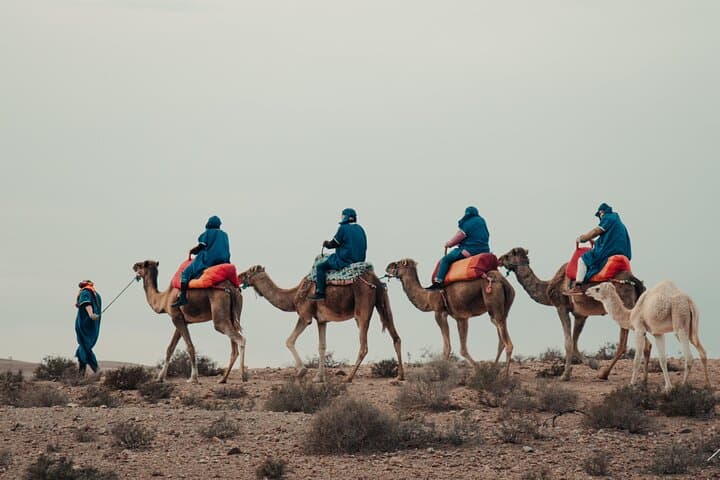
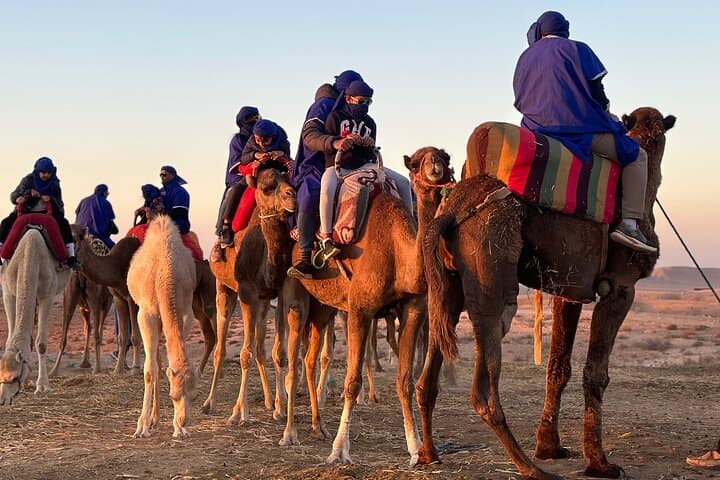
The sun drops behind the Atlas, and the stone plains of the Agafay Desert glow like warmed ochre under a widening sky. You climb a low dune onto a wooden saddle, the camel rising with a patient heave; the town lights of Marrakech fade, and the horizon tightens to a ribbon of mountain and dust.
The sun drops behind the Atlas, and the stone plains of the Agafay Desert glow like warmed ochre under a widening sky. You climb a low dune onto a wooden saddle, the camel rising with a patient heave; the town lights of Marrakech fade, and the horizon tightens to a ribbon of mountain and dust.
Geology here is hardpan and scattered gravel rather than Sahara sand—an austere, wind-sculpted landscape formed by river deposits and millennia of erosion. Historically the area sits on the margins of Berber lands; tonight’s meal and music are local expressions of that culture—harira or tagine warmed by communal stoves, and optional drumming or fire displays that give a modern stage to age-old rhythms.
The typical excursion runs about 6–7 hours with round-trip transfer from Marrakech (roughly 45 minutes each way). Expect a gentle camel ride timed for sunset then a stroll to a camp for dinner under open sky. Entertainment varies by provider—some include Berber drumming or fire shows; others keep the night quiet with mint tea and stargazing. The terrain is rocky and uneven, so stable footwear and a steady core make the ride comfortable. Guides will often provide simple Sahrawi robes for photos and sun protection.
Practical note: tours are family-friendly but not advised for pregnant travelers or those with serious back issues. Bring layered clothing for cool desert nights, water, and a camera with spare batteries—the light changes fast. Book a pickup point in Marrakech in advance and aim to arrive with an empty stomach and an appetite for slow rhythms and warm, spiced food.