THE ADVENTURE COLLECTIVE® · Independent discovery and booking for outdoor travel

Join a market tour and hands‑on cooking class in Patong that pairs ingredient lore with practical techniques. Learn to make traditional Thai curries, noodles and desserts in a small open‑kitchen setting and take home recipes and a certificate.
Join a market tour and hands‑on cooking class in Patong that pairs ingredient lore with practical techniques. Learn to make traditional Thai curries, noodles and desserts in a small open‑kitchen setting and take home recipes and a certificate.
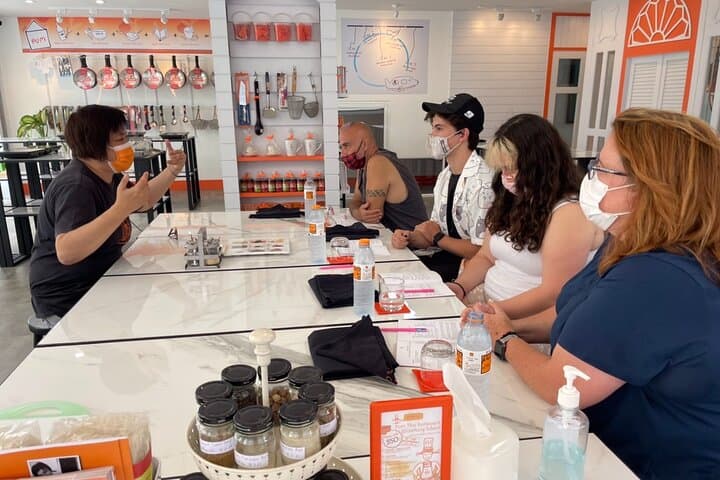
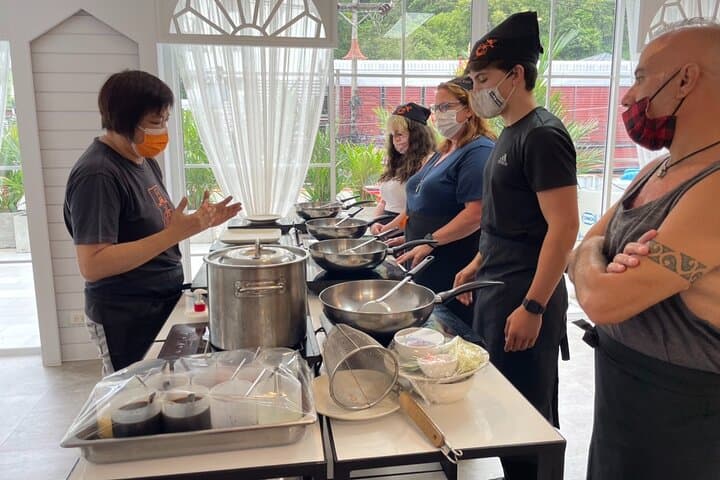
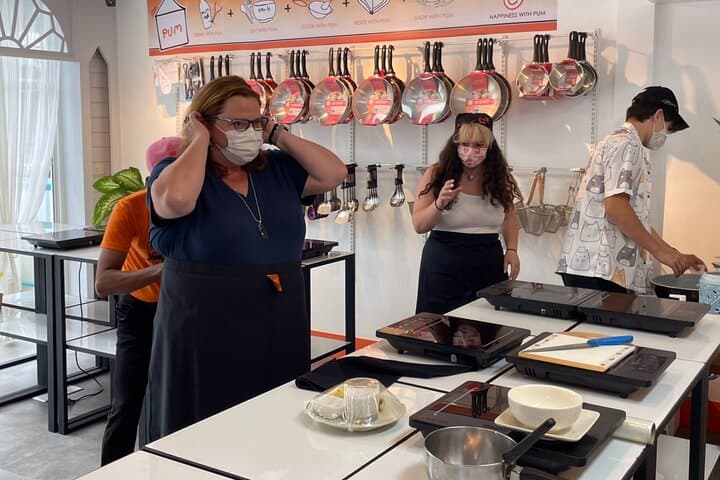
You step off a tuk‑tuk into the humid morning bustle of Patong and into a world of scents—lime, galangal, roasted coconut—before the class even begins. A short transfer delivers you to Pum Thai Cooking School, an orange shophouse with an open kitchen where stainless steel and chatter set the rhythm for the day.
Verified experiences and guided adventures in the surrounding area.
Operated by Oh-Hoo · Phuket, Phuket Province
You step off a tuk‑tuk into the humid morning bustle of Patong and into a world of scents—lime, galangal, roasted coconut—before the class even begins. A short transfer delivers you to Pum Thai Cooking School, an orange shophouse with an open kitchen where stainless steel and chatter set the rhythm for the day.
Phuket’s food culture reflects its layered history: a trading hub shaped by Chinese immigrants, tin mining wealth and Malay influences. The island’s coastline and nearby limestone karsts supplied the seafood and spices that define its plates; the market stop is where those raw stories become tangible—piles of tamarind, sacks of dried chilies and fragrant basil bunches.
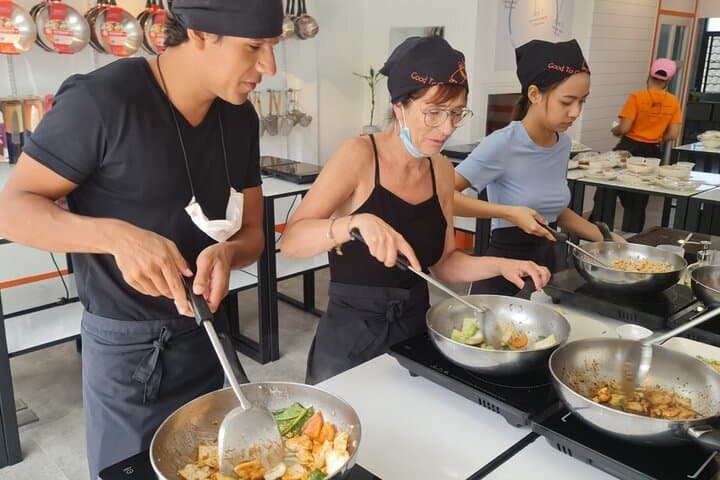
In a small-group class (max ~8–10) you’ll learn to pound curry paste by hand, balance coconut and fish sauce, and finish four mains plus a dessert—expect Panaeng, green or Massaman curries, pad thai or stir fried noodles, a spicy minced salad and mango sticky rice or steamed banana cake depending on the day.
Practicalities: the program runs roughly 5 hours including hotel pick‑up from Patong/Karon/Kata areas, English instruction and all ingredients provided. Bring appetite and a sense of curiosity; wear closed‑toe shoes for the market and breathable layers for the kitchen. If you have dietary restrictions, tell the host when booking—vegetarian and vegan adaptations are available. Leave with recipes, a certificate and the confidence to recreate Thai dishes at home.
easy.
5 hours.
Light physical demands—standing, walking short distances at a market; suitable for most fitness levels.
Yes—free pickup and drop‑off are provided for hotels in Patong, Karon and Kata; confirm exact pickup time and location after booking.
Yes—dishes with meat and fish can be adapted to vegetarian or vegan diets when requested in advance.
English instruction is available; teachers are experienced with international students and will guide hands‑on steps.
The tour requires a minimum of two participants to operate and may be cancelled with short notice if minimums aren’t met.
Phuket’s cuisine reflects its role as a trading entrepôt and tin‑mining hub, with Chinese immigrant influences and local Malay and southern Thai ingredients shaping regional dishes.
Support local vendors and sustainable seafood choices; avoid single‑use plastics at markets and ask vendors about sourcing to reduce environmental impact.
Oh-Hoo operates guided outdoor trips and adventures with an emphasis on safety, stewardship, and memorable experiences.
You step off a tuk‑tuk into the humid morning bustle of Patong and into a world of scents—lime, galangal, roasted coconut—before the class even begins. A short transfer delivers you to Pum Thai Cooking School, an orange shophouse with an open kitchen where stainless steel and chatter set the rhythm for the day.
You step off a tuk‑tuk into the humid morning bustle of Patong and into a world of scents—lime, galangal, roasted coconut—before the class even begins. A short transfer delivers you to Pum Thai Cooking School, an orange shophouse with an open kitchen where stainless steel and chatter set the rhythm for the day.
Phuket’s food culture reflects its layered history: a trading hub shaped by Chinese immigrants, tin mining wealth and Malay influences. The island’s coastline and nearby limestone karsts supplied the seafood and spices that define its plates; the market stop is where those raw stories become tangible—piles of tamarind, sacks of dried chilies and fragrant basil bunches.
In a small-group class (max ~8–10) you’ll learn to pound curry paste by hand, balance coconut and fish sauce, and finish four mains plus a dessert—expect Panaeng, green or Massaman curries, pad thai or stir fried noodles, a spicy minced salad and mango sticky rice or steamed banana cake depending on the day.
Practicalities: the program runs roughly 5 hours including hotel pick‑up from Patong/Karon/Kata areas, English instruction and all ingredients provided. Bring appetite and a sense of curiosity; wear closed‑toe shoes for the market and breathable layers for the kitchen. If you have dietary restrictions, tell the host when booking—vegetarian and vegan adaptations are available. Leave with recipes, a certificate and the confidence to recreate Thai dishes at home.