THE ADVENTURE COLLECTIVE® · Independent discovery and booking for outdoor travel

Board a three-hour boat tour from Uvita to Marino Ballena National Park for guided whale and dolphin watching, seasonal snorkeling, and coastal scenery. Peak humpback seasons run mid-July–Oct and late Dec–late Feb, though sightings vary by day.
Board a three-hour boat tour from Uvita to Marino Ballena National Park for guided whale and dolphin watching, seasonal snorkeling, and coastal scenery. Peak humpback seasons run mid-July–Oct and late Dec–late Feb, though sightings vary by day.
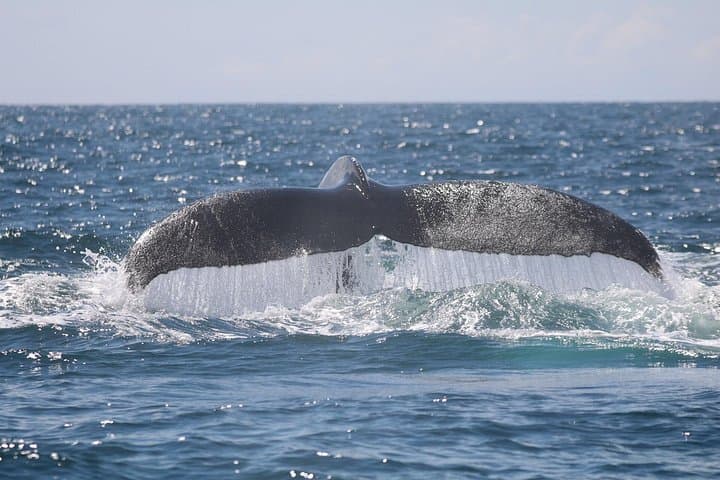
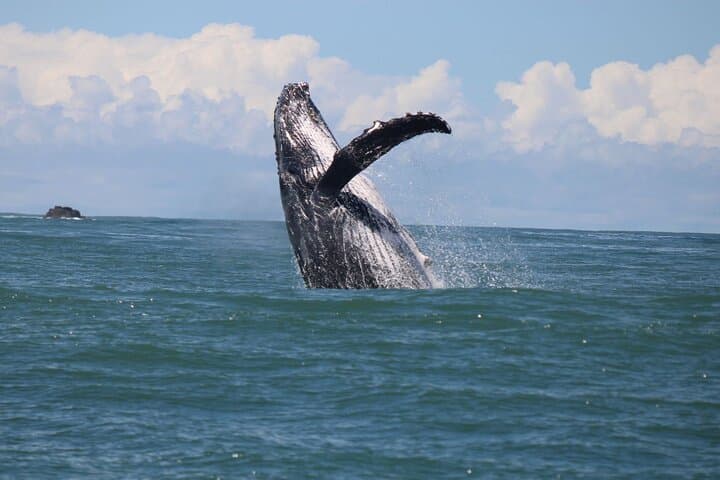
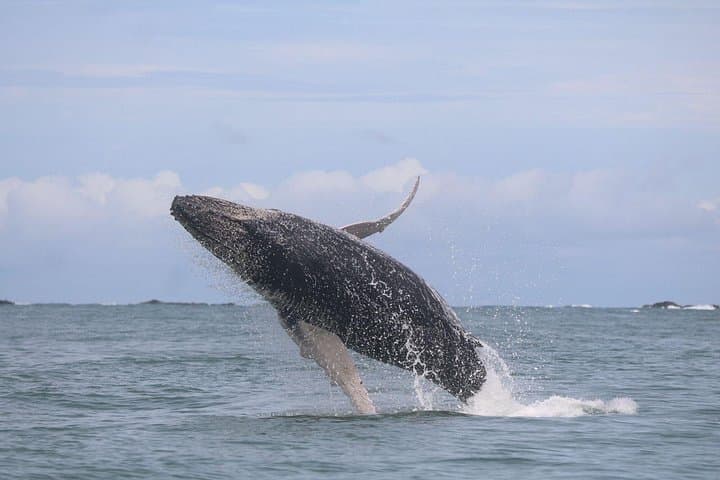
A slow wind off the Pacific teases the boat’s bow as you leave Uvita’s shore and head toward the distinctive Whale’s Tail sandbar. The coastline opens into wide water where dorsal fins and blow spouts puncture the surface—humpbacks come to breed and dolphins thread the swell with playful intelligence. The guide’s voice points out rock arches and seabirds; the ocean keeps moving, daring you to watch.
Verified experiences and guided adventures in the surrounding area.
Operated by Bahía Aventuras · Uvita, Puntarenas Province
A slow wind off the Pacific teases the boat’s bow as you leave Uvita’s shore and head toward the distinctive Whale’s Tail sandbar. The coastline opens into wide water where dorsal fins and blow spouts puncture the surface—humpbacks come to breed and dolphins thread the swell with playful intelligence. The guide’s voice points out rock arches and seabirds; the ocean keeps moving, daring you to watch.
Marino Ballena National Park was created to protect coastal and marine habitats and the migratory routes of large whales. The park’s geology—shelf-like sandbars and offshore rock formations—shapes tidal pools and the exposed Whale’s Tail at low tide. Local fishing villages and tourism around Uvita have long balanced small-scale livelihoods with growing conservation awareness; bilingual naturalist guides often discuss protected-species rules while highlighting sea turtle nesting and seabird colonies.
Practical guidance: tours run about three hours; expect binoculars and a camera with zoom. Whale sightings peak mid-July–October (Southern Hemisphere migrants) and late December–late February (Northern Hemisphere migrants), but encounters aren’t guaranteed. If sea conditions permit, the itinerary may include supervised open-water swimming and snorkeling—snorkel equipment is available seasonally. Bring reef-safe sunscreen, motion-sickness medication if you’re prone, a light waterproof layer, and a refillable water bottle. Follow your guide’s instructions for safe distances and quiet observation—boats follow regulations to minimize disturbance.
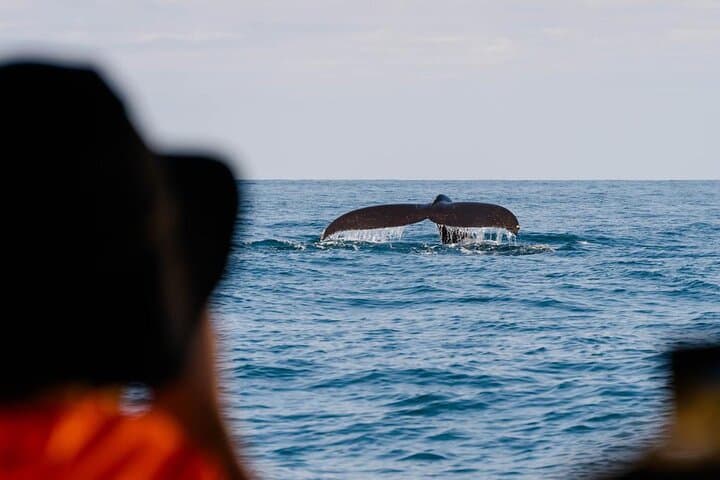
This trip pairs close wildlife viewing with coastal scenery: listen for the splash of a tail, watch dolphins cut through glassy water, and leave with a clearer sense of the marine rhythms that shape the southern Nicoya coastline.
easy.
3 hours.
Suitable for most fitness levels; ability to step on/off a small boat and stand for observation recommended.
Southern humpbacks are most common mid-July to October; Northern hemisphere whales appear late December to late February—sightings still depend on conditions.
Snorkeling and swimming are included only when sea conditions, visibility, and safety permit; snorkeling equipment is provided seasonally but confirm availability before booking.
Yes—tours are family-friendly but infants must sit on an adult’s lap; follow lifejacket rules and the crew’s safety instructions.
This tour is not recommended for pregnant travelers; check with your doctor and inform the operator of any medical conditions when booking.
Marino Ballena National Park was designated to protect key marine habitats and migratory routes in the southern Nicoya region, reflecting Costa Rica’s broader coastal conservation efforts.
Operators follow park regulations to minimize disturbance; use reef-safe products, avoid feeding wildlife, and support guides who practice low-impact viewing.
Bahía Aventuras operates guided outdoor trips and adventures with an emphasis on safety, stewardship, and memorable experiences.
A slow wind off the Pacific teases the boat’s bow as you leave Uvita’s shore and head toward the distinctive Whale’s Tail sandbar. The coastline opens into wide water where dorsal fins and blow spouts puncture the surface—humpbacks come to breed and dolphins thread the swell with playful intelligence. The guide’s voice points out rock arches and seabirds; the ocean keeps moving, daring you to watch.
A slow wind off the Pacific teases the boat’s bow as you leave Uvita’s shore and head toward the distinctive Whale’s Tail sandbar. The coastline opens into wide water where dorsal fins and blow spouts puncture the surface—humpbacks come to breed and dolphins thread the swell with playful intelligence. The guide’s voice points out rock arches and seabirds; the ocean keeps moving, daring you to watch.
Marino Ballena National Park was created to protect coastal and marine habitats and the migratory routes of large whales. The park’s geology—shelf-like sandbars and offshore rock formations—shapes tidal pools and the exposed Whale’s Tail at low tide. Local fishing villages and tourism around Uvita have long balanced small-scale livelihoods with growing conservation awareness; bilingual naturalist guides often discuss protected-species rules while highlighting sea turtle nesting and seabird colonies.
Practical guidance: tours run about three hours; expect binoculars and a camera with zoom. Whale sightings peak mid-July–October (Southern Hemisphere migrants) and late December–late February (Northern Hemisphere migrants), but encounters aren’t guaranteed. If sea conditions permit, the itinerary may include supervised open-water swimming and snorkeling—snorkel equipment is available seasonally. Bring reef-safe sunscreen, motion-sickness medication if you’re prone, a light waterproof layer, and a refillable water bottle. Follow your guide’s instructions for safe distances and quiet observation—boats follow regulations to minimize disturbance.
This trip pairs close wildlife viewing with coastal scenery: listen for the splash of a tail, watch dolphins cut through glassy water, and leave with a clearer sense of the marine rhythms that shape the southern Nicoya coastline.