THE ADVENTURE COLLECTIVE® · Independent discovery and booking for outdoor travel

Set off from Walvis Bay for a three-hour catamaran cruise to Pelican Point where dolphins, pelicans and a seal colony gather. Enjoy oysters and guided commentary while learning about the bay’s ecology and maritime history.
Set off from Walvis Bay for a three-hour catamaran cruise to Pelican Point where dolphins, pelicans and a seal colony gather. Enjoy oysters and guided commentary while learning about the bay’s ecology and maritime history.
Morning light hits the rippled surface of Walvis Bay and the catamaran slips free from the quay, the city’s industrial silhouette sliding astern. Salt air sharpens the senses; calls of terns and pelicans punctuate the engine hum as the lagoon opens toward Pelican Point and a low line of breakers where seals haul out.
Verified experiences and guided adventures in the surrounding area.
Operated by Sun Sail Catamarans · Walvis Bay, Erongo Region
Morning light hits the rippled surface of Walvis Bay and the catamaran slips free from the quay, the city’s industrial silhouette sliding astern. Salt air sharpens the senses; calls of terns and pelicans punctuate the engine hum as the lagoon opens toward Pelican Point and a low line of breakers where seals haul out.
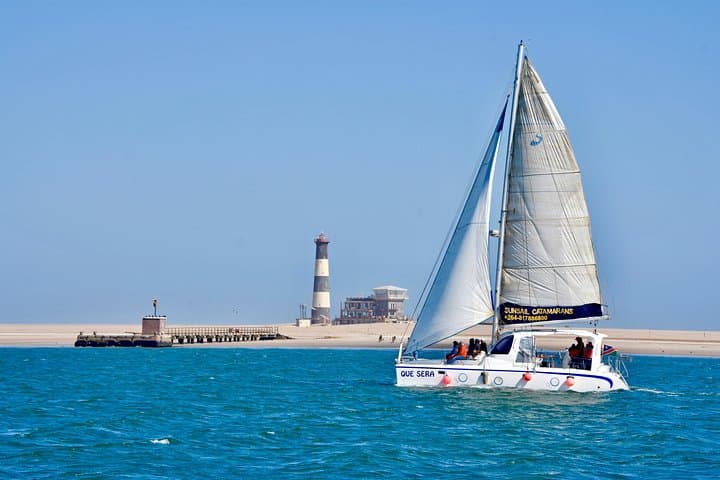
The route follows a sheltered tidal lagoon that has long supported fishing, oyster farming, and a string of colonial-era settlements around this natural deep-water harbor. The sand spit of Pelican Point and its lighthouse mark a geological edge where Atlantic currents meet upwellings that feed plankton, fish, and the larger animals behind them — dolphins riding the food, Cape fur seals sunning on boulders, and seasonal whales passing offshore.
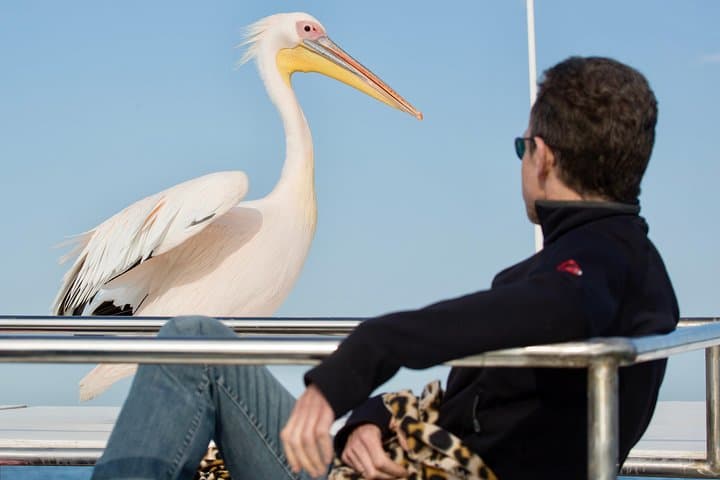
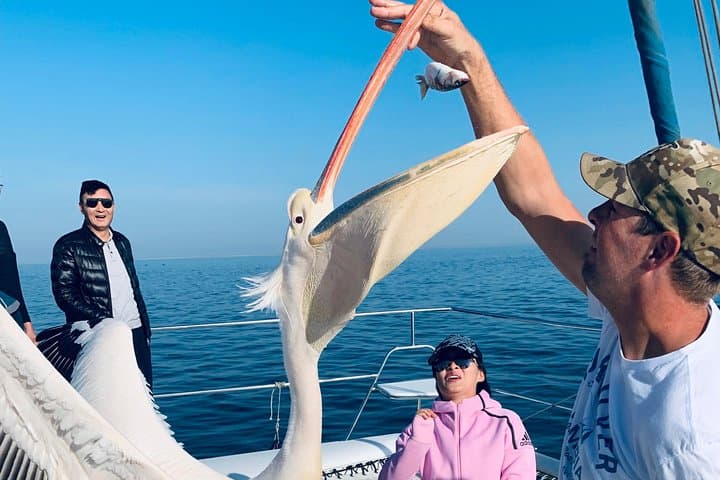
Onboard, guides explain local ecology and human ties to the bay: oyster beds that supply restaurants, and a maritime history shaped by ships and the harbor’s value to Namibia. For photographers and families alike, wildlife often approaches the boat — pelicans investigate the bow while dolphins slice through the wake — giving a sense of being observed as much as a visitor.
Practical side: departures are morning, the trip lasts about three hours, and basic amenities — toilets, blankets, life jackets — are provided. Bring a windproof layer, waterproof camera protection, and sea-sickness precautions if you’re sensitive to swell. Inform operators of dietary needs for onboard oysters and snacks.
This cruise balances easy accessibility with authentic wildlife viewing; its rhythm is patient and observational, rewarding those who come prepared to listen, look, and move slowly with the sea.
easy.
3 hours.
Suitable for most fitness levels; must be able to step aboard and walk short deck distances
Departures leave from the Walvis Bay Waterfront; check-in is near the main jetty and usually 20–30 minutes before sailing.
Yes — vessels are wheelchair accessible, infants may sit on laps, and children of all ages are welcome; notify operator of special requirements when booking.
Common sightings include dolphins, Cape fur seals, pelicans, and seasonal visits from whales and turtles depending on the time of year.
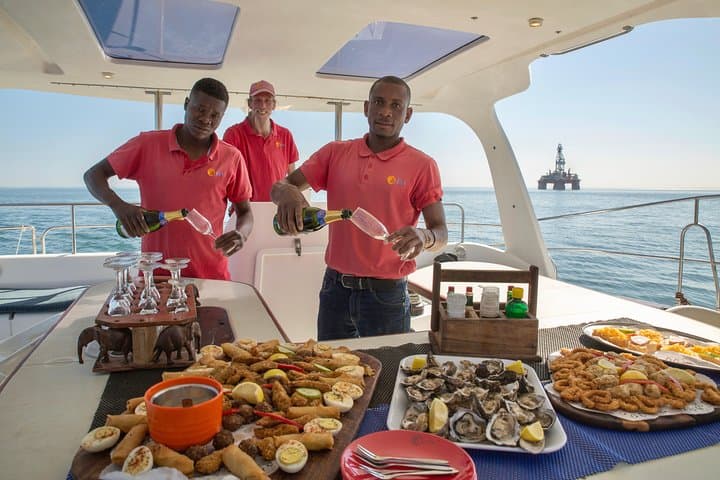
Yes — complimentary snacks, a light lunch with fresh oysters, sparkling wine, coffee, tea and bottled water are included; inform operators of dietary needs in advance.
Walvis Bay has been a strategic deep-water harbor for centuries; the lagoon supported local fisheries and later commercial oyster farms that still operate today.
Operators follow local guidelines to minimize disturbance to animals; avoid feeding wildlife and support licensed tours to reduce environmental impact.
Sun Sail Catamarans operates guided outdoor trips and adventures with an emphasis on safety, stewardship, and memorable experiences.
Morning light hits the rippled surface of Walvis Bay and the catamaran slips free from the quay, the city’s industrial silhouette sliding astern. Salt air sharpens the senses; calls of terns and pelicans punctuate the engine hum as the lagoon opens toward Pelican Point and a low line of breakers where seals haul out.
Morning light hits the rippled surface of Walvis Bay and the catamaran slips free from the quay, the city’s industrial silhouette sliding astern. Salt air sharpens the senses; calls of terns and pelicans punctuate the engine hum as the lagoon opens toward Pelican Point and a low line of breakers where seals haul out.
The route follows a sheltered tidal lagoon that has long supported fishing, oyster farming, and a string of colonial-era settlements around this natural deep-water harbor. The sand spit of Pelican Point and its lighthouse mark a geological edge where Atlantic currents meet upwellings that feed plankton, fish, and the larger animals behind them — dolphins riding the food, Cape fur seals sunning on boulders, and seasonal whales passing offshore.
Onboard, guides explain local ecology and human ties to the bay: oyster beds that supply restaurants, and a maritime history shaped by ships and the harbor’s value to Namibia. For photographers and families alike, wildlife often approaches the boat — pelicans investigate the bow while dolphins slice through the wake — giving a sense of being observed as much as a visitor.
Practical side: departures are morning, the trip lasts about three hours, and basic amenities — toilets, blankets, life jackets — are provided. Bring a windproof layer, waterproof camera protection, and sea-sickness precautions if you’re sensitive to swell. Inform operators of dietary needs for onboard oysters and snacks.
This cruise balances easy accessibility with authentic wildlife viewing; its rhythm is patient and observational, rewarding those who come prepared to listen, look, and move slowly with the sea.