THE ADVENTURE COLLECTIVE® · Independent discovery and booking for outdoor travel

Escape Marrakech for a day exploring the Marigha salt pans and Ouirgane Valley. This guided excursion combines light walking across salt flats, mountain views, and a Berber family lunch for cultural context.
Escape Marrakech for a day exploring the Marigha salt pans and Ouirgane Valley. This guided excursion combines light walking across salt flats, mountain views, and a Berber family lunch for cultural context.
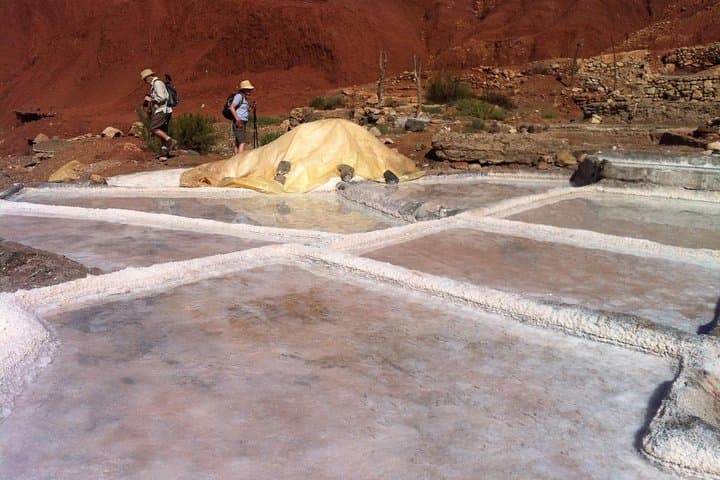
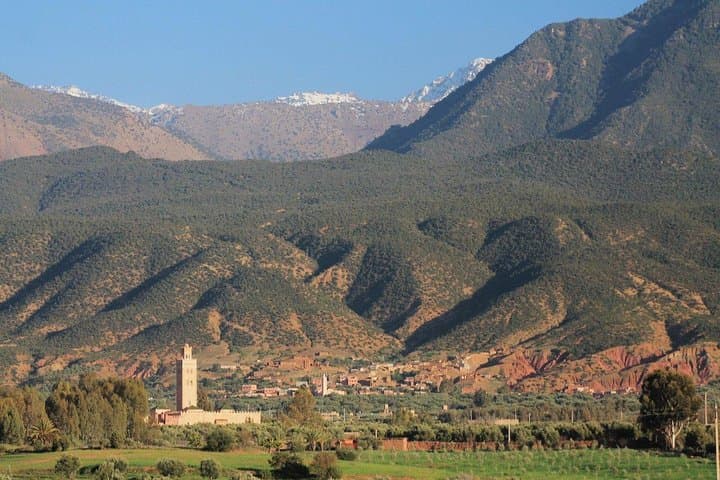
A dry wind moves through the Marigha basin as you descend from the red-stone lanes out of Marrakech; the city’s heat gives way to open sky and the carved shoulders of the High Atlas. The road to Ouirgane slices through terraced fields and small Berber villages, and by mid-morning the Marigha salt pans shimmer like a low, pale lake — a working landscape that invites a slow, curious walk.
Verified experiences and guided adventures in the surrounding area.
Operated by Ouirgane Atlas Activity · Ouirgane, Marrakesh-Safi
A dry wind moves through the Marigha basin as you descend from the red-stone lanes out of Marrakech; the city’s heat gives way to open sky and the carved shoulders of the High Atlas. The road to Ouirgane slices through terraced fields and small Berber villages, and by mid-morning the Marigha salt pans shimmer like a low, pale lake — a working landscape that invites a slow, curious walk.
The Marigha salt mines are part of a long local tradition of harvesting mineral salts from evaporated basins and small springs that have served nearby communities for generations. Geologically, the flats are the surface expression of an inland evaporitic basin cut by seasonal streams running down from the Atlas. Culturally, the route threads through villages where Amazigh (Berber) hospitality remains central: tea invitations, mule tracks, and a family-style lunch are as much a part of the visit as the mine itself.
Expect easy walking on packed tracks and salt crusts, interrupted by short stony paths and low-lying scrub. The atmosphere is elemental — wind nudges the salt and the mountains loom, keeping silence and scale in balance. Birdlife uses the flats; small herds and shepherds are common in the valley.
Practical guidance: plan a full day (6–7 hours), wear sturdy shoes for uneven salt and rock, bring sun protection and 1.5–2 liters of water, and respect private land and local customs when photographing. If winter snows dust the higher passes, the drive can be slower; summer offers stark, high-contrast light. A guided visit typically includes transfers, a guided walk, and lunch with a Berber family — useful for both context and local support.
easy.
6–7 hours.
Suitable for most people who can walk 2–4 miles on uneven surfaces; minimal elevation change but some rocky sections.
Expect a 6–7 hour day including round-trip transfers; driving to Ouirgane takes about 1–1.5 hours each way depending on route and traffic.
No — the walking is generally easy with some uneven ground; suitable for people with average mobility but not ideal for wheelchairs.
Yes — the typical itinerary includes lunch with a local Berber family, offering traditional dishes and a cultural exchange.
Facilities are basic outside Marrakech; plan for simple village toilets and rest breaks at family homes rather than modern restrooms.
Salt extraction here follows centuries-old local traditions tied to Amazigh communities and mountain trade routes that linked valleys to Marrakech.
Visitors should avoid removing salt or disturbing fragile crusts, stick to paths to prevent erosion, and support local guides to ensure tourism benefits communities.
Ouirgane Atlas Activity operates guided outdoor trips and adventures with an emphasis on safety, stewardship, and memorable experiences.

A dry wind moves through the Marigha basin as you descend from the red-stone lanes out of Marrakech; the city’s heat gives way to open sky and the carved shoulders of the High Atlas. The road to Ouirgane slices through terraced fields and small Berber villages, and by mid-morning the Marigha salt pans shimmer like a low, pale lake — a working landscape that invites a slow, curious walk.
A dry wind moves through the Marigha basin as you descend from the red-stone lanes out of Marrakech; the city’s heat gives way to open sky and the carved shoulders of the High Atlas. The road to Ouirgane slices through terraced fields and small Berber villages, and by mid-morning the Marigha salt pans shimmer like a low, pale lake — a working landscape that invites a slow, curious walk.
The Marigha salt mines are part of a long local tradition of harvesting mineral salts from evaporated basins and small springs that have served nearby communities for generations. Geologically, the flats are the surface expression of an inland evaporitic basin cut by seasonal streams running down from the Atlas. Culturally, the route threads through villages where Amazigh (Berber) hospitality remains central: tea invitations, mule tracks, and a family-style lunch are as much a part of the visit as the mine itself.
Expect easy walking on packed tracks and salt crusts, interrupted by short stony paths and low-lying scrub. The atmosphere is elemental — wind nudges the salt and the mountains loom, keeping silence and scale in balance. Birdlife uses the flats; small herds and shepherds are common in the valley.
Practical guidance: plan a full day (6–7 hours), wear sturdy shoes for uneven salt and rock, bring sun protection and 1.5–2 liters of water, and respect private land and local customs when photographing. If winter snows dust the higher passes, the drive can be slower; summer offers stark, high-contrast light. A guided visit typically includes transfers, a guided walk, and lunch with a Berber family — useful for both context and local support.