THE ADVENTURE COLLECTIVE® · Independent discovery and booking for outdoor travel

A quieter alternative to the crowded Annapurna routes, the Mardi Himal Trek threads rhododendron forests and Gurung villages to a high viewpoint under Annapurna’s southern faces. This short‑to‑mid length trek combines dramatic views with simple teahouse nights — ideal for travelers who want big panoramas without the main circuit crowds.
A quieter alternative to the crowded Annapurna routes, the Mardi Himal Trek threads rhododendron forests and Gurung villages to a high viewpoint under Annapurna’s southern faces. This short‑to‑mid length trek combines dramatic views with simple teahouse nights — ideal for travelers who want big panoramas without the main circuit crowds.
Morning breaks on a narrow ridge and the trail hums with the soft clack of trekking poles. Rhododendron forests open and close like curtains as you climb; Annapurna South and Machapuchare loom ahead, their flanks catching the first sun while the valley below remains in shadow. The route nudges through small Gurung villages, across terraced fields, and up steep switchbacks until the air thins and the panorama widens.
Verified experiences and guided adventures in the surrounding area.
Operated by Travel Max Guide · Pokhara, Gandaki Province
Morning breaks on a narrow ridge and the trail hums with the soft clack of trekking poles. Rhododendron forests open and close like curtains as you climb; Annapurna South and Machapuchare loom ahead, their flanks catching the first sun while the valley below remains in shadow. The route nudges through small Gurung villages, across terraced fields, and up steep switchbacks until the air thins and the panorama widens.
Mardi Himal sits on the southern edge of the Annapurna massif, a quieter alternative to the main circuit that became popular in the last two decades as teahouse routes expanded. Geologically the trek slices through young Himalayan folds — limestone and metamorphosed shale — carved by monsoon-fed rivers. Culturally, villages along the trail reflect Gurung and Magar traditions: prayer flags, small gompas, and tea houses that double as community hubs.
Expect single‑track trails, sustained uphill days, and lodge-to-lodge nights in simple teahouses. The high viewpoint and high camp sit around 4,200–4,500 m, making acclimatization important; total trekking distance is roughly 45–55 km depending on your itinerary. Permits (ACAP and TIMS) are required and local guides/porters are common and recommended.
Practical edge: hike early to avoid afternoon clouds, carry layered clothing for rapid temperature shifts, bring local currency for teahouse purchases, and allow at least one acclimatization day if you’re moving from Pokhara (800 m) to higher camps. The trek rewards steady pacing more than speed — the mountain will reveal itself to those who give it time.
moderate.
9–11 days.
Good cardiovascular fitness and ability to carry a daypack on uphill days; prior multi‑day hiking experience helpful
Yes — you’ll need an Annapurna Conservation Area Permit (ACAP) and a TIMS card; guides or agencies usually arrange these before departure.
The high camp/viewpoint is around 4,200–4,500 m depending on route variations; altitude acclimatization is important.
Typical itineraries run 6–11 days from Pokhara including transport; the program in this listing allocates about 9–11 days including travel and acclimatization.
Yes — the route is serviced by mountain teahouses with basic rooms and meals, though facilities get simpler and pricier at higher camps.
The Mardi area sits within the Annapurna conservation landscape and has long been used by local Gurung and Magar communities for grazing and trade, with trekking infrastructure expanding since the 1990s.
The trek passes through the Annapurna Conservation Area — follow pack‑in/pack‑out principles, use established trails, and limit plastic and non‑biodegradable waste to reduce impact.
Travel Max Guide operates guided outdoor trips and adventures with an emphasis on safety, stewardship, and memorable experiences.
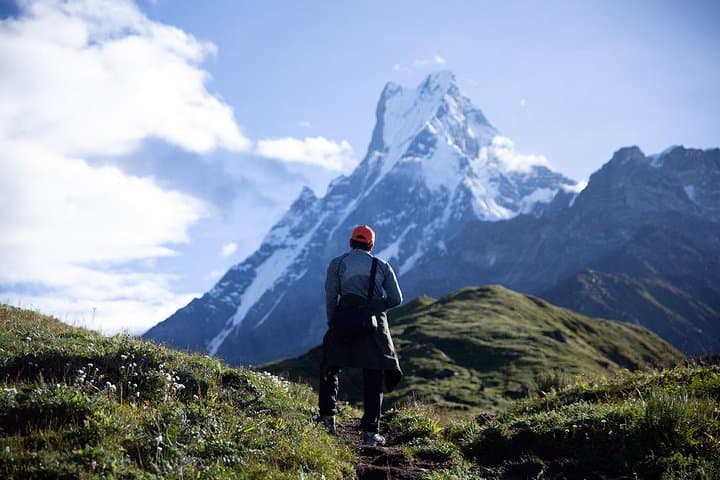
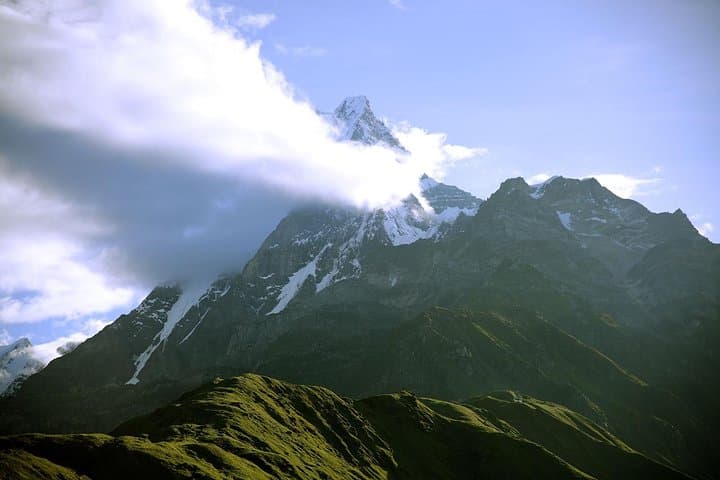
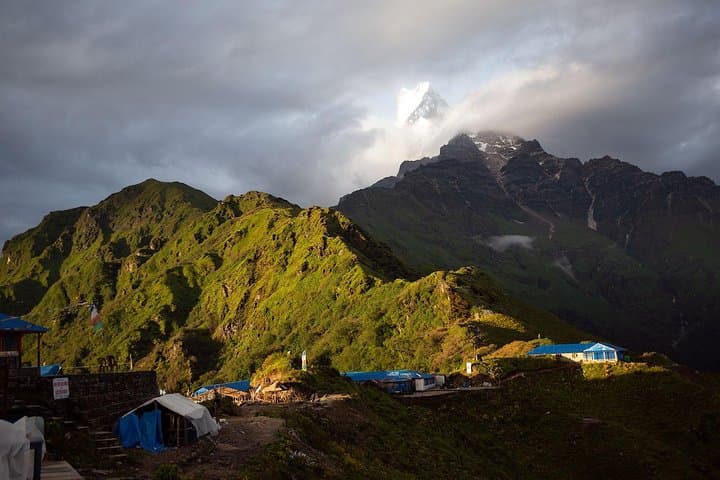
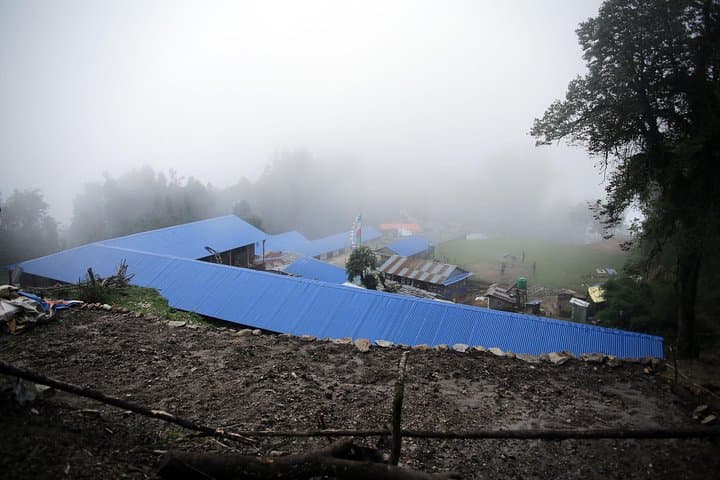
Morning breaks on a narrow ridge and the trail hums with the soft clack of trekking poles. Rhododendron forests open and close like curtains as you climb; Annapurna South and Machapuchare loom ahead, their flanks catching the first sun while the valley below remains in shadow. The route nudges through small Gurung villages, across terraced fields, and up steep switchbacks until the air thins and the panorama widens.
Morning breaks on a narrow ridge and the trail hums with the soft clack of trekking poles. Rhododendron forests open and close like curtains as you climb; Annapurna South and Machapuchare loom ahead, their flanks catching the first sun while the valley below remains in shadow. The route nudges through small Gurung villages, across terraced fields, and up steep switchbacks until the air thins and the panorama widens.
Mardi Himal sits on the southern edge of the Annapurna massif, a quieter alternative to the main circuit that became popular in the last two decades as teahouse routes expanded. Geologically the trek slices through young Himalayan folds — limestone and metamorphosed shale — carved by monsoon-fed rivers. Culturally, villages along the trail reflect Gurung and Magar traditions: prayer flags, small gompas, and tea houses that double as community hubs.
Expect single‑track trails, sustained uphill days, and lodge-to-lodge nights in simple teahouses. The high viewpoint and high camp sit around 4,200–4,500 m, making acclimatization important; total trekking distance is roughly 45–55 km depending on your itinerary. Permits (ACAP and TIMS) are required and local guides/porters are common and recommended.
Practical edge: hike early to avoid afternoon clouds, carry layered clothing for rapid temperature shifts, bring local currency for teahouse purchases, and allow at least one acclimatization day if you’re moving from Pokhara (800 m) to higher camps. The trek rewards steady pacing more than speed — the mountain will reveal itself to those who give it time.