THE ADVENTURE COLLECTIVE® · Independent discovery and booking for outdoor travel

A compact 6-day trek from Kathmandu to Mardi Himal that climbs from Pokhara's lakeshore into alpine ridges. Expect rhododendron forests, teahouse nights, and close-up views of Machhapuchhre and the Annapurna massif.
A compact 6-day trek from Kathmandu to Mardi Himal that climbs from Pokhara's lakeshore into alpine ridges. Expect rhododendron forests, teahouse nights, and close-up views of Machhapuchhre and the Annapurna massif.
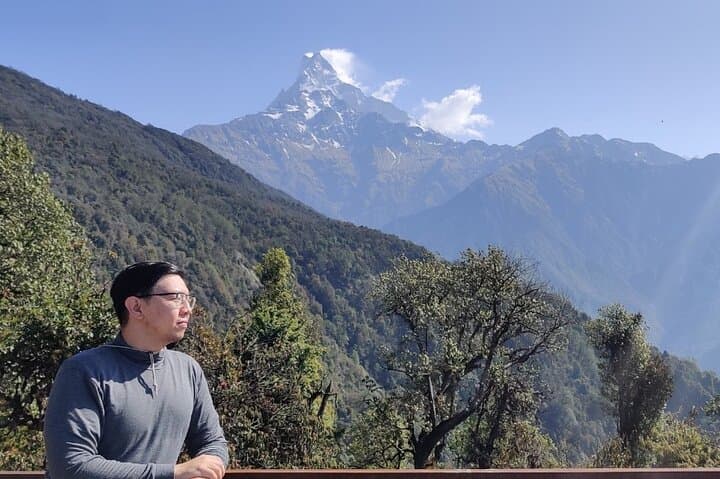
Dawn breaks over the Annapurna range as the road from Kathmandu drops into terraced hills and the silhouette of Machhapuchhre (Fishtail) sharpens against the sky. You begin with a slow drive to Pokhara, then a short climb to Kande; the trail tightens into rhododendron forest, opens onto alpine meadows, and finally pins you to a ridge where Mardi Himal Base Camp lays out its raw, rocky face.
Verified experiences and guided adventures in the surrounding area.
Operated by Peak to Peak Tours and Treks Pvt Ltd · Pokhara, Gandaki Province
Dawn breaks over the Annapurna range as the road from Kathmandu drops into terraced hills and the silhouette of Machhapuchhre (Fishtail) sharpens against the sky. You begin with a slow drive to Pokhara, then a short climb to Kande; the trail tightens into rhododendron forest, opens onto alpine meadows, and finally pins you to a ridge where Mardi Himal Base Camp lays out its raw, rocky face.
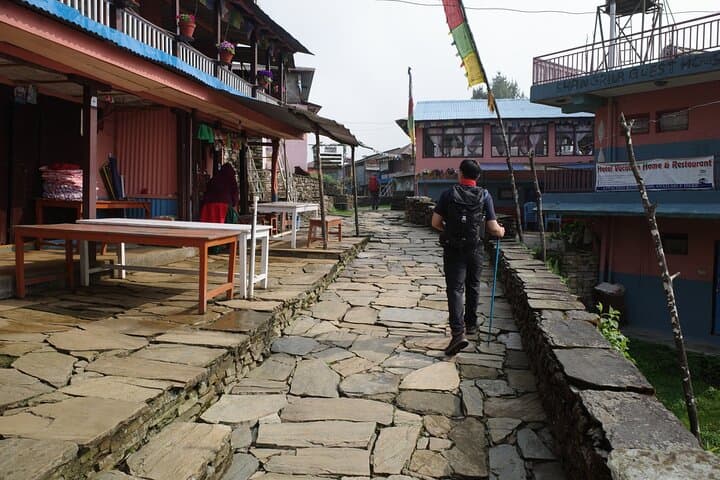
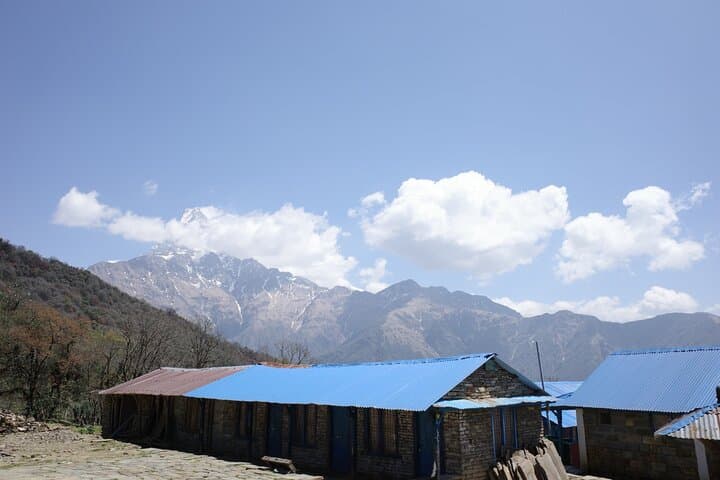
This route threads local Gurung villages, teahouse stops and old shepherd trails skimming glacially carved slopes. Geologically the Annapurna massif is a fold of metamorphic rock uplifted by the collision of the Indian and Eurasian plates; the land here feels active—ridges rising, valleys carving—while cultural threads of temple shrines and slate-roofed homes remind you this is lived-in mountain country.
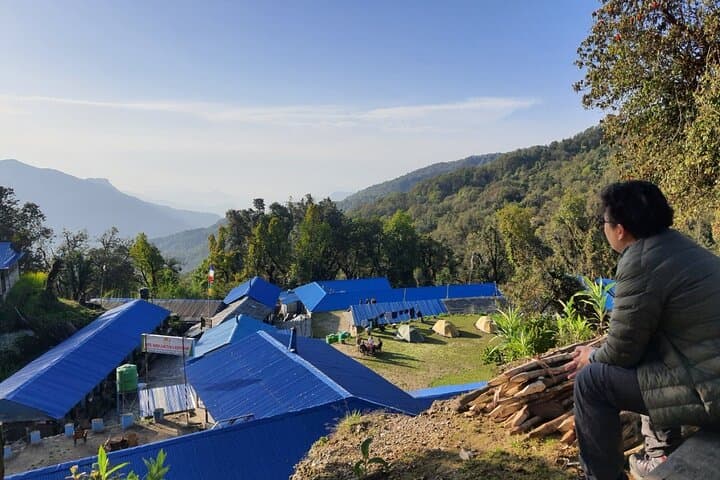
The itinerary climbs from Pokhara (≈820 m) to Mardi Himal Base Camp (≈4,500 m) in about five days of trekking, passing Low and High Camp along the way. Expect forested switchbacks, fragile alpine meadows, and close-up views of Annapurna South, Hiunchuli and Machhapuchhre. Teahouses provide basic meals and bunk-style lodging; cash and patience are part of the rhythm.
Practical guidance: pace your ascent, drink often, and start pre-dawn on summit days for stable weather and best light. Footwear with a stiff sole and good ankle support, trekking poles, and a warm down layer for high camps are essential. Permits are required; respect local conservation rules, pack out rubbish where possible, and leave early to avoid afternoon storms and cloud cover.
moderate.
5–7 days.
Moderate fitness—able to hike 4–7 hours per day with sustained uphill sections at altitude.
Yes—trekkers must obtain ACAP (Annapurna Conservation Area Project) permits and TIMS where applicable; guides and agencies typically handle this for packaged tours.
Temperatures at ~4,500 m can drop well below freezing at night; expect sub-zero temperatures, especially in winter and early spring.
Yes—basic teahouses offer simple meals and shared dormitories at Forest Camp, Low Camp and High Camp; services thin out closer to Base Camp.
Spring (March–May) and fall (September–November) offer the clearest views and stable weather, while monsoon months are wet and winter brings snow at higher camps.
The route passes communities of Gurung and other mountain peoples; the Annapurna region has long been a trade and pastoral corridor shaped by Himalayan geography.
This area sits within the Annapurna Conservation Area—stick to marked trails, minimize single-use plastics, and support local teahouses to sustain village economies.
Peak to Peak Tours and Treks Pvt Ltd operates guided outdoor trips and adventures with an emphasis on safety, stewardship, and memorable experiences.
Dawn breaks over the Annapurna range as the road from Kathmandu drops into terraced hills and the silhouette of Machhapuchhre (Fishtail) sharpens against the sky. You begin with a slow drive to Pokhara, then a short climb to Kande; the trail tightens into rhododendron forest, opens onto alpine meadows, and finally pins you to a ridge where Mardi Himal Base Camp lays out its raw, rocky face.
Dawn breaks over the Annapurna range as the road from Kathmandu drops into terraced hills and the silhouette of Machhapuchhre (Fishtail) sharpens against the sky. You begin with a slow drive to Pokhara, then a short climb to Kande; the trail tightens into rhododendron forest, opens onto alpine meadows, and finally pins you to a ridge where Mardi Himal Base Camp lays out its raw, rocky face.
This route threads local Gurung villages, teahouse stops and old shepherd trails skimming glacially carved slopes. Geologically the Annapurna massif is a fold of metamorphic rock uplifted by the collision of the Indian and Eurasian plates; the land here feels active—ridges rising, valleys carving—while cultural threads of temple shrines and slate-roofed homes remind you this is lived-in mountain country.
The itinerary climbs from Pokhara (≈820 m) to Mardi Himal Base Camp (≈4,500 m) in about five days of trekking, passing Low and High Camp along the way. Expect forested switchbacks, fragile alpine meadows, and close-up views of Annapurna South, Hiunchuli and Machhapuchhre. Teahouses provide basic meals and bunk-style lodging; cash and patience are part of the rhythm.
Practical guidance: pace your ascent, drink often, and start pre-dawn on summit days for stable weather and best light. Footwear with a stiff sole and good ankle support, trekking poles, and a warm down layer for high camps are essential. Permits are required; respect local conservation rules, pack out rubbish where possible, and leave early to avoid afternoon storms and cloud cover.