THE ADVENTURE COLLECTIVE® · Independent discovery and booking for outdoor travel

A compact 5-day trek from Pokhara that climbs through rhododendron forests and teahouse villages to dramatic Annapurna views. Ideal for trekkers who want high-mountain panoramas without a long circuit.
A compact 5-day trek from Pokhara that climbs through rhododendron forests and teahouse villages to dramatic Annapurna views. Ideal for trekkers who want high-mountain panoramas without a long circuit.
A misty dawn on Phewa Lake, and your guide is already unpacking the jeep — the road to Dhampus unwinds under a rising sun and a shoulder of Annapurna peers over terraced fields. Within an hour you leave Pokhara’s lakeside bustle and step into a fir-and-rhododendron corridor that pushes the world into sharper focus: rock, ice, and cultivated slope.
Verified experiences and guided adventures in the surrounding area.
Operated by Base Camp Hike · Pokhara, Gandaki Province
A misty dawn on Phewa Lake, and your guide is already unpacking the jeep — the road to Dhampus unwinds under a rising sun and a shoulder of Annapurna peers over terraced fields. Within an hour you leave Pokhara’s lakeside bustle and step into a fir-and-rhododendron corridor that pushes the world into sharper focus: rock, ice, and cultivated slope.
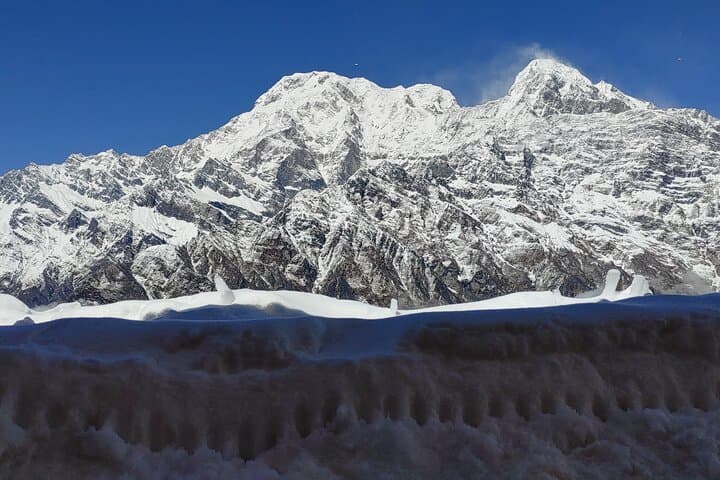
The Mardi Himal route threads the southern flanks of the Annapurna Massif, carved by tectonic uplift and glacial action into steep ridgelines and hanging valleys. Villages along the way are primarily Gurung, their stone houses and prayer flags marking agricultural life that long predates trekking as an industry. The geology here reveals itself in scree bands, moraine-fed streams, and sudden clearings where the massif’s glaciers reveal blue ice and layered granite.
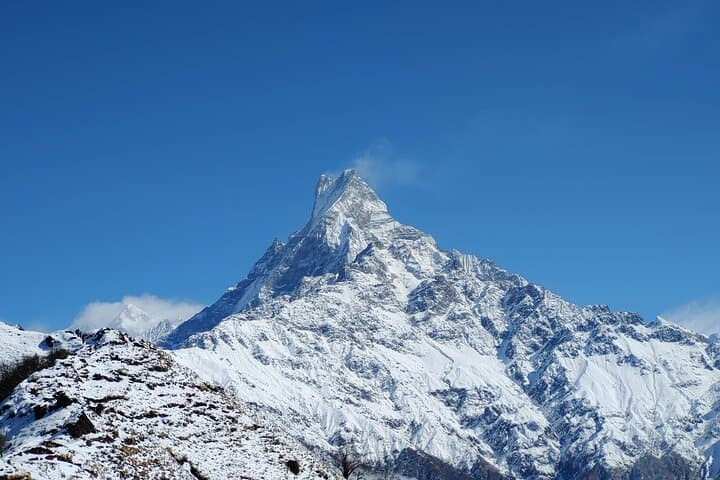
Over five days the itinerary moves from Dhampus (≈1,600 m) through Forest Camp and Low Camp, up to High Camp (roughly 3,200–3,500 m) for sunrise views of Machapuchare (Fishtail), Annapurna South and Hiunchuli, then down through Landruk to Siwai and back to Pokhara. Expect long ascents on stone steps and narrow singletrack, teahouse lodgings, simple meals, and short stretches of exposed ridge.
Practically, acclimatize slowly, carry layers for high-camp wind and sun, and budget for a porter if you want lighter days. Trail surfaces vary from packed dirt to loose scree; trekking poles and sturdy boots make the climbs and descents more comfortable. Early mornings and late afternoons deliver the clearest views; mid-day clouds build quickly. The trip balances close-in cultural encounters with high-mountain panoramas — compact, demanding, and deeply rewarding.
moderate.
4–5 days.
Moderate fitness—regular walkers who can handle 5–7 hour days with sustained climbs will be comfortable
Mardi Himal trekking typically requires the Annapurna Conservation Area Permit (ACAP) and a Trekkers' Information Management System (TIMS) card; your operator usually arranges these.
Expect 5–7 hour walking days with steady climbs; the route uses many stone steps and some short steep sections.
Teahouse-style lodges on a double-occupancy basis with simple bathrooms; included meals as listed in the itinerary.
Spring (Mar–May) and autumn (Sep–Nov) offer the clearest views and stable weather; shoulder seasons bring more rain or snow at higher elevations.
This region lies within traditional Gurung territory and has long been an agricultural landscape; trekking developed here as Pokhara became a gateway to the Annapurna range.
The trek runs inside the Annapurna Conservation Area — stick to marked trails, minimize plastic, and use local teahouses to support the community-based conservation economy.
Base Camp Hike operates guided outdoor trips and adventures with an emphasis on safety, stewardship, and memorable experiences.
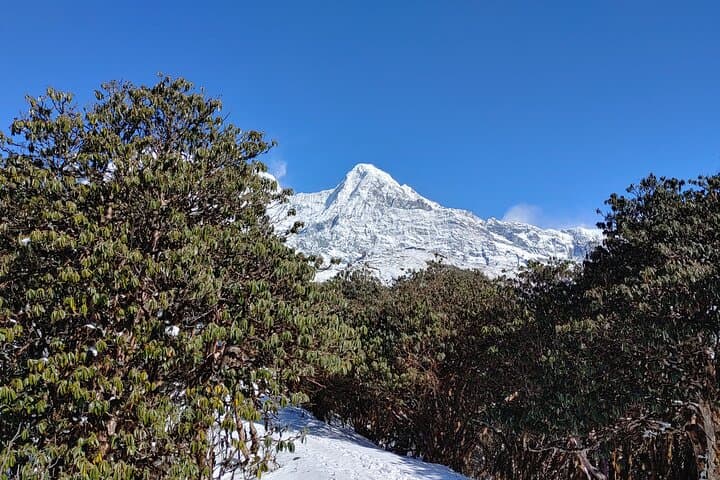
A misty dawn on Phewa Lake, and your guide is already unpacking the jeep — the road to Dhampus unwinds under a rising sun and a shoulder of Annapurna peers over terraced fields. Within an hour you leave Pokhara’s lakeside bustle and step into a fir-and-rhododendron corridor that pushes the world into sharper focus: rock, ice, and cultivated slope.
A misty dawn on Phewa Lake, and your guide is already unpacking the jeep — the road to Dhampus unwinds under a rising sun and a shoulder of Annapurna peers over terraced fields. Within an hour you leave Pokhara’s lakeside bustle and step into a fir-and-rhododendron corridor that pushes the world into sharper focus: rock, ice, and cultivated slope.
The Mardi Himal route threads the southern flanks of the Annapurna Massif, carved by tectonic uplift and glacial action into steep ridgelines and hanging valleys. Villages along the way are primarily Gurung, their stone houses and prayer flags marking agricultural life that long predates trekking as an industry. The geology here reveals itself in scree bands, moraine-fed streams, and sudden clearings where the massif’s glaciers reveal blue ice and layered granite.
Over five days the itinerary moves from Dhampus (≈1,600 m) through Forest Camp and Low Camp, up to High Camp (roughly 3,200–3,500 m) for sunrise views of Machapuchare (Fishtail), Annapurna South and Hiunchuli, then down through Landruk to Siwai and back to Pokhara. Expect long ascents on stone steps and narrow singletrack, teahouse lodgings, simple meals, and short stretches of exposed ridge.
Practically, acclimatize slowly, carry layers for high-camp wind and sun, and budget for a porter if you want lighter days. Trail surfaces vary from packed dirt to loose scree; trekking poles and sturdy boots make the climbs and descents more comfortable. Early mornings and late afternoons deliver the clearest views; mid-day clouds build quickly. The trip balances close-in cultural encounters with high-mountain panoramas — compact, demanding, and deeply rewarding.