THE ADVENTURE COLLECTIVE® · Independent discovery and booking for outdoor travel

A compact, less-crowded Himalayan trek from Pokhara that reaches Mardi Himal Base Camp (4,500 m) in five days. Expect rhododendron forests, teahouse stays, dramatic Annapurna views and a demanding high-day ascent.
A compact, less-crowded Himalayan trek from Pokhara that reaches Mardi Himal Base Camp (4,500 m) in five days. Expect rhododendron forests, teahouse stays, dramatic Annapurna views and a demanding high-day ascent.
You set out from Pokhara before dawn, the city lights folding behind you as the road climbs to Kande. The trail immediately narrows into a ribbon of packed earth under a canopy of rhododendron and pine, each step trading village smoke for cooler, thinner air.
Verified experiences and guided adventures in the surrounding area.
Operated by Mountain Hike Nepal · Pokhara, Gandaki Province
You set out from Pokhara before dawn, the city lights folding behind you as the road climbs to Kande. The trail immediately narrows into a ribbon of packed earth under a canopy of rhododendron and pine, each step trading village smoke for cooler, thinner air.
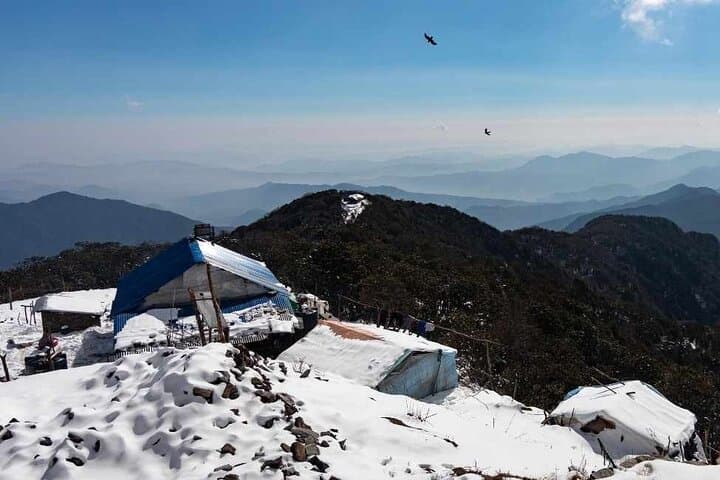
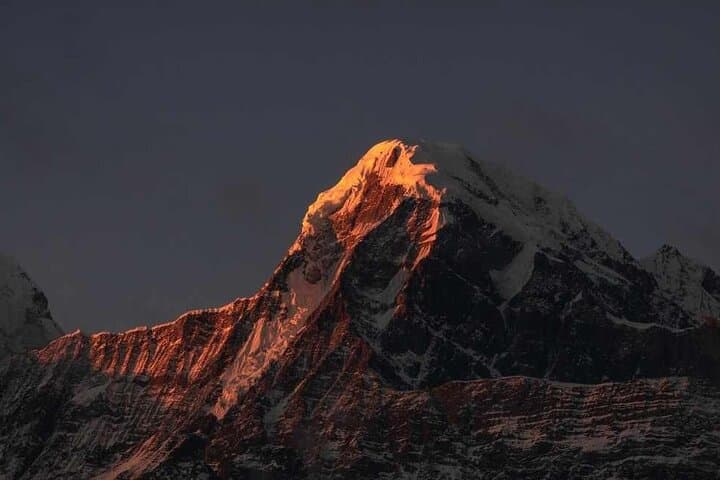
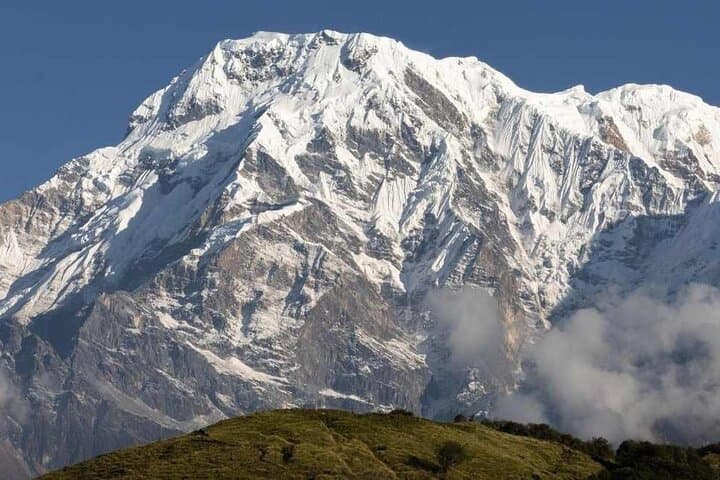
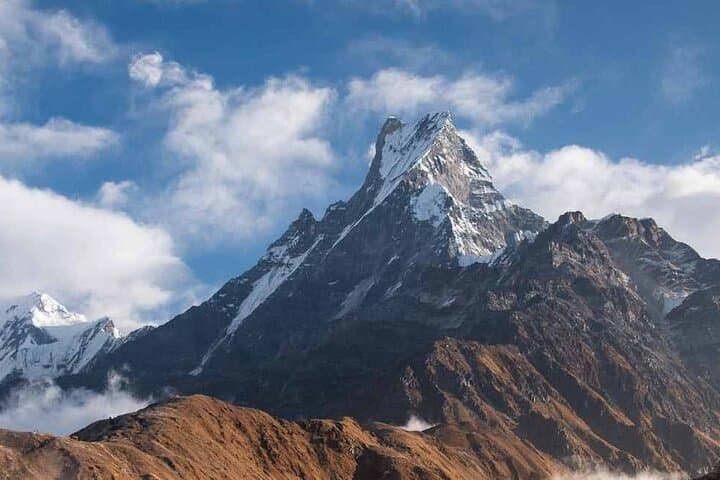
Across five days you move through changing zones: low, green villages and magnolia groves; a higher band of dwarf rhododendron that blooms explosively in spring; then scree and rocky ledges above 3,500 m where Annapurna's ridgelines and the horn of Machapuchare dominate the skyline. Mardi Himal sits quieter than its neighbours—an intimate vantage for sunrise and a rare close-up of Annapurna South and Hiunchuli.
Geologically the route follows young Himalayan uplift and glacially carved valleys; culturally you pass Gurung and Magar villages and stay in family-run teahouses where local meals and stories share space with drying socks.
Practical guide: expect 4–6 hours walking on most days, a maximum altitude near 4,500 m at the base camp, and one strenuous ascent from High Camp. Trails are a mix of well-trodden singletrack, stone staircases, and short rocky scrambles—no technical climbing required but altitude awareness is essential.
Pack layered insulation, sturdy ankle-support boots, and a headlamp for early starts. Hire a guide or porter if you want to move lighter; permits (ACAP, TIMS) are mandatory and generally arranged in Pokhara. Aim for spring (rhodo bloom) or autumn (clear views) for the best balance of weather and visibility. Move deliberately, hydrate, and listen to your body—the mountain rewards patience with panoramas and quiet that feel earned.
challenging.
4–5 days.
Good cardiovascular fitness with experience on sustained uphill hiking; ability to handle altitude gain.
Yes—Annapurna Conservation Area Permit (ACAP) and a TIMS card are required; guides or tour operators usually arrange them in Pokhara.
Mardi Himal Base Camp sits around 4,500 meters; the highest day involves steep and rocky sections from High Camp.
No technical climbing is required, but sections above 3,500 m are rocky and can be steep—good footwear and sure footing are essential.
Yes—teahouses along the route offer basic rooms and local meals, but options are limited at higher camps so carry snacks and any specialty items.
The route runs through the Annapurna Conservation Area, an early example of community-based conservation in Nepal that balances tourism with local livelihoods.
Stick to marked trails, avoid single-use plastics in teahouses, and use local guides to support community-based tourism and minimize environmental impact.
Mountain Hike Nepal operates guided outdoor trips and adventures with an emphasis on safety, stewardship, and memorable experiences.
You set out from Pokhara before dawn, the city lights folding behind you as the road climbs to Kande. The trail immediately narrows into a ribbon of packed earth under a canopy of rhododendron and pine, each step trading village smoke for cooler, thinner air.
You set out from Pokhara before dawn, the city lights folding behind you as the road climbs to Kande. The trail immediately narrows into a ribbon of packed earth under a canopy of rhododendron and pine, each step trading village smoke for cooler, thinner air.
Across five days you move through changing zones: low, green villages and magnolia groves; a higher band of dwarf rhododendron that blooms explosively in spring; then scree and rocky ledges above 3,500 m where Annapurna's ridgelines and the horn of Machapuchare dominate the skyline. Mardi Himal sits quieter than its neighbours—an intimate vantage for sunrise and a rare close-up of Annapurna South and Hiunchuli.
Geologically the route follows young Himalayan uplift and glacially carved valleys; culturally you pass Gurung and Magar villages and stay in family-run teahouses where local meals and stories share space with drying socks.
Practical guide: expect 4–6 hours walking on most days, a maximum altitude near 4,500 m at the base camp, and one strenuous ascent from High Camp. Trails are a mix of well-trodden singletrack, stone staircases, and short rocky scrambles—no technical climbing required but altitude awareness is essential.
Pack layered insulation, sturdy ankle-support boots, and a headlamp for early starts. Hire a guide or porter if you want to move lighter; permits (ACAP, TIMS) are mandatory and generally arranged in Pokhara. Aim for spring (rhodo bloom) or autumn (clear views) for the best balance of weather and visibility. Move deliberately, hydrate, and listen to your body—the mountain rewards patience with panoramas and quiet that feel earned.