THE ADVENTURE COLLECTIVE® · Independent discovery and booking for outdoor travel

A 12-day circuit from Pokhara into the Annapurna Conservation Area, the Mardi Himal Trek climbs forested ridgelines to high camps with sweeping views of Machhapuchhre and the Annapurna range. This guide outlines what to expect on trail, cultural highlights, and how to prepare for altitude and variable weather.
A 12-day circuit from Pokhara into the Annapurna Conservation Area, the Mardi Himal Trek climbs forested ridgelines to high camps with sweeping views of Machhapuchhre and the Annapurna range. This guide outlines what to expect on trail, cultural highlights, and how to prepare for altitude and variable weather.
Dawn breaks over terraced fields as you climb from Pokhara’s misty lake basin toward narrow ridgelines. The trail rises through rhododendron and oak, the forest occasionally parting to reveal Machhapuchhre—its fluted south face daring you onward. By High Camp the air thins and the silhouettes of Annapurna South and Hiunchuli dominate the horizon; on a clear day the panorama throws light across glaciers and ice walls below Mardi Himal Base Camp (up to ~4,500 m).
Verified experiences and guided adventures in the surrounding area.
Operated by Himalaya Sky Travel & Adventure · Pokhara, Gandaki Province
Dawn breaks over terraced fields as you climb from Pokhara’s misty lake basin toward narrow ridgelines. The trail rises through rhododendron and oak, the forest occasionally parting to reveal Machhapuchhre—its fluted south face daring you onward. By High Camp the air thins and the silhouettes of Annapurna South and Hiunchuli dominate the horizon; on a clear day the panorama throws light across glaciers and ice walls below Mardi Himal Base Camp (up to ~4,500 m).
The route threads long-used trans-Himalayan paths and modern conservation corridors inside the Annapurna Conservation Area. Geologically this section is young uplifted terrane—steep valleys cut by glacial and river erosion, yielding abrupt elevation gain and rich, porous soils that support orchids and mosses. Culturally the trail passes Tamang and Gurung villages where tea gardens and stone houses speak to centuries of farming and trade between hills and lowlands.
Expect 4–6 hour approach days with two longer days: the ascent to High Camp and the push to Mardi Himal Base Camp and back (~8 hours). Trails alternate packed-sand singletrack, stone staircases, and grassy ridgelines; muddy stretches follow rain or late snow. Lodges provide basic rooms and hot meals; porters and guides are common and ACAP/TIMS permits are required.
Practical tips: pace your ascent to reduce altitude effects, carry layers for rapid temperature swings, and plan daylight hours to avoid afternoon storms. Water sources exist at villages but treat or filter. For many hikers this trek delivers concentrated alpine views with modest technical demand—rewarding, raw, and distinctly Himalayan.
moderate.
12 days.
Moderately fit: able to hike 4–8 hours day over steep trails and manage simple carries; previous multi-day hiking experience helpful
Yes—ACAP (Annapurna Conservation Area Permit) and TIMS are required; guides or operators typically arrange these before trekking.
The trek is classified moderate, but reaches ~4,500 m; expect thinner air on summit day and plan extra acclimatization time.
Yes—basic teahouse lodges provide sleeping rooms and hot meals along the route, though services thin above High Camp.
Fall (Sept–Nov) and spring (Mar–May) offer the clearest views and most stable conditions; monsoon and winter bring rain or snow respectively.
Trails around Mardi Himal follow age-old transhumance routes used by Tamang and Gurung communities; the area is now managed under the Annapurna Conservation Area to balance tourism and local livelihoods.
Permits fund ACAP conservation programs; keep to trails, pack out waste where possible, and support local lodges that follow waste-management practices.
Himalaya Sky Travel & Adventure operates guided outdoor trips and adventures with an emphasis on safety, stewardship, and memorable experiences.
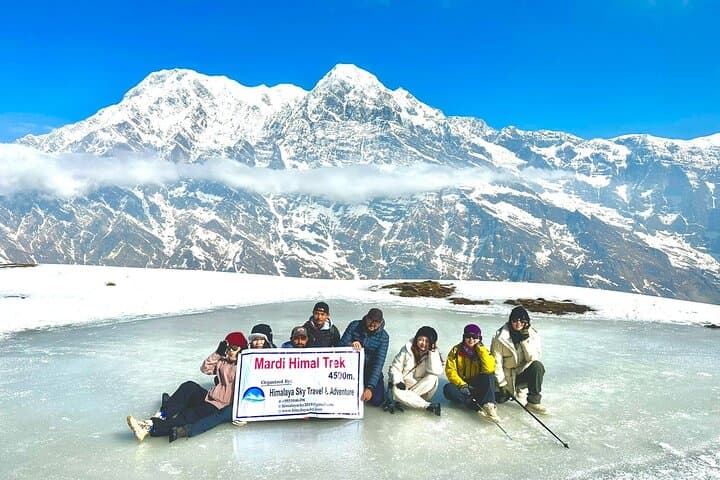
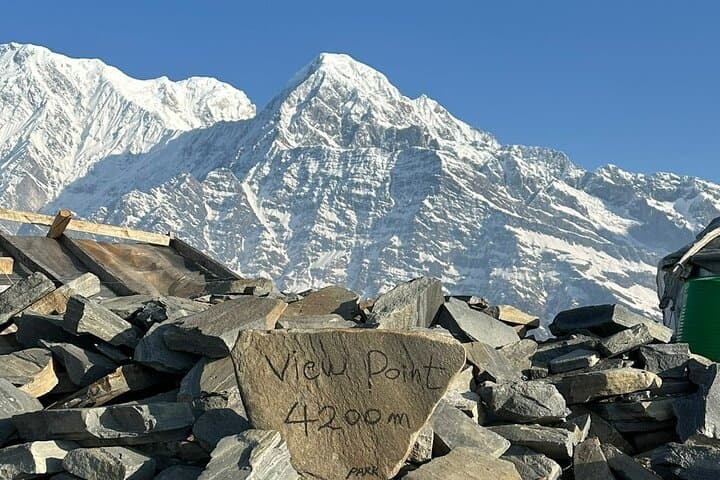
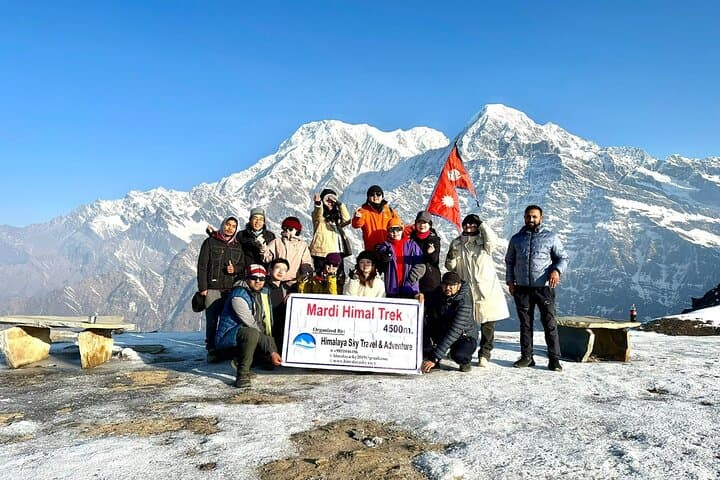
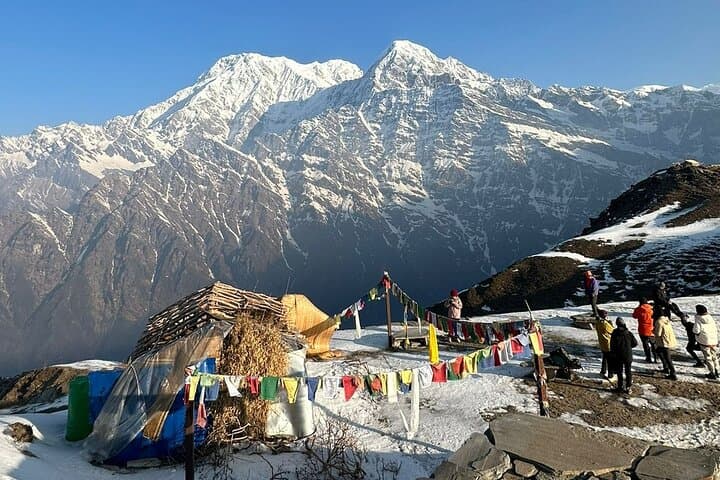
Dawn breaks over terraced fields as you climb from Pokhara’s misty lake basin toward narrow ridgelines. The trail rises through rhododendron and oak, the forest occasionally parting to reveal Machhapuchhre—its fluted south face daring you onward. By High Camp the air thins and the silhouettes of Annapurna South and Hiunchuli dominate the horizon; on a clear day the panorama throws light across glaciers and ice walls below Mardi Himal Base Camp (up to ~4,500 m).
Dawn breaks over terraced fields as you climb from Pokhara’s misty lake basin toward narrow ridgelines. The trail rises through rhododendron and oak, the forest occasionally parting to reveal Machhapuchhre—its fluted south face daring you onward. By High Camp the air thins and the silhouettes of Annapurna South and Hiunchuli dominate the horizon; on a clear day the panorama throws light across glaciers and ice walls below Mardi Himal Base Camp (up to ~4,500 m).
The route threads long-used trans-Himalayan paths and modern conservation corridors inside the Annapurna Conservation Area. Geologically this section is young uplifted terrane—steep valleys cut by glacial and river erosion, yielding abrupt elevation gain and rich, porous soils that support orchids and mosses. Culturally the trail passes Tamang and Gurung villages where tea gardens and stone houses speak to centuries of farming and trade between hills and lowlands.
Expect 4–6 hour approach days with two longer days: the ascent to High Camp and the push to Mardi Himal Base Camp and back (~8 hours). Trails alternate packed-sand singletrack, stone staircases, and grassy ridgelines; muddy stretches follow rain or late snow. Lodges provide basic rooms and hot meals; porters and guides are common and ACAP/TIMS permits are required.
Practical tips: pace your ascent to reduce altitude effects, carry layers for rapid temperature swings, and plan daylight hours to avoid afternoon storms. Water sources exist at villages but treat or filter. For many hikers this trek delivers concentrated alpine views with modest technical demand—rewarding, raw, and distinctly Himalayan.