THE ADVENTURE COLLECTIVE® · Independent discovery and booking for outdoor travel

A steady, high-altitude trek from Pokhara to Mardi Himal Base Camp that climbs through rhododendron forests and alpine meadows to panoramic views of Annapurna and Machapuchare. This 9–11 day route balances manageable trails with serious altitude — ideal for trekkers looking for a non-technical Himalayan summit experience.
A steady, high-altitude trek from Pokhara to Mardi Himal Base Camp that climbs through rhododendron forests and alpine meadows to panoramic views of Annapurna and Machapuchare. This 9–11 day route balances manageable trails with serious altitude — ideal for trekkers looking for a non-technical Himalayan summit experience.
The trail opens on a single ridge, the valley below a patchwork of rice terraces and the Annapurna range rising like a white wall ahead. Morning light picks out the serrated ridgeline of Annapurna South and Machapuchare; by midday the forest exhales damp, pine-scented air that pushes you uphill.
Verified experiences and guided adventures in the surrounding area.
Operated by Overland Trek Nepal · Pokhara, Gandaki Province
The trail opens on a single ridge, the valley below a patchwork of rice terraces and the Annapurna range rising like a white wall ahead. Morning light picks out the serrated ridgeline of Annapurna South and Machapuchare; by midday the forest exhales damp, pine-scented air that pushes you uphill.
Mardi Himal sits on the southern flank of the Annapurna Massif. Geologically recent uplift and glacial carving have left steep ridges, narrow cols and broad moraine shoulders; culturally the route threads scattered Gurung and Magar villages that have long acted as trade and pastoral waypoints between lowland Pokhara and the high pastures. Tea houses, altitudinal rhododendron stands and seasonal yak pastures mark the changing ecosystem as you climb.
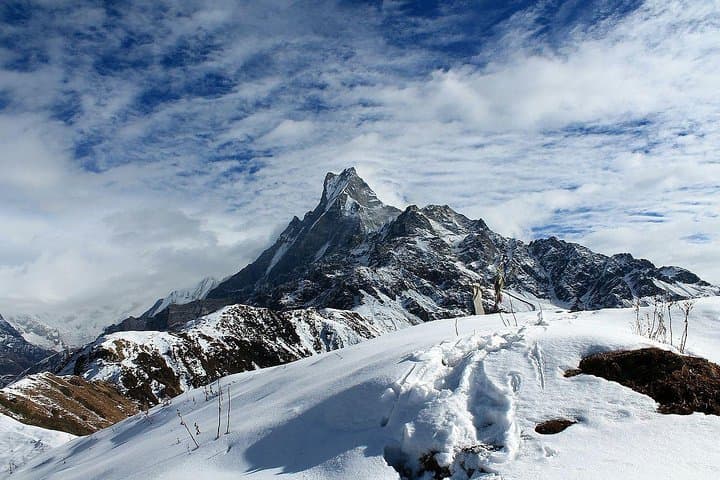
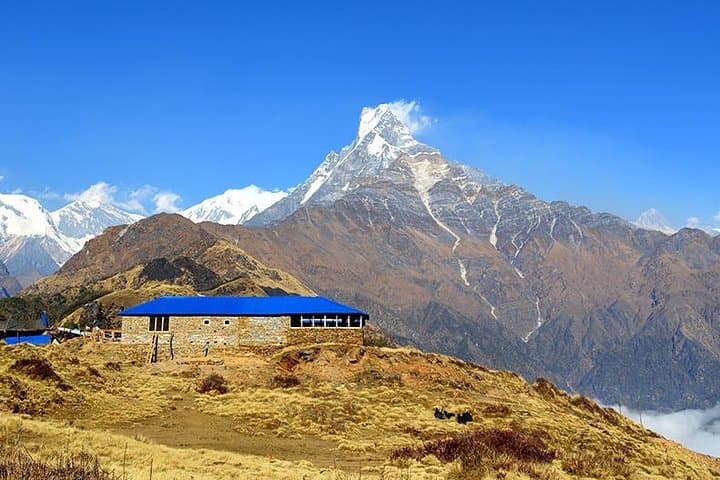
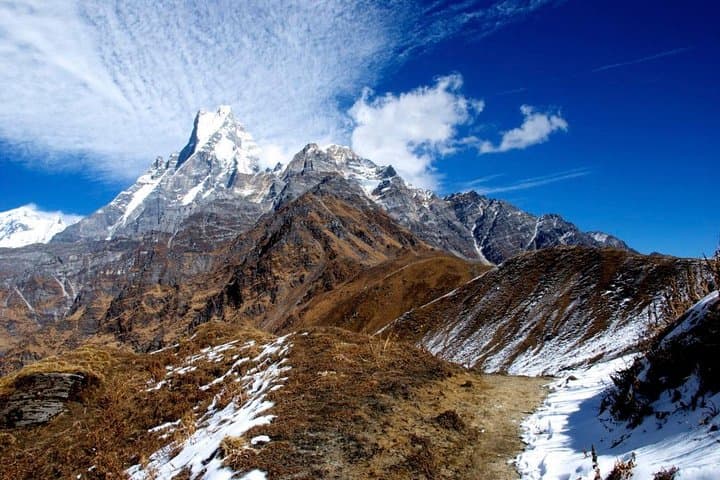
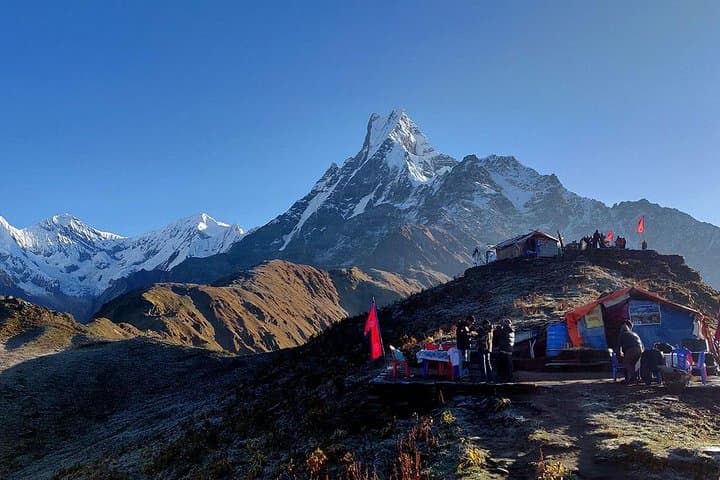
Expect a steady ascent from Phedi (≈1,100m) through Deurali and High Camp to Base Camp at about 4,500m — roughly 45–55 km round-trip with cumulative ascent near 3,500–3,800m. Terrain ranges from carved stone steps and forest tracks to exposed alpine meadows and short scree sections above High Camp. Views sharpen at dawn and dusk; the summit ridge seems to lean toward you, daring you to keep climbing.
Practically: plan for ACAP and TIMS permits, allow acclimatization days, and carry layered clothing for large diurnal swings. Start early to avoid afternoon clouds; hydrate consistently and watch for mild altitude symptoms. Tea-house logistics are straightforward but expect simple fare and basic hot-water systems. The route rewards steady pacing: it’s an accessible high-altitude trek that asks for respect, not technical climbing skills.
moderate.
9–11 days.
Good aerobic fitness with experience on sustained uphill days; able to hike 5–7 hours per day and carry a 6–10 kg daypack.
Yes — you need an Annapurna Conservation Area Permit (ACAP) and a TIMS card; guides or operators typically arrange these before departure.
No — the route is non-technical; crampons are not normally needed in standard seasons, but winter snows can make sections icy.
Spring (March–May) and autumn (September–November) offer the most stable weather and the clearest mountain views; monsoon brings heavy rain and winter brings deep snow higher on the route.
Tea houses provide basic meals, hot water and simple beds on most nights of the route; high-camp services are more rustic and may be limited in supply.
The trails follow historic trans-Himalayan grazing and trade routes used by Gurung and Magar communities; local tea houses grew with modern trekking in the 1990s.
The trek lies within the Annapurna Conservation Area — stick to marked trails, minimize single-use plastic, and support local lodges to keep tourism sustainable.
Overland Trek Nepal operates guided outdoor trips and adventures with an emphasis on safety, stewardship, and memorable experiences.
The trail opens on a single ridge, the valley below a patchwork of rice terraces and the Annapurna range rising like a white wall ahead. Morning light picks out the serrated ridgeline of Annapurna South and Machapuchare; by midday the forest exhales damp, pine-scented air that pushes you uphill.
The trail opens on a single ridge, the valley below a patchwork of rice terraces and the Annapurna range rising like a white wall ahead. Morning light picks out the serrated ridgeline of Annapurna South and Machapuchare; by midday the forest exhales damp, pine-scented air that pushes you uphill.
Mardi Himal sits on the southern flank of the Annapurna Massif. Geologically recent uplift and glacial carving have left steep ridges, narrow cols and broad moraine shoulders; culturally the route threads scattered Gurung and Magar villages that have long acted as trade and pastoral waypoints between lowland Pokhara and the high pastures. Tea houses, altitudinal rhododendron stands and seasonal yak pastures mark the changing ecosystem as you climb.
Expect a steady ascent from Phedi (≈1,100m) through Deurali and High Camp to Base Camp at about 4,500m — roughly 45–55 km round-trip with cumulative ascent near 3,500–3,800m. Terrain ranges from carved stone steps and forest tracks to exposed alpine meadows and short scree sections above High Camp. Views sharpen at dawn and dusk; the summit ridge seems to lean toward you, daring you to keep climbing.
Practically: plan for ACAP and TIMS permits, allow acclimatization days, and carry layered clothing for large diurnal swings. Start early to avoid afternoon clouds; hydrate consistently and watch for mild altitude symptoms. Tea-house logistics are straightforward but expect simple fare and basic hot-water systems. The route rewards steady pacing: it’s an accessible high-altitude trek that asks for respect, not technical climbing skills.