THE ADVENTURE COLLECTIVE® · Independent discovery and booking for outdoor travel

A long day into the high Andes from Lima, the Marcapomacocha Lakeside Route covers dramatic glacial lagoons, the three-tiered Carispaccha waterfall and local pachamama rituals. Ideal for travelers ready to handle altitude and seeking stark Andean landscapes.
A long day into the high Andes from Lima, the Marcapomacocha Lakeside Route covers dramatic glacial lagoons, the three-tiered Carispaccha waterfall and local pachamama rituals. Ideal for travelers ready to handle altitude and seeking stark Andean landscapes.
Dawn breaks on the high puna as the van slides east out of Lima, headlights dimming under a vault of clear, cold sky. Air thins, colors sharpen: slate lakes mirror snow-bright ridges and flocks of alpacas graze like slow punctuation marks on the slopes. The route to Marcapomacocha moves between lagoons, past the sapphire of Yantac and the quieter Chuchún, each pool framed by wind-swept grasses and the compact architecture of Andean stone.
Verified experiences and guided adventures in the surrounding area.
Operated by IZI PERU · Marcapomacocha, Junín
Dawn breaks on the high puna as the van slides east out of Lima, headlights dimming under a vault of clear, cold sky. Air thins, colors sharpen: slate lakes mirror snow-bright ridges and flocks of alpacas graze like slow punctuation marks on the slopes. The route to Marcapomacocha moves between lagoons, past the sapphire of Yantac and the quieter Chuchún, each pool framed by wind-swept grasses and the compact architecture of Andean stone.
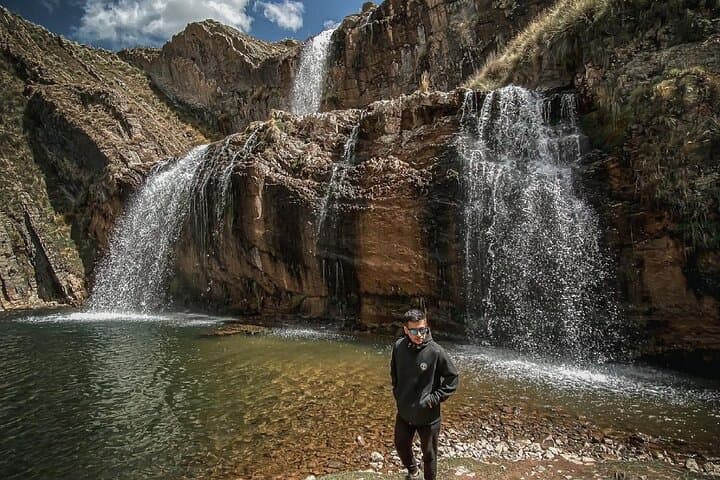
Geology here is blunt and recent — uplifted granite and glacially scoured basins carved during the last ice ages. The Cordillera de la Viuda (Widow Range) rises to alpine summits over 5,200 m, feeding waterfalls such as Carispaccha, a stepped cascade with three falls totaling more than 30 m. Culturally the valleys are alive: local communities continue pachamama (earth) offerings; coca tea and small ceremonies are part of acclimatization and respect for place.
Expect a full-day outing (early departure, late return), with timed stops for breathing exercises and a guided short walk to view falls and lagoons. The trail sections are moderate underfoot — high-elevation walking rather than technical hiking — with loose rock, peat, and wet grass near the lakes. Practicalities: bring layered insulation, sun protection, a refillable water bottle, and let your guide know if you have altitude concerns. Entrance to Carispaccha carries a small fee (≈S/3). Plan for long daylight, brisk wind, and dramatic photos — and leave no trace: these high Andean wetlands are fragile and recover slowly.
moderate.
15 hours (full day, approx. 5:00–21:00).
Suitable for people with basic walking fitness; must tolerate long day and high elevation up to ~5,200 m.
This is a full-day tour that departs early (around 5:00 AM) from Lima and returns late evening (approx. 9:00 PM), totaling about 15 hours including stops.
Yes—trail sections are non-technical and guides note the tour is suitable for most fitness levels, but altitude makes it more demanding than sea-level walks.
Tourist transport and an official guide are included; bring snacks if you prefer—coca tea and ponchos are provided by the operator.
There is a small entrance fee to Carispaccha Waterfall (~S/3) not always included; carry small cash for this and local purchases.
Local communities maintain Andean traditions and ceremonies; Marcapomacocha has long been part of indigenous pastoral routes and ritual landscapes.
High Andean wetlands are sensitive—stick to trails, pack out waste, and avoid trampling mosses and cushion plants that recover very slowly.
IZI PERU operates guided outdoor trips and adventures with an emphasis on safety, stewardship, and memorable experiences.
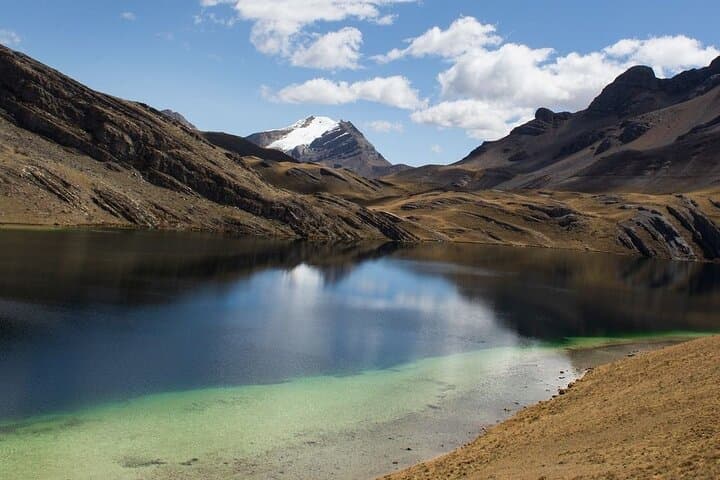
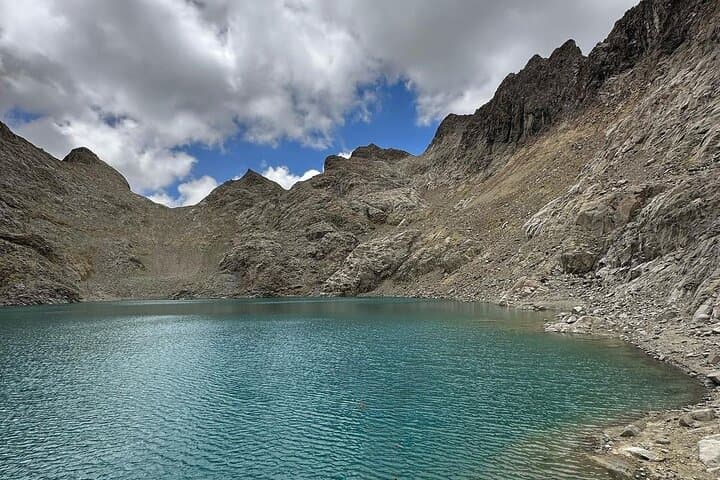
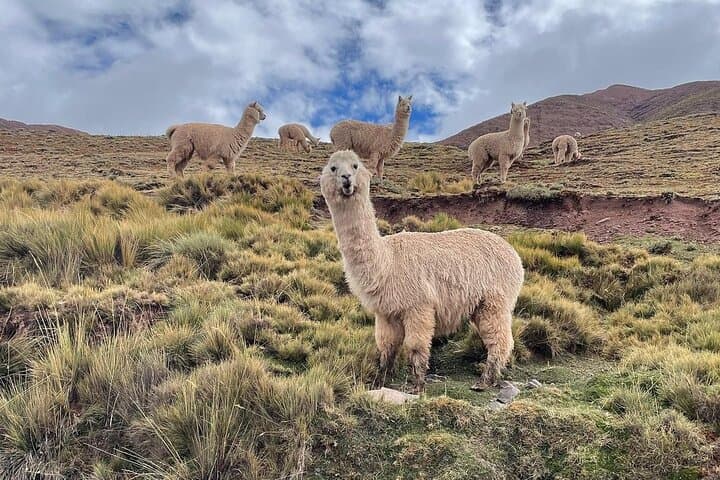
Dawn breaks on the high puna as the van slides east out of Lima, headlights dimming under a vault of clear, cold sky. Air thins, colors sharpen: slate lakes mirror snow-bright ridges and flocks of alpacas graze like slow punctuation marks on the slopes. The route to Marcapomacocha moves between lagoons, past the sapphire of Yantac and the quieter Chuchún, each pool framed by wind-swept grasses and the compact architecture of Andean stone.
Dawn breaks on the high puna as the van slides east out of Lima, headlights dimming under a vault of clear, cold sky. Air thins, colors sharpen: slate lakes mirror snow-bright ridges and flocks of alpacas graze like slow punctuation marks on the slopes. The route to Marcapomacocha moves between lagoons, past the sapphire of Yantac and the quieter Chuchún, each pool framed by wind-swept grasses and the compact architecture of Andean stone.
Geology here is blunt and recent — uplifted granite and glacially scoured basins carved during the last ice ages. The Cordillera de la Viuda (Widow Range) rises to alpine summits over 5,200 m, feeding waterfalls such as Carispaccha, a stepped cascade with three falls totaling more than 30 m. Culturally the valleys are alive: local communities continue pachamama (earth) offerings; coca tea and small ceremonies are part of acclimatization and respect for place.
Expect a full-day outing (early departure, late return), with timed stops for breathing exercises and a guided short walk to view falls and lagoons. The trail sections are moderate underfoot — high-elevation walking rather than technical hiking — with loose rock, peat, and wet grass near the lakes. Practicalities: bring layered insulation, sun protection, a refillable water bottle, and let your guide know if you have altitude concerns. Entrance to Carispaccha carries a small fee (≈S/3). Plan for long daylight, brisk wind, and dramatic photos — and leave no trace: these high Andean wetlands are fragile and recover slowly.