THE ADVENTURE COLLECTIVE® · Independent discovery and booking for outdoor travel

Explore Vila Viçosa’s working quarries and mills to see how Alentejo marble is extracted and transformed—from open faces to finished slabs—on a 2–3 hour guided route.
Explore Vila Viçosa’s working quarries and mills to see how Alentejo marble is extracted and transformed—from open faces to finished slabs—on a 2–3 hour guided route.
You step out of the car into a landscape of exposed cliffs and pale faces—marble reaches toward the Alentejo sky like folded pages of geological history. Sun picks out bands of cream and gray; dust settles in the dry air as machines hum in the distance. The tour begins at the Núcleo Documental do Mármore, where a guide points to maps and samples and explains how heat, pressure and calcium carbonate turned ancient seabeds into the stone that built palaces.
Verified experiences and guided adventures in the surrounding area.
Operated by Rota do Marmore do Anticlinal de Estremoz · Vila Viçosa, Évora District
You step out of the car into a landscape of exposed cliffs and pale faces—marble reaches toward the Alentejo sky like folded pages of geological history. Sun picks out bands of cream and gray; dust settles in the dry air as machines hum in the distance. The tour begins at the Núcleo Documental do Mármore, where a guide points to maps and samples and explains how heat, pressure and calcium carbonate turned ancient seabeds into the stone that built palaces.
Vila Viçosa and nearby Borba have been centers of marble extraction and craft for centuries. Local quarries provided material for regional architecture and for royal commissions; the sawmills and workshops nearby show how artisan techniques met industrial processing in the 20th century. Geology here is obvious—layered veins, fossil fragments and polished faces reveal the rock’s origin and the ways cracks determine how blocks are cut.
Expect a mix of outdoor quarry viewing and indoor workshop demonstrations: heavy machinery, diamond-wire saws, hand-finishing benches and the personal stories of master stoneworkers. The route requires short walks on uneven ground and strict safety protocols—helmets and vests are mandatory. Bring closed-toe shoes, water and a sun layer; plan for a 2–3 hour window if you’re moving between sites by car.
Photography is rewarding but respect signage and restricted areas. Time your visit for morning or late afternoon light when veining contrasts strongest. For travelers curious about craft and landscape, this is a practical, tactile look at how raw stone becomes architecture—an industrial landscape that still shapes local identity and economy.
moderate.
2–3 hours.
Moderate fitness required—comfortable walking on uneven ground and short climbs; not suitable for those with serious mobility issues.
Yes—while the meeting point is fixed, visits cover multiple quarries and workshops; guests usually travel by car between locations.
Children can join but must be supervised; infants should sit on laps and the tour is not recommended for those with back or heart problems.
Photography is generally allowed in outdoor quarries and some workshops, but follow staff instructions and do not photograph restricted machinery or personnel without permission.
Local guides commonly speak Portuguese and often English; check the booking provider for specific language options if needed.
Vila Viçosa’s marble industry supplied stone for regional palaces and public works; quarrying and carving have shaped local crafts and economies for centuries.
Quarries are active industrial sites with safety and preservation rules—stay on designated paths, don’t remove samples and follow guide directions to minimize impact.
Rota do Marmore do Anticlinal de Estremoz operates guided outdoor trips and adventures with an emphasis on safety, stewardship, and memorable experiences.
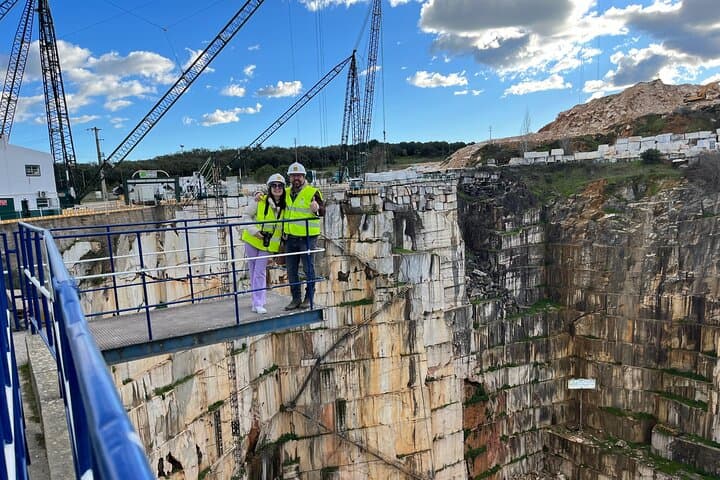


You step out of the car into a landscape of exposed cliffs and pale faces—marble reaches toward the Alentejo sky like folded pages of geological history. Sun picks out bands of cream and gray; dust settles in the dry air as machines hum in the distance. The tour begins at the Núcleo Documental do Mármore, where a guide points to maps and samples and explains how heat, pressure and calcium carbonate turned ancient seabeds into the stone that built palaces.
You step out of the car into a landscape of exposed cliffs and pale faces—marble reaches toward the Alentejo sky like folded pages of geological history. Sun picks out bands of cream and gray; dust settles in the dry air as machines hum in the distance. The tour begins at the Núcleo Documental do Mármore, where a guide points to maps and samples and explains how heat, pressure and calcium carbonate turned ancient seabeds into the stone that built palaces.
Vila Viçosa and nearby Borba have been centers of marble extraction and craft for centuries. Local quarries provided material for regional architecture and for royal commissions; the sawmills and workshops nearby show how artisan techniques met industrial processing in the 20th century. Geology here is obvious—layered veins, fossil fragments and polished faces reveal the rock’s origin and the ways cracks determine how blocks are cut.
Expect a mix of outdoor quarry viewing and indoor workshop demonstrations: heavy machinery, diamond-wire saws, hand-finishing benches and the personal stories of master stoneworkers. The route requires short walks on uneven ground and strict safety protocols—helmets and vests are mandatory. Bring closed-toe shoes, water and a sun layer; plan for a 2–3 hour window if you’re moving between sites by car.
Photography is rewarding but respect signage and restricted areas. Time your visit for morning or late afternoon light when veining contrasts strongest. For travelers curious about craft and landscape, this is a practical, tactile look at how raw stone becomes architecture—an industrial landscape that still shapes local identity and economy.