THE ADVENTURE COLLECTIVE® · Independent discovery and booking for outdoor travel

Climb marble-studded peaks, watch master sculptors at their forges, then drift down Hoi An’s Hoai River releasing a paper lantern under the glow of historic streets. This half-day tour pairs geology and handicraft with a ritual evening afloat.
Climb marble-studded peaks, watch master sculptors at their forges, then drift down Hoi An’s Hoai River releasing a paper lantern under the glow of historic streets. This half-day tour pairs geology and handicraft with a ritual evening afloat.
You arrive from Da Nang with limestone faces rising ahead, stairways cut into stone and the scent of incense drifting from 19th-century pagodas. Climbing the Marble Mountains feels like stepping into a lived-in grotto: sunlight slices through cave mouths, monks’ bells echo, and local artisans tap at marble blocks in open-front workshops.
Verified experiences and guided adventures in the surrounding area.
Operated by Authentic PHU QUOC · Da Nang, Da Nang
You arrive from Da Nang with limestone faces rising ahead, stairways cut into stone and the scent of incense drifting from 19th-century pagodas. Climbing the Marble Mountains feels like stepping into a lived-in grotto: sunlight slices through cave mouths, monks’ bells echo, and local artisans tap at marble blocks in open-front workshops.
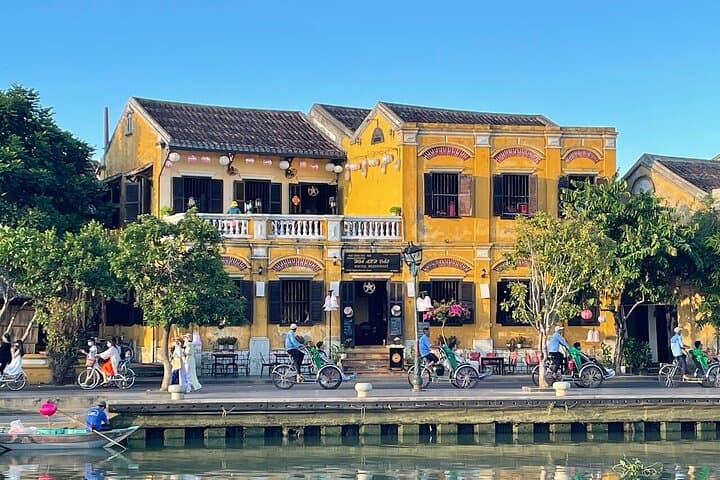
Geology here is raw — five marble and limestone hills formed by tectonic uplift and sea retreat. Human history layers over that rock: Cham worship sites, later Buddhist sanctuaries, and the coastal port city of Hoi An, once a hub on the South China Sea trade routes. In Hoi An the preserved wooden shop-houses, the Chinese assembly hall, and the 400-year-old Japanese Bridge sketch a living map of commerce and cultural exchange.
As daylight slips toward evening, the Hoai River eases you into a quieter pace. Boats drift under paper lantern light; releasing a flower lantern is both a ritual and a moment of communal calm amid the night market hum.
Practical guidance: the combined excursion runs about six hours with hotel pickup in Da Nang. Expect stairs and uneven rock paths at Marble Mountains (an elevator is available at one site), plus easy walking on Hoi An's compact streets. Bring a rain jacket during the wet season, comfortable shoes for steps and cave floors, and small cash for market purchases and workshop souvenirs. If you have dietary needs, notify the operator in advance — the included local dinner can be adapted. Time your visit for late afternoon to catch lantern-lit Hoi An after exploring the mountains earlier in the day.
easy.
6 hours.
Light activity: suitable for most fitness levels but requires climbing stairs and short walks on uneven ground.
The tour lasts about six hours and includes hotel pickup/drop-off in Da Nang, entrance fees, an English-speaking guide, a local dinner (one dish), mineral water, a boat ride and lantern experience.
The climb involves stairs and uneven surfaces but is generally easy; an elevator is available for part of the site if stairs are unsuitable.
Yes — operators can adapt meals for vegetarian or vegan diets if you note restrictions when booking.
Many operators now use biodegradable lanterns and floating flower baskets; check with the provider and avoid lanterns with wire frames that can harm wildlife.
Marble Mountains host Buddhist pagodas and Cham-era shrines carved into limestone; Hoi An grew from a 15th–19th-century trading port connecting China, Japan and Europe, reflected in its architecture.
Hoi An manages tourism by restricting some development within the old town and promoting biodegradable lanterns; visitors are encouraged to limit single-use plastics and respect temple sites.
Authentic PHU QUOC operates guided outdoor trips and adventures with an emphasis on safety, stewardship, and memorable experiences.



You arrive from Da Nang with limestone faces rising ahead, stairways cut into stone and the scent of incense drifting from 19th-century pagodas. Climbing the Marble Mountains feels like stepping into a lived-in grotto: sunlight slices through cave mouths, monks’ bells echo, and local artisans tap at marble blocks in open-front workshops.
You arrive from Da Nang with limestone faces rising ahead, stairways cut into stone and the scent of incense drifting from 19th-century pagodas. Climbing the Marble Mountains feels like stepping into a lived-in grotto: sunlight slices through cave mouths, monks’ bells echo, and local artisans tap at marble blocks in open-front workshops.
Geology here is raw — five marble and limestone hills formed by tectonic uplift and sea retreat. Human history layers over that rock: Cham worship sites, later Buddhist sanctuaries, and the coastal port city of Hoi An, once a hub on the South China Sea trade routes. In Hoi An the preserved wooden shop-houses, the Chinese assembly hall, and the 400-year-old Japanese Bridge sketch a living map of commerce and cultural exchange.
As daylight slips toward evening, the Hoai River eases you into a quieter pace. Boats drift under paper lantern light; releasing a flower lantern is both a ritual and a moment of communal calm amid the night market hum.
Practical guidance: the combined excursion runs about six hours with hotel pickup in Da Nang. Expect stairs and uneven rock paths at Marble Mountains (an elevator is available at one site), plus easy walking on Hoi An's compact streets. Bring a rain jacket during the wet season, comfortable shoes for steps and cave floors, and small cash for market purchases and workshop souvenirs. If you have dietary needs, notify the operator in advance — the included local dinner can be adapted. Time your visit for late afternoon to catch lantern-lit Hoi An after exploring the mountains earlier in the day.