THE ADVENTURE COLLECTIVE® · Independent discovery and booking for outdoor travel

Explore five sculpted marble and limestone hills, Buddhist caves and pagodas, then walk Hoi An’s lantern-lit ancient streets. This half‑day private tour pairs geological curiosities with centuries of cultural trade—ending with a riverside dinner at dusk.
Explore five sculpted marble and limestone hills, Buddhist caves and pagodas, then walk Hoi An’s lantern-lit ancient streets. This half‑day private tour pairs geological curiosities with centuries of cultural trade—ending with a riverside dinner at dusk.
You step out of the van into humid coastal air and limestone spires rising like a small range against the sky—Marble Mountains’ carved faces daring you up narrow stairways and into cool cave sanctuaries.
Verified experiences and guided adventures in the surrounding area.
Operated by Vietnam Sightseeing · Da Nang, Da Nang
You step out of the van into humid coastal air and limestone spires rising like a small range against the sky—Marble Mountains’ carved faces daring you up narrow stairways and into cool cave sanctuaries.
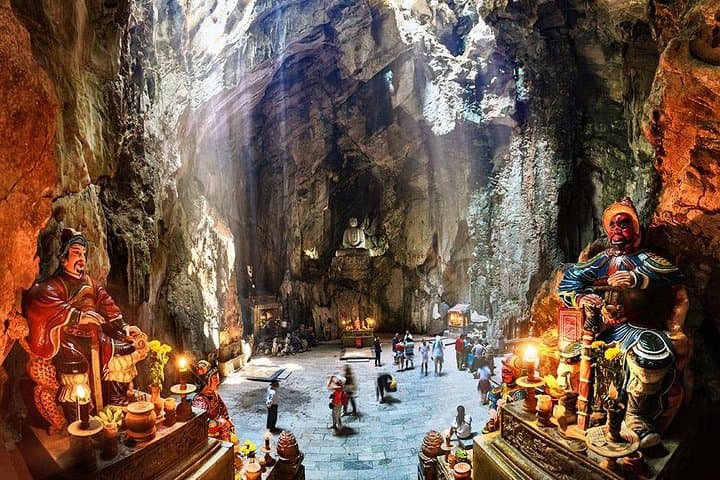
The cluster of five marble and limestone hills—named after the five classical elements—has attracted pilgrims and stonemasons for centuries. Moss-dark caverns hold Buddhist shrines and niches where incense smoke drifts like slow-moving weather; above, carved steps and lookouts frame views across Da Nang’s coastline toward Cham Island.
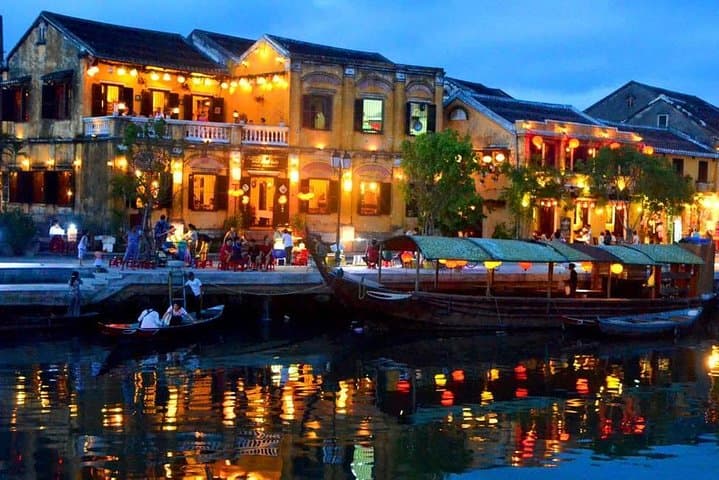
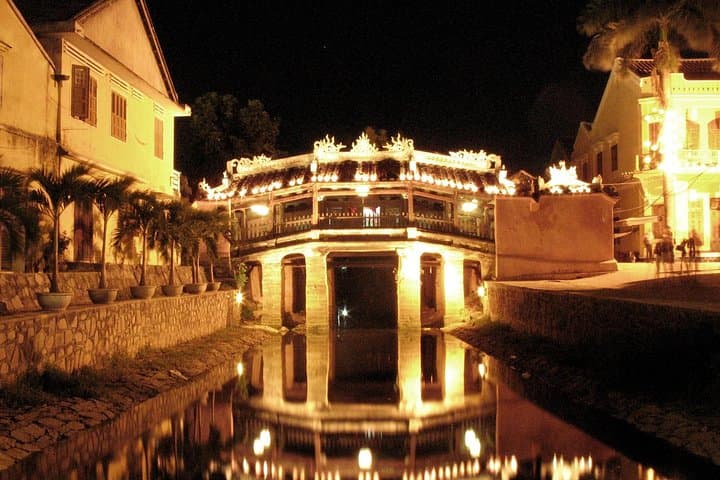
Hoi An, an hour south, flips the script from compact, geological drama to human-scale history: a UNESCO World Heritage port where Japanese merchants once crossed a covered bridge and Chinese assembly halls mark transoceanic trade routes. At dusk the Thu Bon riverfront comes alive—lanterns swing, market stalls sell cao lầu and paper lamps, and the ancient streets glow under foot and gaslight.
Practical edge: expect 6–7 hours on the road with 1–2 miles of walking on uneven stone steps and paved alleys. There’s minimal elevation overall but several steep flights through the Marble Mountains’ caves and pagodas. Dress modestly for temple visits, wear grippy shoes for wet or polished stone, and time the visit to arrive Hoi An at sunset for the lantern-lit sections and market atmosphere. Bottled water is common on tour, but bring a refillable bottle for sustainability. Bring a small camera, modest cash for souvenirs, and patience for crowds in peak season.
easy.
6–7 hours.
Suitable for most fitness levels; requires short bursts of stair climbing and 1–2 miles of walking on uneven surfaces.
The tour runs about 6–7 hours and includes visits to Marble Mountains and Hoi An with an English-speaking guide, bottled water, dinner, and admission to featured sites per the itinerary.
It’s advertised as suitable for all fitness levels, but Marble Mountains have steep steps and uneven paths that may be challenging for limited mobility—consider asking about alternatives or reduced walking options.
Yes—most itineraries include a guided walk and free time in Hoi An’s old town and night market so you can explore, shop, and take photos at your own pace before dinner.
Yes—temples expect modest dress and quiet behavior; bring a shawl or wear clothing that covers shoulders and knees and remove hats inside sacred spaces.
Marble Mountains has been a Buddhist pilgrimage site and stone-carving center for centuries, while Hoi An prospered as a major Southeast Asian trading port from the 15th to 19th centuries, reflected in its Japanese Covered Bridge and Chinese assembly halls.
Both sites manage visitor impact—stick to marked paths, avoid touching fragile carvings, and use refillable bottles to reduce plastic waste.
Vietnam Sightseeing operates guided outdoor trips and adventures with an emphasis on safety, stewardship, and memorable experiences.
You step out of the van into humid coastal air and limestone spires rising like a small range against the sky—Marble Mountains’ carved faces daring you up narrow stairways and into cool cave sanctuaries.
You step out of the van into humid coastal air and limestone spires rising like a small range against the sky—Marble Mountains’ carved faces daring you up narrow stairways and into cool cave sanctuaries.
The cluster of five marble and limestone hills—named after the five classical elements—has attracted pilgrims and stonemasons for centuries. Moss-dark caverns hold Buddhist shrines and niches where incense smoke drifts like slow-moving weather; above, carved steps and lookouts frame views across Da Nang’s coastline toward Cham Island.
Hoi An, an hour south, flips the script from compact, geological drama to human-scale history: a UNESCO World Heritage port where Japanese merchants once crossed a covered bridge and Chinese assembly halls mark transoceanic trade routes. At dusk the Thu Bon riverfront comes alive—lanterns swing, market stalls sell cao lầu and paper lamps, and the ancient streets glow under foot and gaslight.
Practical edge: expect 6–7 hours on the road with 1–2 miles of walking on uneven stone steps and paved alleys. There’s minimal elevation overall but several steep flights through the Marble Mountains’ caves and pagodas. Dress modestly for temple visits, wear grippy shoes for wet or polished stone, and time the visit to arrive Hoi An at sunset for the lantern-lit sections and market atmosphere. Bottled water is common on tour, but bring a refillable bottle for sustainability. Bring a small camera, modest cash for souvenirs, and patience for crowds in peak season.