THE ADVENTURE COLLECTIVE® · Independent discovery and booking for outdoor travel

Climb carved steps into shadowed grottoes at the Marble Mountains, watch master sculptors at work, then stand beneath the towering Lady Buddha on Son Tra Peninsula. This 3–4 hour private tour blends geology, religion, and local craft with panoramic views of Da Nang.
Climb carved steps into shadowed grottoes at the Marble Mountains, watch master sculptors at work, then stand beneath the towering Lady Buddha on Son Tra Peninsula. This 3–4 hour private tour blends geology, religion, and local craft with panoramic views of Da Nang.
You arrive at the base of five steep limestone hills, the air humid and salted by the nearby South China Sea. Steps cut into pale stone climb into shadowed grottos and open terraces; incense curls from a hilltop pagoda while the city of Da Nang spreads low and bright below. The guide points to carved niches and explains which caverns were used for quiet meditation and which are still active worship sites.
Verified experiences and guided adventures in the surrounding area.
Operated by TTP Henry Travel Hoi An · Da Nang, Đà Nẵng
You arrive at the base of five steep limestone hills, the air humid and salted by the nearby South China Sea. Steps cut into pale stone climb into shadowed grottos and open terraces; incense curls from a hilltop pagoda while the city of Da Nang spreads low and bright below. The guide points to carved niches and explains which caverns were used for quiet meditation and which are still active worship sites.
The Marble Mountains (Ngu Hanh Son) are a compact geology lesson: karst limestone uplifted and pocked by centuries of rain and sea spray. Each mound is named for an element and hosts caves, Buddhist and Hindu shrines, and artisan workshops where sculptors work veined marble into altars and souvenirs. On Son Tra Peninsula the 67-meter Lady Buddha at Linh Ung Pagoda watches over fishermen and ferry routes, an imposing white figure visible from miles offshore.
Expect narrow stairways, short climbs to viewpoints, and a blend of natural chambers and human architecture dating to local religious traditions. Cultural notes: many grottoes served as hermitages and wartime shelters; the sculpting industry here remains an important local craft.
Practical guidance: wear sturdy walking shoes for uneven steps, carry sunscreen and water, and allow 3–4 hours to move at a comfortable pace. Respect temple dress codes—cover shoulders and knees—and plan morning or late-afternoon visits to avoid the hottest part of the day.
easy.
3–4 hours.
Suitable for most fitness levels; involves short stair climbs and walking on uneven stone.
The tour typically lasts 3–4 hours depending on traffic and how long you spend in the caves and at Linh Ung Pagoda.
Yes—expect carved stone steps and some steep sections inside the mountains; the route is manageable but requires steady footing.
Entrance fees are included in the tour according to the itinerary; the guide will handle tickets and logistics.
Cover shoulders and knees; bring a lightweight wrap or long shirt if you plan to enter pagoda interiors.
Marble Mountains contain Buddhist and Hindu grottoes used for centuries; the area also supplied stone for religious carving that shaped local craft economies.
Stay on marked paths and avoid touching fragile cave formations; local workshops face pressure from tourism so prioritize purchases from reputable artisans.
TTP Henry Travel Hoi An operates guided outdoor trips and adventures with an emphasis on safety, stewardship, and memorable experiences.


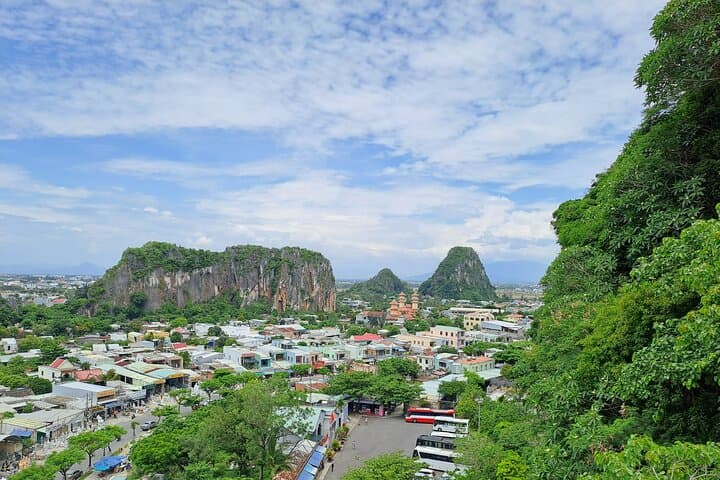
You arrive at the base of five steep limestone hills, the air humid and salted by the nearby South China Sea. Steps cut into pale stone climb into shadowed grottos and open terraces; incense curls from a hilltop pagoda while the city of Da Nang spreads low and bright below. The guide points to carved niches and explains which caverns were used for quiet meditation and which are still active worship sites.
You arrive at the base of five steep limestone hills, the air humid and salted by the nearby South China Sea. Steps cut into pale stone climb into shadowed grottos and open terraces; incense curls from a hilltop pagoda while the city of Da Nang spreads low and bright below. The guide points to carved niches and explains which caverns were used for quiet meditation and which are still active worship sites.
The Marble Mountains (Ngu Hanh Son) are a compact geology lesson: karst limestone uplifted and pocked by centuries of rain and sea spray. Each mound is named for an element and hosts caves, Buddhist and Hindu shrines, and artisan workshops where sculptors work veined marble into altars and souvenirs. On Son Tra Peninsula the 67-meter Lady Buddha at Linh Ung Pagoda watches over fishermen and ferry routes, an imposing white figure visible from miles offshore.
Expect narrow stairways, short climbs to viewpoints, and a blend of natural chambers and human architecture dating to local religious traditions. Cultural notes: many grottoes served as hermitages and wartime shelters; the sculpting industry here remains an important local craft.
Practical guidance: wear sturdy walking shoes for uneven steps, carry sunscreen and water, and allow 3–4 hours to move at a comfortable pace. Respect temple dress codes—cover shoulders and knees—and plan morning or late-afternoon visits to avoid the hottest part of the day.