THE ADVENTURE COLLECTIVE® · Independent discovery and booking for outdoor travel

Explore Da Nang’s Marble Mountains, the atmospheric Âm Phủ Cave, and the sweeping Lady Buddha viewpoint on Son Tra Peninsula in a compact half‑day. This tour mixes accessible walks, marble‑carving culture, and coastal panoramas—ideal for travelers short on time.
Explore Da Nang’s Marble Mountains, the atmospheric Âm Phủ Cave, and the sweeping Lady Buddha viewpoint on Son Tra Peninsula in a compact half‑day. This tour mixes accessible walks, marble‑carving culture, and coastal panoramas—ideal for travelers short on time.
You step out of the van to warm sea air and the low silhouette of five rocky hills rising from rice flats—Marble Mountains (Ngu Hanh Son) ahead, Son Tra’s green ridge with Lady Buddha to the east. The path climbs stone steps, threads through small shrines, and drops into the cool shadow of Âm Phủ (“Hell Cave”), where carved chambers and dripping limestone feel both ancient and immediate.
Verified experiences and guided adventures in the surrounding area.
Operated by Authentic Travel Ho Chi Minh · Da Nang, Da Nang
You step out of the van to warm sea air and the low silhouette of five rocky hills rising from rice flats—Marble Mountains (Ngu Hanh Son) ahead, Son Tra’s green ridge with Lady Buddha to the east. The path climbs stone steps, threads through small shrines, and drops into the cool shadow of Âm Phủ (“Hell Cave”), where carved chambers and dripping limestone feel both ancient and immediate.
Geology here is blunt and readable: low limestone and marble karst formed by marine sediment, then polished by human hands into altars and sculptures. Non Nuoc village at the mountains’ base has supplied Da Nang with marble craft for generations; look for sculptors turning raw blocks into Buddhas and dragons. Nearby, Linh Ung Pagoda on Monkey Mountain guards sweeping views of China Sea shipping lanes and Da Nang’s crescents of sand.
This is a half‑day, primarily walking tour—expect stairs, narrow caves, and paved viewpoints more than strenuous trail work (the highest of the Marble Mountains reaches roughly 100–110 m). Cultural context matters: pagodas are active spiritual sites—dress modestly and observe quiet zones. The operator includes round‑trip transfers (about 90 km total if you’re coming from Da Nang/Hoi An), entrance fees, and a bottle of water.
Practical guidance: start early to avoid midday heat or monsoon squalls; wear closed shoes with good grip for wet stone; carry sun protection and a lightweight rain layer in summer. If you want more time photographing temples or visiting workshops, ask about a private or extended option when you book.
easy.
4–5 hours.
Suitable for average fitness; involves climbing multiple stairs and short cave walkways but no technical climbing.
Entrance fees for the Marble Mountains and caves are typically included in this tour; confirm at booking and keep your ticket or receipt during the visit.
The tour is family‑friendly but involves many stairs and uneven surfaces—those with limited mobility may find access to caves and summits difficult.
Yes. The Linh Ung Pagoda viewpoint on Son Tra allows close access to the Lady Buddha complex and panoramic sea views; expect paved steps and landscaped grounds.
Yes—the operator offers pick up and drop off from Da Nang and Hoi An city centers; confirm your pickup point when booking.
Marble Mountains have long been a spiritual and craft center; pagodas and shrines here date to later Vietnamese dynasties and local religious traditions.
Respect marked paths and don’t remove rock or flora; ongoing tourism management focuses on protecting cave interiors and temple structures.
Authentic Travel Ho Chi Minh operates guided outdoor trips and adventures with an emphasis on safety, stewardship, and memorable experiences.
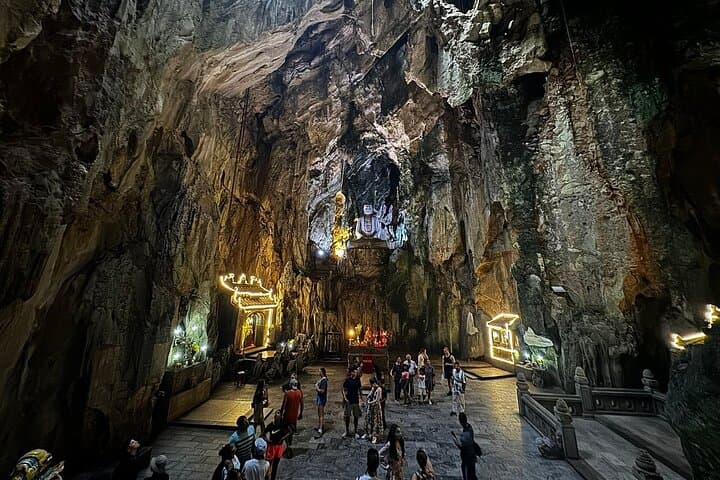
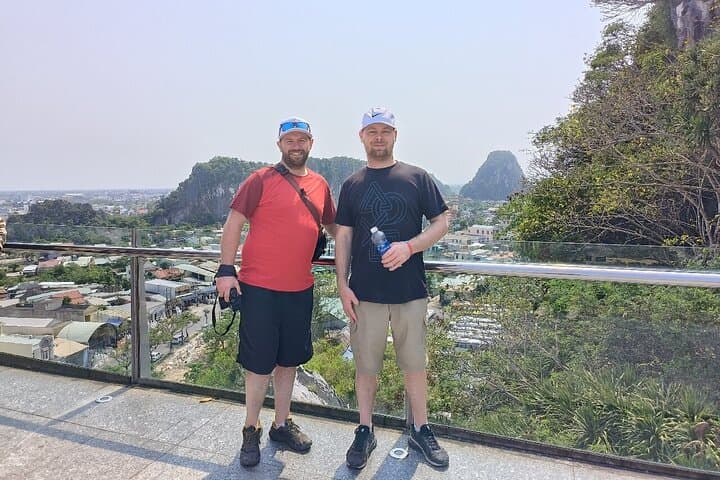
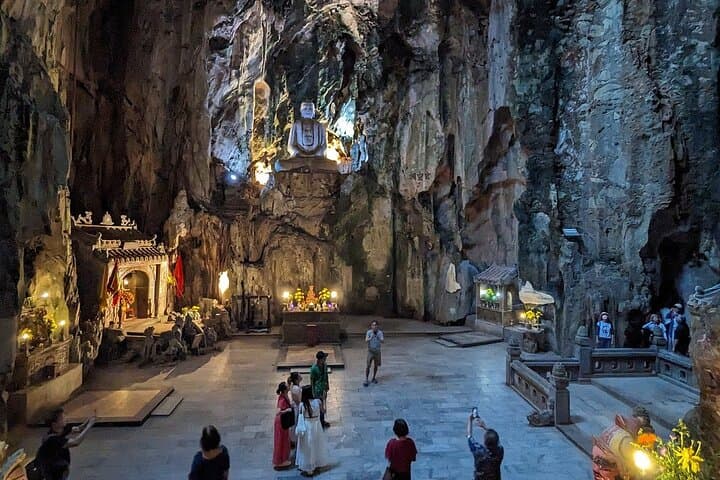
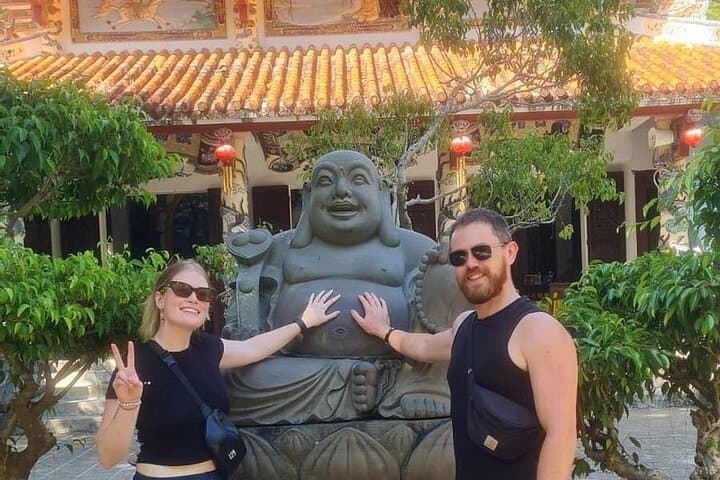
You step out of the van to warm sea air and the low silhouette of five rocky hills rising from rice flats—Marble Mountains (Ngu Hanh Son) ahead, Son Tra’s green ridge with Lady Buddha to the east. The path climbs stone steps, threads through small shrines, and drops into the cool shadow of Âm Phủ (“Hell Cave”), where carved chambers and dripping limestone feel both ancient and immediate.
You step out of the van to warm sea air and the low silhouette of five rocky hills rising from rice flats—Marble Mountains (Ngu Hanh Son) ahead, Son Tra’s green ridge with Lady Buddha to the east. The path climbs stone steps, threads through small shrines, and drops into the cool shadow of Âm Phủ (“Hell Cave”), where carved chambers and dripping limestone feel both ancient and immediate.
Geology here is blunt and readable: low limestone and marble karst formed by marine sediment, then polished by human hands into altars and sculptures. Non Nuoc village at the mountains’ base has supplied Da Nang with marble craft for generations; look for sculptors turning raw blocks into Buddhas and dragons. Nearby, Linh Ung Pagoda on Monkey Mountain guards sweeping views of China Sea shipping lanes and Da Nang’s crescents of sand.
This is a half‑day, primarily walking tour—expect stairs, narrow caves, and paved viewpoints more than strenuous trail work (the highest of the Marble Mountains reaches roughly 100–110 m). Cultural context matters: pagodas are active spiritual sites—dress modestly and observe quiet zones. The operator includes round‑trip transfers (about 90 km total if you’re coming from Da Nang/Hoi An), entrance fees, and a bottle of water.
Practical guidance: start early to avoid midday heat or monsoon squalls; wear closed shoes with good grip for wet stone; carry sun protection and a lightweight rain layer in summer. If you want more time photographing temples or visiting workshops, ask about a private or extended option when you book.