THE ADVENTURE COLLECTIVE® · Independent discovery and booking for outdoor travel

A half-day journey from Da Nang pairs the rugged Marble Mountains' caves and pagodas with the historic streets of Hoi An. This guided tour mixes light climbing, cultural sites and local flavors—ideal for travelers seeking active sightseeing with practical logistics.
A half-day journey from Da Nang pairs the rugged Marble Mountains' caves and pagodas with the historic streets of Hoi An. This guided tour mixes light climbing, cultural sites and local flavors—ideal for travelers seeking active sightseeing with practical logistics.
Stepping out of a Da Nang hotel, the air carries salt and incense; limestone hills rise ahead, their faces scored with caves that seem to dare visitors to enter. The Marble Mountains — five stone peaks of marble and limestone — climb abruptly from the coast, dotted with 19th-century pagodas and narrow stairways. Inside, caverns hold cool shadows and Buddhist niches, while platforms open to a patchwork of rice fields and the South China Sea.
Verified experiences and guided adventures in the surrounding area.
Operated by Authenitc Travel DA NANG · Da Nang, Da Nang
Stepping out of a Da Nang hotel, the air carries salt and incense; limestone hills rise ahead, their faces scored with caves that seem to dare visitors to enter. The Marble Mountains — five stone peaks of marble and limestone — climb abruptly from the coast, dotted with 19th-century pagodas and narrow stairways. Inside, caverns hold cool shadows and Buddhist niches, while platforms open to a patchwork of rice fields and the South China Sea.
The afternoon moves to Hoi An, where timber-framed merchant houses and the 400-year-old Japanese Bridge mark a port shaped by Chinese, Japanese and European trade from the 15th to 19th centuries. Learn the craft history in local stone-carving yards at the Marble Mountains, then walk lantern-lit streets in Hoi An, sampling cao lầu or bánh mì Phượng—local dishes with clear regional roots.
Practically: this is a five- to six-hour outing that combines short climbs, stair sections and flat town walking. An optional elevator at Marble Mountains reduces steps for those who prefer it. Wear sturdy shoes for uneven stone steps and bring sun protection; carry small cash for market purchases and temple donations. Expect guided commentary at key sites, included entrance fees, mineral water and a single-course lunch. Morning departures avoid midday heat; an afternoon in Hoi An is best for softer light and cooler streets. Respect temple dress codes, move carefully on slick cave steps, and leave time to browse local handicraft workshops—these support the communities preserving both stone carving and Hoi An’s living heritage.
easy.
5–6 hours.
Suitable for most fitness levels; requires ability to climb short steep stair sections and walk on uneven ground.
Yes—entrance fees to Marble Mountains attractions and cave temples are included in the tour price.
A single local-dish lunch is included (options like chicken rice, cao lầu, mì Quảng or bánh mì Phượng); inform the operator of dietary needs when booking.
An elevator at Marble Mountains reduces stairs, but some sites still require steps—contact the operator about specific mobility needs.
Transfers are short: Marble Mountains are about 15–20 minutes from central Da Nang and Hoi An is roughly 40–50 minutes from Da Nang depending on traffic.
Marble Mountains have long been a Buddhist site and a center for stone carving; Hoi An flourished as an international trading port between the 15th and 19th centuries, shaping its mixed architectural styles.
High visitor volumes strain delicate cave temples and narrow streets—stay on marked paths, avoid touching carvings, and support local craft shops to aid community-based preservation.
Authenitc Travel DA NANG operates guided outdoor trips and adventures with an emphasis on safety, stewardship, and memorable experiences.
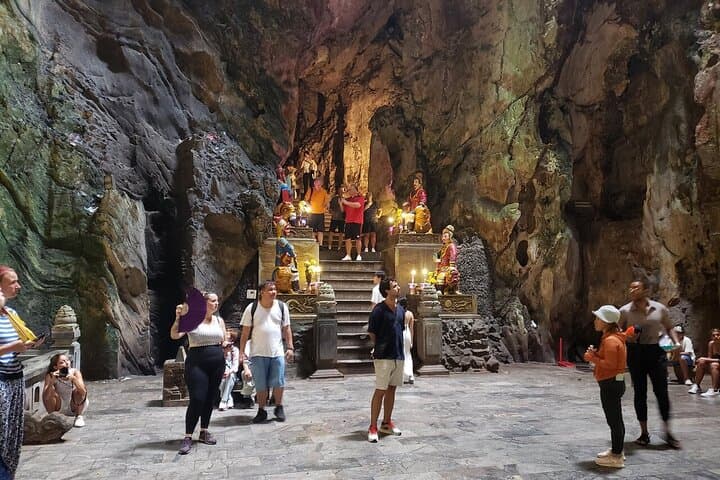

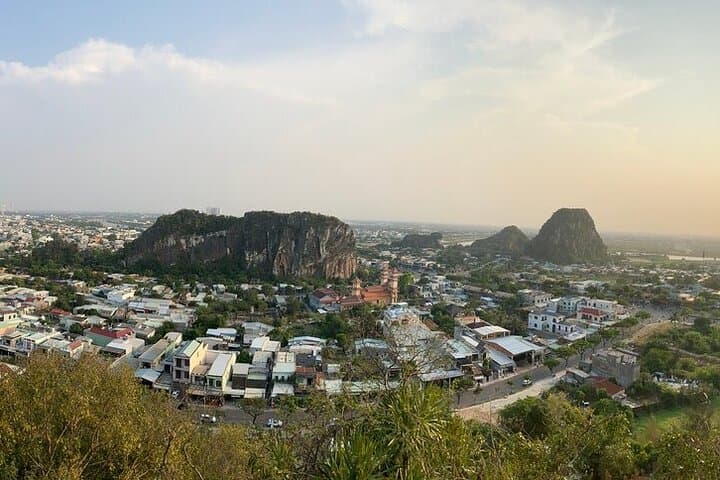
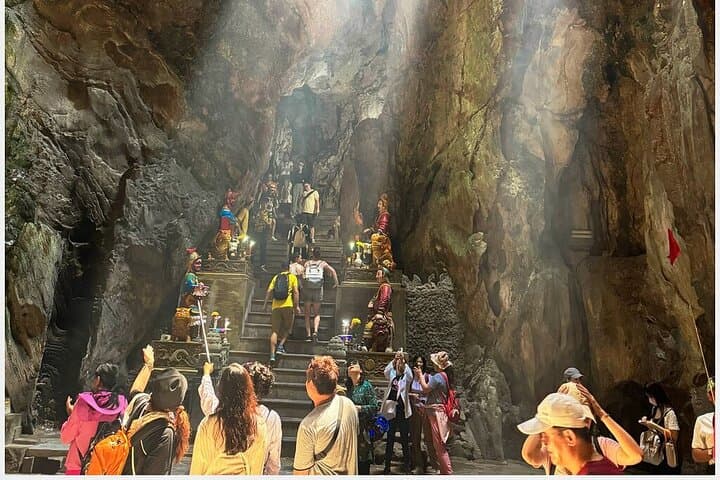
Stepping out of a Da Nang hotel, the air carries salt and incense; limestone hills rise ahead, their faces scored with caves that seem to dare visitors to enter. The Marble Mountains — five stone peaks of marble and limestone — climb abruptly from the coast, dotted with 19th-century pagodas and narrow stairways. Inside, caverns hold cool shadows and Buddhist niches, while platforms open to a patchwork of rice fields and the South China Sea.
Stepping out of a Da Nang hotel, the air carries salt and incense; limestone hills rise ahead, their faces scored with caves that seem to dare visitors to enter. The Marble Mountains — five stone peaks of marble and limestone — climb abruptly from the coast, dotted with 19th-century pagodas and narrow stairways. Inside, caverns hold cool shadows and Buddhist niches, while platforms open to a patchwork of rice fields and the South China Sea.
The afternoon moves to Hoi An, where timber-framed merchant houses and the 400-year-old Japanese Bridge mark a port shaped by Chinese, Japanese and European trade from the 15th to 19th centuries. Learn the craft history in local stone-carving yards at the Marble Mountains, then walk lantern-lit streets in Hoi An, sampling cao lầu or bánh mì Phượng—local dishes with clear regional roots.
Practically: this is a five- to six-hour outing that combines short climbs, stair sections and flat town walking. An optional elevator at Marble Mountains reduces steps for those who prefer it. Wear sturdy shoes for uneven stone steps and bring sun protection; carry small cash for market purchases and temple donations. Expect guided commentary at key sites, included entrance fees, mineral water and a single-course lunch. Morning departures avoid midday heat; an afternoon in Hoi An is best for softer light and cooler streets. Respect temple dress codes, move carefully on slick cave steps, and leave time to browse local handicraft workshops—these support the communities preserving both stone carving and Hoi An’s living heritage.