THE ADVENTURE COLLECTIVE® · Independent discovery and booking for outdoor travel

Climb limestone stairs into ancient caves, watch a white Quan Âm statue gaze over the bay, and taste Quang noodles on a focused half‑day from Da Nang. This practical guide covers what to expect, how to prepare, and the cultural notes that make the trip smoother.
Climb limestone stairs into ancient caves, watch a white Quan Âm statue gaze over the bay, and taste Quang noodles on a focused half‑day from Da Nang. This practical guide covers what to expect, how to prepare, and the cultural notes that make the trip smoother.
Morning light sharpens the limestone faces of the Marble Mountains while salt breeze from the nearby South China Sea tugs at your shirt. Visitors step from a small minivan into a stone courtyard, then climb: about 100 carved steps and a network of rocky trails winding through caverns, shrines and cliffside viewpoints.
Verified experiences and guided adventures in the surrounding area.
Operated by Hoi An Food Tour - Private Day Tours · Da Nang, Da Nang
Morning light sharpens the limestone faces of the Marble Mountains while salt breeze from the nearby South China Sea tugs at your shirt. Visitors step from a small minivan into a stone courtyard, then climb: about 100 carved steps and a network of rocky trails winding through caverns, shrines and cliffside viewpoints.
These five marble-and-limestone hills — Ngu Hanh Son — have been a center of Buddhist practice, stone carving and coastal defense for centuries. The caves hold votive altars and weathered reliefs; below, Non Nuoc village preserves the craft of stone carving that supplied temples across central Vietnam. A short drive onto Son Tra Peninsula brings Linh Ung Pagoda, where a white Quan Âm statue watches the bay from a wind-scoured headland.
Geologically the cliffs are compact limestone and marble, pocked by erosion that creates small caves and stairs; footing can be loose after rain. Culturally, pagoda etiquette matters: modest dress, quiet voices and removing hats indoors keep the visit respectful.
Practical edge: the tour runs about 5–6 hours with transportation, an English guide, bottled water and a Quang noodle lunch included. Wear grippy shoes for uneven rock, bring sun protection, and expect short steep sections and narrow cave steps. Mornings are cooler and less crowded; late afternoons can be hazy with sea spray. Treat wildlife and carvings with care, carry cash for small purchases at local craft stalls, and leave time for the coastal viewpoint at Linh Ung — it’s where the land leans into the sea and seems to dare the horizon onward.
moderate.
5–6 hours.
Suitable for those comfortable with 100 short steep steps and walking on uneven, sometimes slippery rock; basic mobility required.
The tour runs about 5–6 hours (fixed 360 minutes) and includes round-trip transportation from central Da Nang/Hoi An pickup points.
There are roughly 100 carved steps and some narrow cave steps; it’s generally suitable for children and older adults with reasonable mobility but not for those who have difficulty with stairs.
Yes—bottled water and a Vietnamese lunch (Quang noodle with choice of chicken or pork, spring roll and fruit) are included in the tour price.
Photography is allowed in most outdoor and cave areas, but be respectful inside shrine spaces; avoid flash where altars or worshippers are present.
Marble Mountains have long been a religious and craft center; caves served as meditation sites and, in more recent history, as shelter during conflicts.
Visitor pressure and litter can damage fragile cave formations and temple sites—stay on marked paths, avoid touching carvings and minimize plastic waste.
Hoi An Food Tour - Private Day Tours operates guided outdoor trips and adventures with an emphasis on safety, stewardship, and memorable experiences.

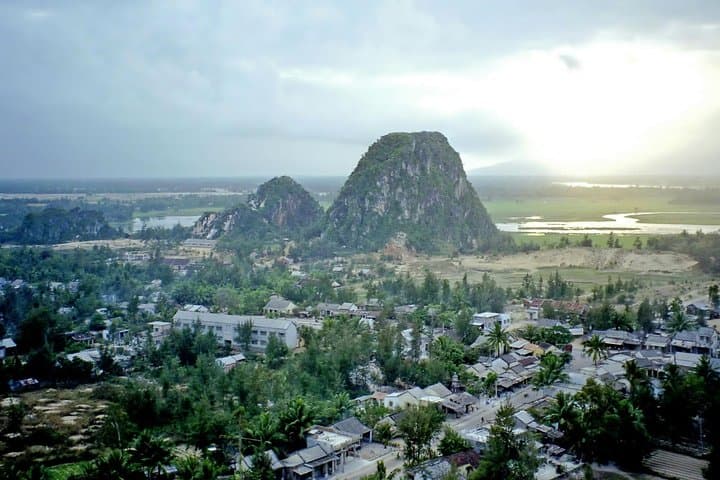

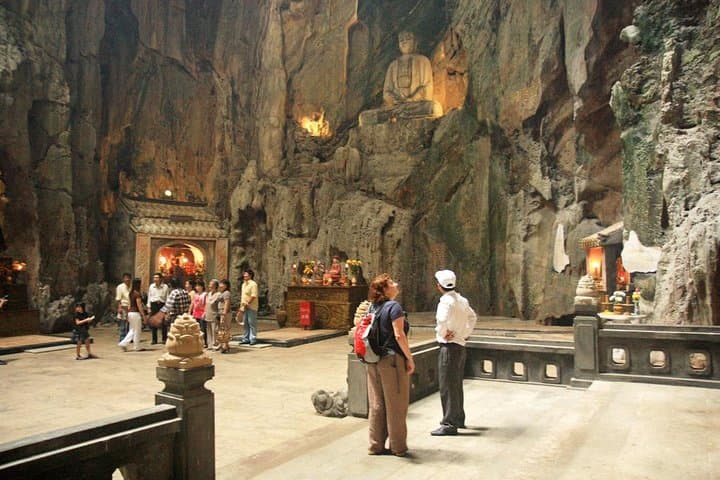
Morning light sharpens the limestone faces of the Marble Mountains while salt breeze from the nearby South China Sea tugs at your shirt. Visitors step from a small minivan into a stone courtyard, then climb: about 100 carved steps and a network of rocky trails winding through caverns, shrines and cliffside viewpoints.
Morning light sharpens the limestone faces of the Marble Mountains while salt breeze from the nearby South China Sea tugs at your shirt. Visitors step from a small minivan into a stone courtyard, then climb: about 100 carved steps and a network of rocky trails winding through caverns, shrines and cliffside viewpoints.
These five marble-and-limestone hills — Ngu Hanh Son — have been a center of Buddhist practice, stone carving and coastal defense for centuries. The caves hold votive altars and weathered reliefs; below, Non Nuoc village preserves the craft of stone carving that supplied temples across central Vietnam. A short drive onto Son Tra Peninsula brings Linh Ung Pagoda, where a white Quan Âm statue watches the bay from a wind-scoured headland.
Geologically the cliffs are compact limestone and marble, pocked by erosion that creates small caves and stairs; footing can be loose after rain. Culturally, pagoda etiquette matters: modest dress, quiet voices and removing hats indoors keep the visit respectful.
Practical edge: the tour runs about 5–6 hours with transportation, an English guide, bottled water and a Quang noodle lunch included. Wear grippy shoes for uneven rock, bring sun protection, and expect short steep sections and narrow cave steps. Mornings are cooler and less crowded; late afternoons can be hazy with sea spray. Treat wildlife and carvings with care, carry cash for small purchases at local craft stalls, and leave time for the coastal viewpoint at Linh Ung — it’s where the land leans into the sea and seems to dare the horizon onward.