THE ADVENTURE COLLECTIVE® · Independent discovery and booking for outdoor travel

Explore the Marble Mountains’ caves and pagodas, then wander Hoi An’s lantern-lit streets on a compact day tour from Da Nang. This 6–7 hour trip mixes easy climbs, cultural sites, and a riverside lunch — ideal for travelers wanting a concentrated taste of central Vietnam.
Explore the Marble Mountains’ caves and pagodas, then wander Hoi An’s lantern-lit streets on a compact day tour from Da Nang. This 6–7 hour trip mixes easy climbs, cultural sites, and a riverside lunch — ideal for travelers wanting a concentrated taste of central Vietnam.
You step out of the van into limestone slopes that rise like low, weathered fortresses above coastal rice paddies. The Marble Mountains’ steep stairs and cave mouths open into cool, shadowed chambers; incense drifts from 19th‑century pagodas while craftsmen chip away at white stone in the adjacent village.
Verified experiences and guided adventures in the surrounding area.
Operated by The Sun Tourist · Da Nang, Da Nang
You step out of the van into limestone slopes that rise like low, weathered fortresses above coastal rice paddies. The Marble Mountains’ steep stairs and cave mouths open into cool, shadowed chambers; incense drifts from 19th‑century pagodas while craftsmen chip away at white stone in the adjacent village.
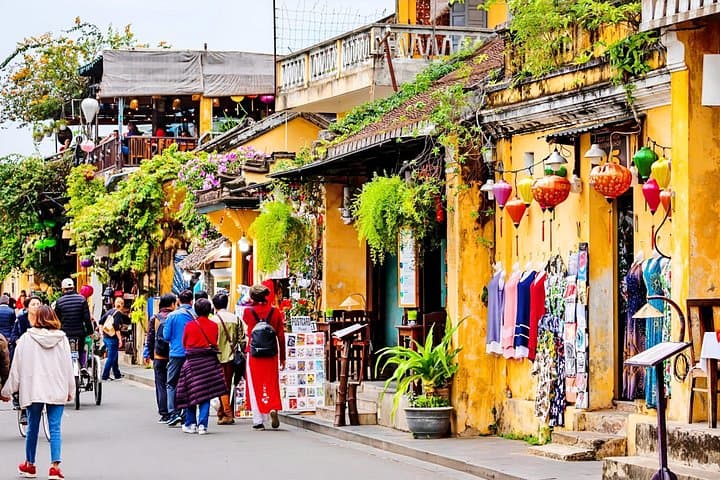
From those stony heights the coastline glints; by midmorning the tour moves toward Hoi An, where the Hoai River dares you to slow down. Hoi An’s narrow lanes trade the hard geometry of trade ships for human-scale architecture — wooden shophouses, tile roofs and the arched Japanese Bridge that bridged merchants and traditions four centuries ago.
Geology here is obvious: marble and limestone karst created caves and grottoes at Marble Mountains, while Hoi An became a port because its river mouth sheltered trading junks for centuries. The area carries Cham, Chinese and Vietnamese cultural layers — you’ll find ancestor halls, clan assembly buildings and street shrines integrated into everyday life.
Practicalities: expect about 3–4 hours exploring Marble Mountains (count several hundred steps if you skip the elevator) and 2–3 hours walking Hoi An’s town and market areas. Terrain is mixed: limestone steps, short cave scrambles and flat cobbles. Wear grippy shoes and bring sun protection; bottled water is supplied but a refillable bottle helps reduce waste.
Timing matters — mornings are cooler and less crowded at the caves; late afternoon brings the lantern-lit charm in Hoi An. The tour is paced for general fitness and gives a concentrated look at central Vietnam’s cultural and geological highlights.
easy.
6–7 hours.
Suitable for average fitness; must manage multiple flights of stairs and several hours of walking.
The tour runs about 6–7 hours and typically includes hotel pickup/drop-off in Da Nang, entrance fees, lunch, bottled water, a licensed English-speaking guide, and a short boat or lantern experience in Hoi An.
Yes — there are several flights of stone steps and stairways to pagodas and viewpoints; an elevator option is sometimes available at one site if you prefer to avoid steps.
The tour is family-friendly for older children but not ideal for infants who must be held; those with mobility limitations may find the Marble Mountains’ steps challenging.
Yes — the operator can accommodate vegetarian, vegan and gluten‑free requests if noted at booking.
Marble Mountains hosted religious sites and stone craftsmanship for centuries; Hoi An was a major trading port from the 15th to 19th centuries, where Chinese, Japanese and European merchants left architectural legacies.
Both sites face visitor pressure—avoid climbing on fragile cave formations, minimize plastic waste, and respect temple rules to help preserve these cultural landscapes.
The Sun Tourist operates guided outdoor trips and adventures with an emphasis on safety, stewardship, and memorable experiences.

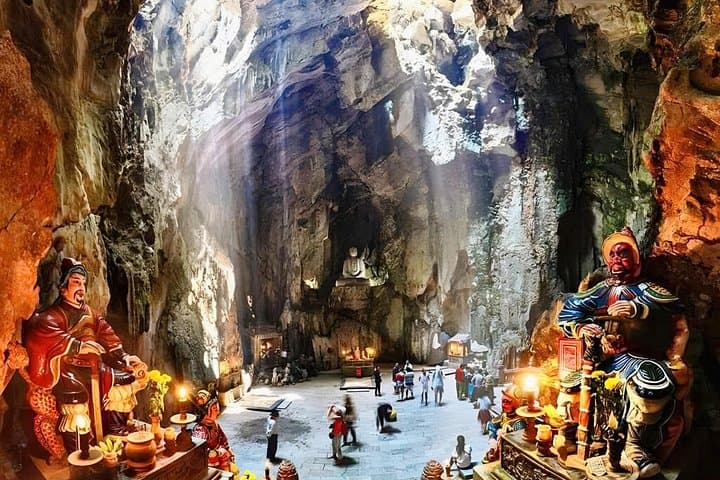
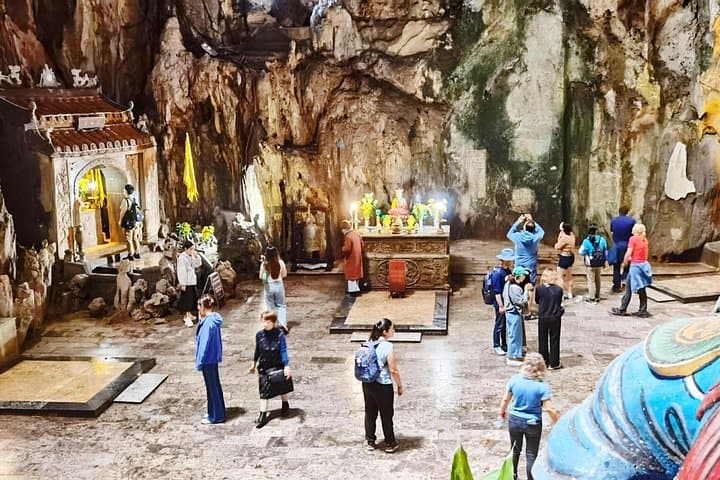
You step out of the van into limestone slopes that rise like low, weathered fortresses above coastal rice paddies. The Marble Mountains’ steep stairs and cave mouths open into cool, shadowed chambers; incense drifts from 19th‑century pagodas while craftsmen chip away at white stone in the adjacent village.
You step out of the van into limestone slopes that rise like low, weathered fortresses above coastal rice paddies. The Marble Mountains’ steep stairs and cave mouths open into cool, shadowed chambers; incense drifts from 19th‑century pagodas while craftsmen chip away at white stone in the adjacent village.
From those stony heights the coastline glints; by midmorning the tour moves toward Hoi An, where the Hoai River dares you to slow down. Hoi An’s narrow lanes trade the hard geometry of trade ships for human-scale architecture — wooden shophouses, tile roofs and the arched Japanese Bridge that bridged merchants and traditions four centuries ago.
Geology here is obvious: marble and limestone karst created caves and grottoes at Marble Mountains, while Hoi An became a port because its river mouth sheltered trading junks for centuries. The area carries Cham, Chinese and Vietnamese cultural layers — you’ll find ancestor halls, clan assembly buildings and street shrines integrated into everyday life.
Practicalities: expect about 3–4 hours exploring Marble Mountains (count several hundred steps if you skip the elevator) and 2–3 hours walking Hoi An’s town and market areas. Terrain is mixed: limestone steps, short cave scrambles and flat cobbles. Wear grippy shoes and bring sun protection; bottled water is supplied but a refillable bottle helps reduce waste.
Timing matters — mornings are cooler and less crowded at the caves; late afternoon brings the lantern-lit charm in Hoi An. The tour is paced for general fitness and gives a concentrated look at central Vietnam’s cultural and geological highlights.