THE ADVENTURE COLLECTIVE® · Independent discovery and booking for outdoor travel

A single-day loop from Da Nang that pairs the karst stairways and caves of the Marble Mountains with the lantern-lit streets of Hoi An Ancient Town. Expect temple steps, coastal views, stone-carving villages, and evening markets.
A single-day loop from Da Nang that pairs the karst stairways and caves of the Marble Mountains with the lantern-lit streets of Hoi An Ancient Town. Expect temple steps, coastal views, stone-carving villages, and evening markets.
You step off an air-conditioned minibus into a humid ribbon of coastal light — limestone ribs of the Marble Mountains rise like weathered knuckles above Non Nuoc Beach, while the low, lantern-lit roofs of Hoi An wait an hour down the road.
Verified experiences and guided adventures in the surrounding area.
Operated by MyVietTrip · Da Nang, Da Nang
You step off an air-conditioned minibus into a humid ribbon of coastal light — limestone ribs of the Marble Mountains rise like weathered knuckles above Non Nuoc Beach, while the low, lantern-lit roofs of Hoi An wait an hour down the road.
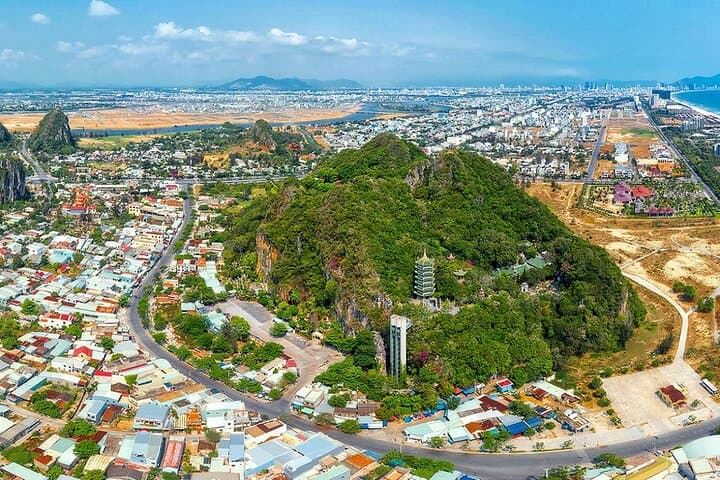
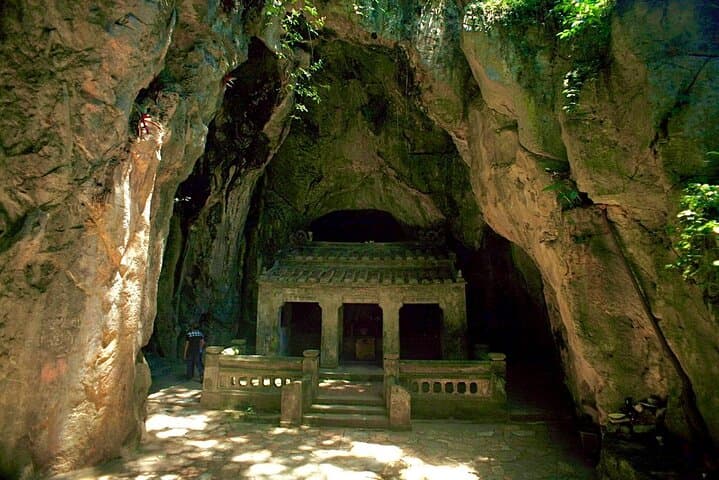
The Marble Mountains (Ngũ Hành Sơn) are a cluster of five stone peaks named after the elements; stair-stepped paths lead through pagodas and echoing caves carved both by nature and centuries of devotion. Nearby, Son Tra Peninsula’s Lady Buddha keeps watch from high above Da Nang, a 67–76 meter figure visible from the city and the sea.
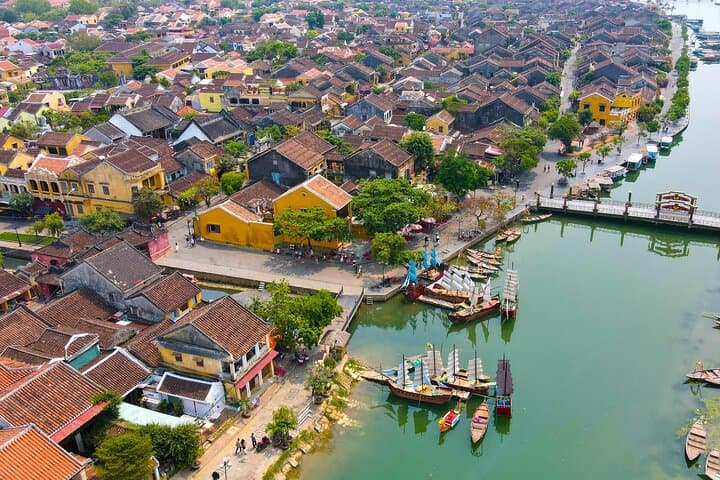
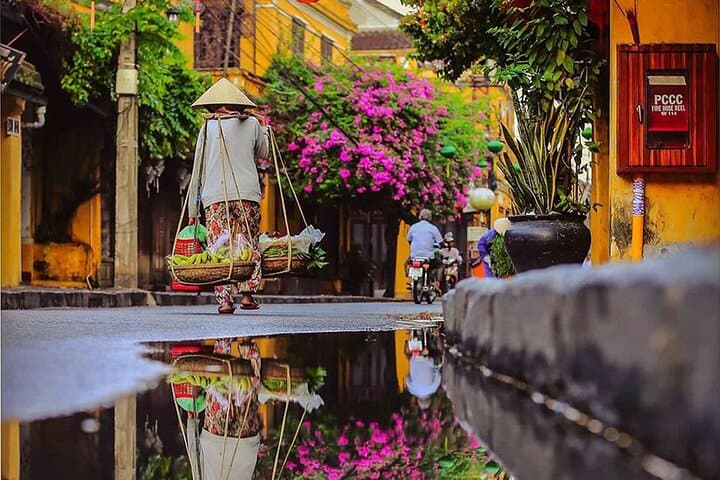
Hoi An’s Ancient Town preserves trading-house façades and a Japanese Covered Bridge from a port that flourished from the 15th to 19th centuries. By evening lantern light the Thu Bon River dares you to slow down — shopfronts, assembly halls, and river-side stalls all speak to layered culture and craftsmanship, including the 200‑year stone‑carving tradition at Non Nuoc Village.
Practical guidance: expect 6–7 hours with moderate walking on uneven stone steps and cobbled streets; comfortable footwear and sun protection matter more than technical gear. Bring a refillable bottle — vendors are frequent in Hoi An but waters are also provided — and plan to arrive in Hoi An before dusk if you want the lanterns and night market photos.
Timing, light, and footwear determine how much you take away: mornings are cooler for cave exploration, evenings richest for atmosphere in Hoi An.
easy.
6–7 hours.
Suitable for most fitness levels; requires walking up steps and short uneven sections for several hours.
Yes — the tour includes the Marble Mountains (Ngũ Hành Sơn) entrance fee as listed in inclusions.
The Lady Buddha on Son Tra Peninsula is offered as an optional extended stop—confirm with the operator when booking.
The tour is generally suitable for all fitness levels, but there are many stairs and uneven paths; travelers with mobility concerns should plan accordingly.
Yes — the itinerary includes roughly 1.5–2 hours in Hoi An’s Ancient Town and night market, timed to catch the lantern-lit evening.
Hoi An was a major Southeast Asian trading port between the 15th and 19th centuries; Marble Mountains have been a spiritual and quarrying site for centuries.
Son Tra and the Marble Mountains face pressure from tourism and quarrying—stick to marked paths, avoid feeding wildlife, and support local workshops that practice sustainable sourcing.
MyVietTrip operates guided outdoor trips and adventures with an emphasis on safety, stewardship, and memorable experiences.
You step off an air-conditioned minibus into a humid ribbon of coastal light — limestone ribs of the Marble Mountains rise like weathered knuckles above Non Nuoc Beach, while the low, lantern-lit roofs of Hoi An wait an hour down the road.
You step off an air-conditioned minibus into a humid ribbon of coastal light — limestone ribs of the Marble Mountains rise like weathered knuckles above Non Nuoc Beach, while the low, lantern-lit roofs of Hoi An wait an hour down the road.
The Marble Mountains (Ngũ Hành Sơn) are a cluster of five stone peaks named after the elements; stair-stepped paths lead through pagodas and echoing caves carved both by nature and centuries of devotion. Nearby, Son Tra Peninsula’s Lady Buddha keeps watch from high above Da Nang, a 67–76 meter figure visible from the city and the sea.
Hoi An’s Ancient Town preserves trading-house façades and a Japanese Covered Bridge from a port that flourished from the 15th to 19th centuries. By evening lantern light the Thu Bon River dares you to slow down — shopfronts, assembly halls, and river-side stalls all speak to layered culture and craftsmanship, including the 200‑year stone‑carving tradition at Non Nuoc Village.
Practical guidance: expect 6–7 hours with moderate walking on uneven stone steps and cobbled streets; comfortable footwear and sun protection matter more than technical gear. Bring a refillable bottle — vendors are frequent in Hoi An but waters are also provided — and plan to arrive in Hoi An before dusk if you want the lanterns and night market photos.
Timing, light, and footwear determine how much you take away: mornings are cooler for cave exploration, evenings richest for atmosphere in Hoi An.