THE ADVENTURE COLLECTIVE® · Independent discovery and booking for outdoor travel

Climb stone-carved steps into sunlit caverns at Marble Mountains, then stroll lantern-lit Hoi An—this guided afternoon-evening tour combines coastal karst scenery with centuries of trade-era culture. Expect stairs, caves, and a riverside finish.
Climb stone-carved steps into sunlit caverns at Marble Mountains, then stroll lantern-lit Hoi An—this guided afternoon-evening tour combines coastal karst scenery with centuries of trade-era culture. Expect stairs, caves, and a riverside finish.
Late afternoon light cleaves through the limestone caverns of Marble Mountains as the group steps from the coach and the sea breeze pulls the heat away. Stones, steps and pagoda roofs hold the smell of incense; inside Huyen Khong Cave shafts of sun turn dust into a quiet, almost sacred floor. The tour then moves downstream to Hoi An, where lanterns wash the Hoai River in amber and centuries-old shopfronts open like living history books.
Verified experiences and guided adventures in the surrounding area.
Operated by Vietnam TravelMART · Da Nang, Da Nang
Late afternoon light cleaves through the limestone caverns of Marble Mountains as the group steps from the coach and the sea breeze pulls the heat away. Stones, steps and pagoda roofs hold the smell of incense; inside Huyen Khong Cave shafts of sun turn dust into a quiet, almost sacred floor. The tour then moves downstream to Hoi An, where lanterns wash the Hoai River in amber and centuries-old shopfronts open like living history books.
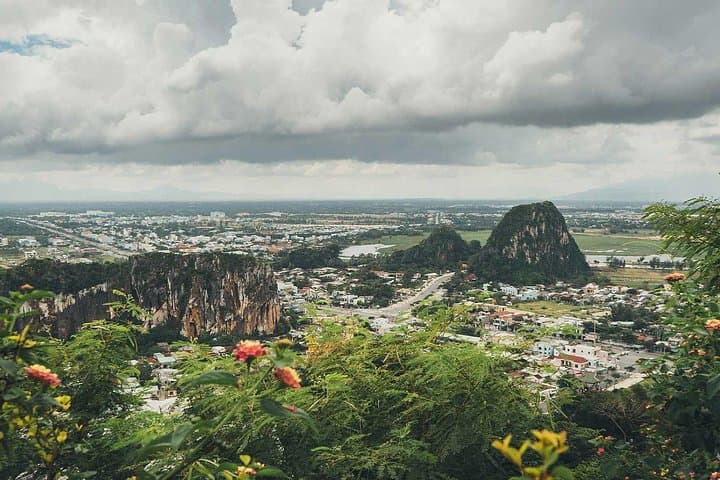
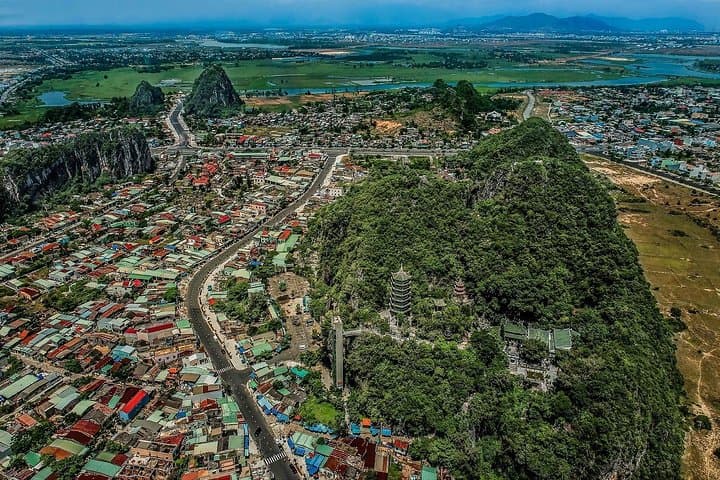
Geology here is blunt and local: five karst limestone outcrops—called Ngu Hanh Son—rise from coastal sand, the tallest reaching roughly 100 meters above sea level after a climb of a few hundred uneven stone steps. The site interleaves Buddhist sanctuaries and artisan workshops; Non Nuoc village below still carves stone by hand. Hoi An, once an international trading port, preserves architecture from Chinese, Japanese and European merchants—the 16th-century Japanese Covered Bridge is a highlight.
Practical guidance: plan 5–6 hours, arrive with steady shoes and a small pack—the Marble Mountains require stair climbing and some low-ceiling cave passages. Expect mixed terrain: paved access, carved steps, slippery rock in cave sections and flat, walkable streets in Hoi An. Bring water and insect repellent, and budget time for a riverside dinner and lantern-lit walking. Respect temple rules (modest clothing, quiet) and keep to marked paths. Pick-up in central Da Nang simplifies logistics; the tour fits travelers who can handle short uphill sections and want a compact blend of nature and living heritage.
moderate.
5–6 hours.
Moderate fitness: able to handle several hundred uneven steps, short uphill sections, and 1–2 hours of walking in Hoi An.
Yes—entry to the Marble Mountains and Huyen Khong Cave is included in the tour price.
Pickup and drop-off are provided for guests staying in Da Nang city center; other guests meet at A La Carte Hotel (200 Vo Nguyen Giap).
Expect several hundred stone steps and short uphill sections at Marble Mountains plus 1–2 hours of walking around Hoi An’s riverfront and alleys.
Some packages include dinner in Hoi An—check your booking details; bottled water on the coach is supplied for all passengers.
The Marble Mountains are a cluster of five limestone hills named for the five elements; Hoi An was a major Southeast Asian trading port from the 15th–19th centuries and shows Chinese, Japanese and European influences.
High visitor numbers can stress cave ecosystems and temples—follow marked trails, avoid touching rock formations, and pack out trash to minimize impact.
Vietnam TravelMART operates guided outdoor trips and adventures with an emphasis on safety, stewardship, and memorable experiences.
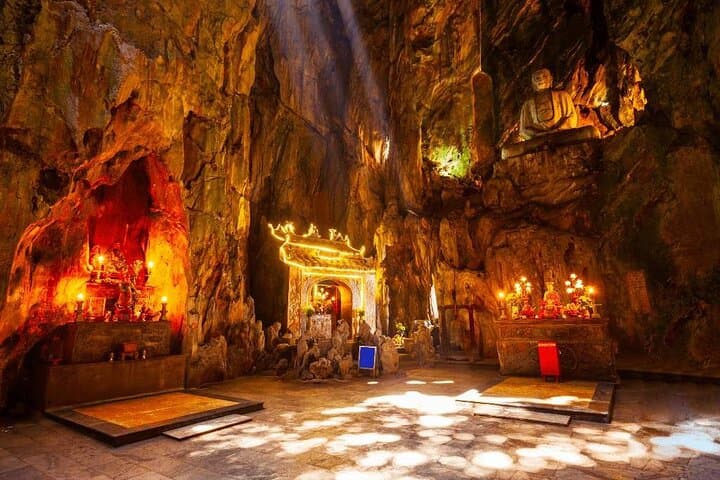

Late afternoon light cleaves through the limestone caverns of Marble Mountains as the group steps from the coach and the sea breeze pulls the heat away. Stones, steps and pagoda roofs hold the smell of incense; inside Huyen Khong Cave shafts of sun turn dust into a quiet, almost sacred floor. The tour then moves downstream to Hoi An, where lanterns wash the Hoai River in amber and centuries-old shopfronts open like living history books.
Late afternoon light cleaves through the limestone caverns of Marble Mountains as the group steps from the coach and the sea breeze pulls the heat away. Stones, steps and pagoda roofs hold the smell of incense; inside Huyen Khong Cave shafts of sun turn dust into a quiet, almost sacred floor. The tour then moves downstream to Hoi An, where lanterns wash the Hoai River in amber and centuries-old shopfronts open like living history books.
Geology here is blunt and local: five karst limestone outcrops—called Ngu Hanh Son—rise from coastal sand, the tallest reaching roughly 100 meters above sea level after a climb of a few hundred uneven stone steps. The site interleaves Buddhist sanctuaries and artisan workshops; Non Nuoc village below still carves stone by hand. Hoi An, once an international trading port, preserves architecture from Chinese, Japanese and European merchants—the 16th-century Japanese Covered Bridge is a highlight.
Practical guidance: plan 5–6 hours, arrive with steady shoes and a small pack—the Marble Mountains require stair climbing and some low-ceiling cave passages. Expect mixed terrain: paved access, carved steps, slippery rock in cave sections and flat, walkable streets in Hoi An. Bring water and insect repellent, and budget time for a riverside dinner and lantern-lit walking. Respect temple rules (modest clothing, quiet) and keep to marked paths. Pick-up in central Da Nang simplifies logistics; the tour fits travelers who can handle short uphill sections and want a compact blend of nature and living heritage.