THE ADVENTURE COLLECTIVE® · Independent discovery and booking for outdoor travel

Climb carved stairs and explore Buddhist grottoes on a half-day small-group tour from Hoi An. Visit Marble Mountains, the instructive Am Phu Cave, and panoramic Monkey Mountain with a local guide and village lunch.
Climb carved stairs and explore Buddhist grottoes on a half-day small-group tour from Hoi An. Visit Marble Mountains, the instructive Am Phu Cave, and panoramic Monkey Mountain with a local guide and village lunch.
Morning light slices across limestone faces as you climb the first stair at Marble Mountains, the five rocky humps that sit between Da Nang and the South China Sea. Cool cave mouths and temple shadows invite a quieter step; incense drifts from pagodas while stone-carving villages hum below.
Verified experiences and guided adventures in the surrounding area.
Operated by Happy Tour · Da Nang, Da Nang
Morning light slices across limestone faces as you climb the first stair at Marble Mountains, the five rocky humps that sit between Da Nang and the South China Sea. Cool cave mouths and temple shadows invite a quieter step; incense drifts from pagodas while stone-carving villages hum below.
Geology here is blunt and readable: karst limestone folded and weathered into caverns and cliff faces over millions of years. Human history layers on top — Buddhist grottoes, Hindu niches, and a marble-carving village with three-century-old techniques where artisans turn raw rock into altars and statues.
Am Phu Cave, the so-called "hell cave," contrasts the serene shrines: dioramas and sculptures dramatize Buddhist moral stories, using fear and humor to teach good conduct. Later, the road climbs toward Monkey Mountain on the Son Tra spine, where Linh Ung Pagoda holds a towering Lady Buddha and wind-cleansed views of Da Nang’s coastline.
Expect stairs—many—and a mix of paved paths, carved tunnels and short steep sections. The tour moves at a steady pace with photo stops and a village lunch; it’s culturally rich rather than technically demanding. Local guides add context on craftsmanship, religious symbolism and the delicate coastal ecology.
Practical guidance: bring steady footwear for uneven steps, sun protection for exposed viewpoints, and small cash for the marble workshops if you want to support local craft. Move respectfully around shrines, keep a safe distance from macaques, and let the rock and ritual guide your visit.
easy.
5–6 hours.
Suitable for most travelers who can manage multiple flights of stairs and short uphill walks; no special fitness required.
The tour runs about 5–6 hours and typically departs in the morning with hotel pickup from Hoi An.
Yes; entrance fees and a traditional family lunch are included according to the tour details.
The itinerary is family-friendly but involves many stairs; it’s not recommended for those with serious back problems or limited mobility.
Yes, the marble-carving village visit includes time to watch craftsmen and purchase pieces—carry cash for smaller items.
Marble Mountains (Ngu Hanh Son) have long been a religious and artisanal center; the nearby marble-carving village has practiced stone work for over 300 years.
Stay on marked paths and don’t feed wildlife—coastal erosion and visitor pressure threaten fragile cave interiors and slope vegetation; supporting local craft keeps traditional livelihoods aligned with conservation.
Happy Tour operates guided outdoor trips and adventures with an emphasis on safety, stewardship, and memorable experiences.
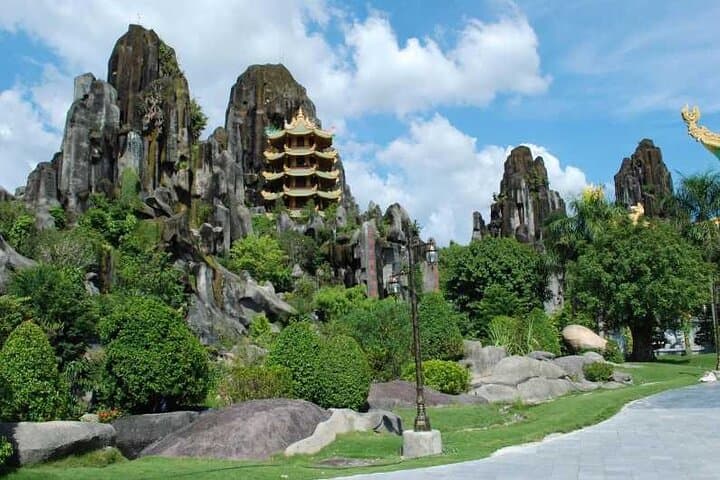
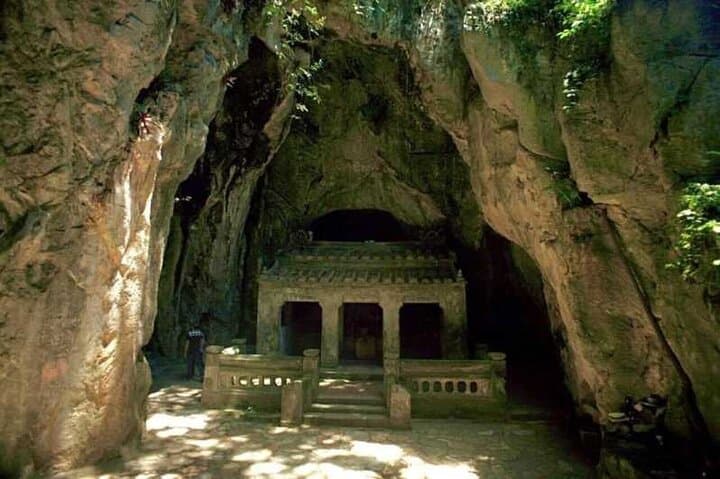
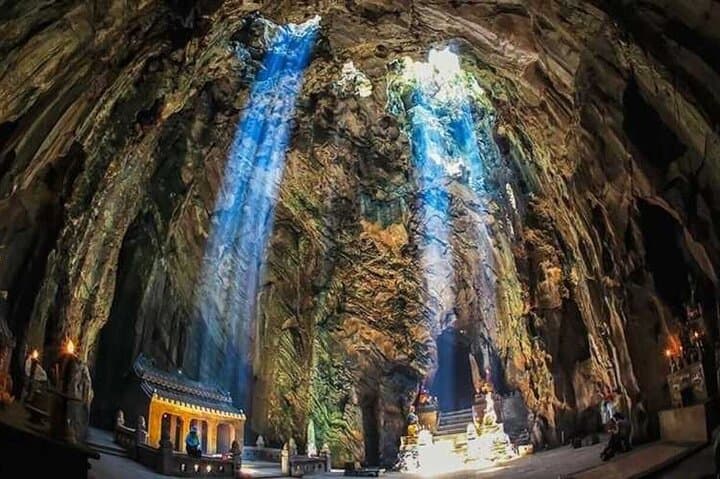
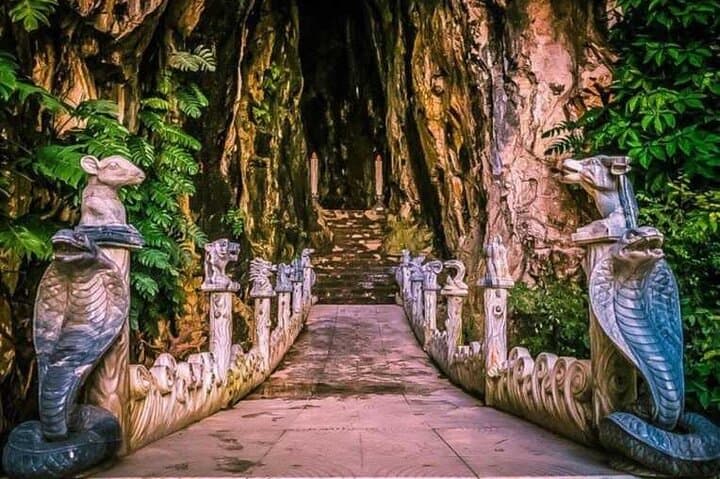
Morning light slices across limestone faces as you climb the first stair at Marble Mountains, the five rocky humps that sit between Da Nang and the South China Sea. Cool cave mouths and temple shadows invite a quieter step; incense drifts from pagodas while stone-carving villages hum below.
Morning light slices across limestone faces as you climb the first stair at Marble Mountains, the five rocky humps that sit between Da Nang and the South China Sea. Cool cave mouths and temple shadows invite a quieter step; incense drifts from pagodas while stone-carving villages hum below.
Geology here is blunt and readable: karst limestone folded and weathered into caverns and cliff faces over millions of years. Human history layers on top — Buddhist grottoes, Hindu niches, and a marble-carving village with three-century-old techniques where artisans turn raw rock into altars and statues.
Am Phu Cave, the so-called "hell cave," contrasts the serene shrines: dioramas and sculptures dramatize Buddhist moral stories, using fear and humor to teach good conduct. Later, the road climbs toward Monkey Mountain on the Son Tra spine, where Linh Ung Pagoda holds a towering Lady Buddha and wind-cleansed views of Da Nang’s coastline.
Expect stairs—many—and a mix of paved paths, carved tunnels and short steep sections. The tour moves at a steady pace with photo stops and a village lunch; it’s culturally rich rather than technically demanding. Local guides add context on craftsmanship, religious symbolism and the delicate coastal ecology.
Practical guidance: bring steady footwear for uneven steps, sun protection for exposed viewpoints, and small cash for the marble workshops if you want to support local craft. Move respectfully around shrines, keep a safe distance from macaques, and let the rock and ritual guide your visit.