THE ADVENTURE COLLECTIVE® · Independent discovery and booking for outdoor travel

Explore the pale pools of Maras and the concentric terraces of Moray on a 4–5 hour guided loop from Cusco. This half-day Sacred Valley tour pairs easy walks with high-altitude viewpoints and hands-on cultural insight.
Explore the pale pools of Maras and the concentric terraces of Moray on a 4–5 hour guided loop from Cusco. This half-day Sacred Valley tour pairs easy walks with high-altitude viewpoints and hands-on cultural insight.
You step out of the minivan into thin air and a panorama of scalloped terraces and bright white salt pans; the wind at 3,300–3,500 m presses cool against your face and the valley stretches away like a living map. The first stop — the Salineras de Maras — is a hill cleaved into hundreds of shallow pools where mineral-rich water evaporates under the sun, giving the landscape a patchwork of salts and ochres.
Verified experiences and guided adventures in the surrounding area.
Operated by CrossoverPeru Tours · Maras, Cusco
You step out of the minivan into thin air and a panorama of scalloped terraces and bright white salt pans; the wind at 3,300–3,500 m presses cool against your face and the valley stretches away like a living map. The first stop — the Salineras de Maras — is a hill cleaved into hundreds of shallow pools where mineral-rich water evaporates under the sun, giving the landscape a patchwork of salts and ochres.
The route moves on to Moray, where concentric agricultural terraces fall away in bowl-like rings. Archaeologists interpret the site as an Inca crop laboratory: each terrace creates a slightly different microclimate for experimenting with temperature and moisture. Geology here is simple and bold — uplifted Andean plateaus, eroding soils, and underground saline springs that communities have tapped for centuries.
Culturally, Maras remains a working landscape: local families maintain salt pans and small markets at town viewpoints. Expect short walks, dusty paths, exposed viewpoints and abrupt steps; the light is intense and the altitude amplifies effort. Practicalities: the half-day tour typically runs 4–5 hours with hotel pickup, a bilingual guide, and entrance fees included. Bring layered clothing for sun and wind, high-SPF sunscreen, water, and small bills for snacks or souvenirs. Pace yourself on stairs and plan for slower breathing at altitude.
The experience rewards curiosity — from the tactile geometry of terraces to the human scale of salt farming — offering an accessible, compact window into Inca ingenuity and contemporary Andean life.
easy.
4–5 hours.
Suitable for most travelers with basic mobility; expect short walks and stairs at high altitude.
The trip lasts about 4–5 hours including pickup, transport, and time at both Maras and Moray.
Yes—it's rated easy with short walks, but altitude can affect anyone; allow extra time and notify guides of any concerns.
Yes; this tour includes entrance fees to the Moray site and access to the Maras viewpoint as listed in the itinerary.
Photography for personal use is fine; drone policies vary and usually require permits—check with the operator and respect no-fly zones and local rules.
Moray’s concentric terraces were used by the Incas as experimental agricultural plots to mimic different climates; Maras’ salt pans have pre-Inca origins and remain managed by local families.
The salt pans are fragile and privately maintained—stick to paths, avoid removing salt, and buy local products to support sustainable stewardship.
CrossoverPeru Tours operates guided outdoor trips and adventures with an emphasis on safety, stewardship, and memorable experiences.
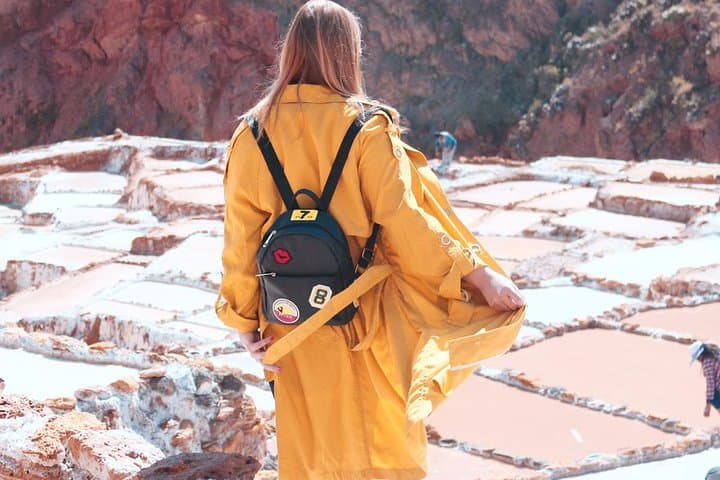

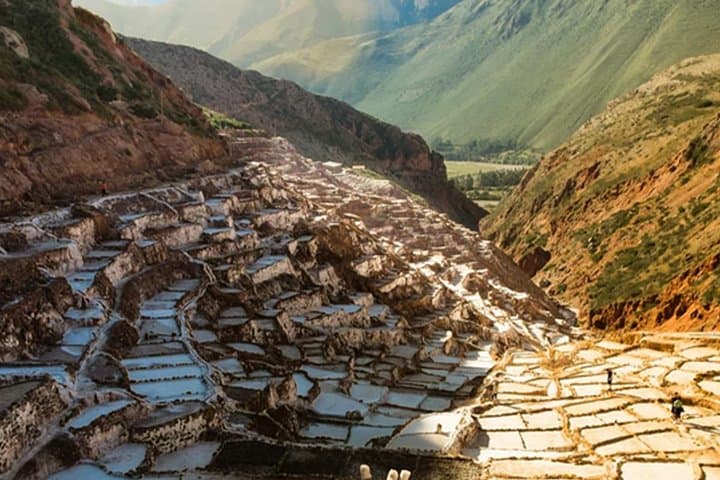
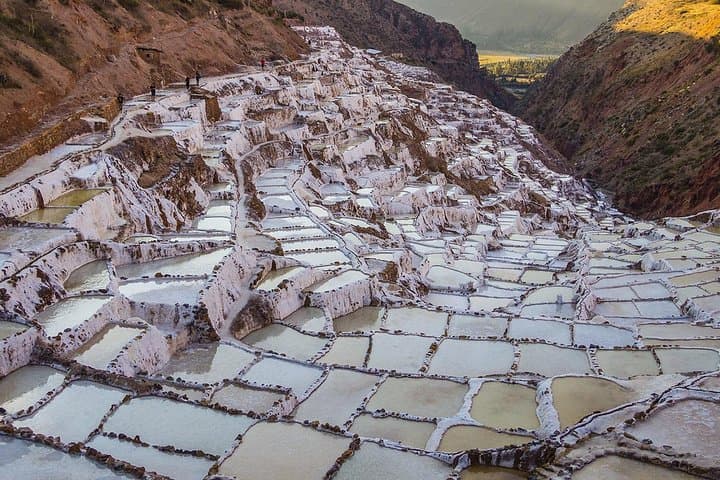
You step out of the minivan into thin air and a panorama of scalloped terraces and bright white salt pans; the wind at 3,300–3,500 m presses cool against your face and the valley stretches away like a living map. The first stop — the Salineras de Maras — is a hill cleaved into hundreds of shallow pools where mineral-rich water evaporates under the sun, giving the landscape a patchwork of salts and ochres.
You step out of the minivan into thin air and a panorama of scalloped terraces and bright white salt pans; the wind at 3,300–3,500 m presses cool against your face and the valley stretches away like a living map. The first stop — the Salineras de Maras — is a hill cleaved into hundreds of shallow pools where mineral-rich water evaporates under the sun, giving the landscape a patchwork of salts and ochres.
The route moves on to Moray, where concentric agricultural terraces fall away in bowl-like rings. Archaeologists interpret the site as an Inca crop laboratory: each terrace creates a slightly different microclimate for experimenting with temperature and moisture. Geology here is simple and bold — uplifted Andean plateaus, eroding soils, and underground saline springs that communities have tapped for centuries.
Culturally, Maras remains a working landscape: local families maintain salt pans and small markets at town viewpoints. Expect short walks, dusty paths, exposed viewpoints and abrupt steps; the light is intense and the altitude amplifies effort. Practicalities: the half-day tour typically runs 4–5 hours with hotel pickup, a bilingual guide, and entrance fees included. Bring layered clothing for sun and wind, high-SPF sunscreen, water, and small bills for snacks or souvenirs. Pace yourself on stairs and plan for slower breathing at altitude.
The experience rewards curiosity — from the tactile geometry of terraces to the human scale of salt farming — offering an accessible, compact window into Inca ingenuity and contemporary Andean life.