THE ADVENTURE COLLECTIVE® · Independent discovery and booking for outdoor travel

Spend a full day on Kilimanjaro’s lower slopes exploring Chagga coffee farms, hiking to Ndoro Waterfalls and touring historic underground caves. This practical cultural-hike mixes hands-on coffee processing with a 1-hour forest descent to a refreshing waterfall pool.
Spend a full day on Kilimanjaro’s lower slopes exploring Chagga coffee farms, hiking to Ndoro Waterfalls and touring historic underground caves. This practical cultural-hike mixes hands-on coffee processing with a 1-hour forest descent to a refreshing waterfall pool.
You step out of the vehicle at Marangu Gate (≈1900m) and the mountain’s lower slopes press close: humid air, tall forest trees, and the distant white crown of Kilimanjaro framing the morning. The group follows narrow tracks into patchy rainforest, the scent of wet soil and coffee blossoms mingling as a guide talks about Chagga life and the mountain routes used by generations.
Verified experiences and guided adventures in the surrounding area.
Operated by Tanzania Serengeti Safaris · Moshi, Kilimanjaro Region
You step out of the vehicle at Marangu Gate (≈1900m) and the mountain’s lower slopes press close: humid air, tall forest trees, and the distant white crown of Kilimanjaro framing the morning. The group follows narrow tracks into patchy rainforest, the scent of wet soil and coffee blossoms mingling as a guide talks about Chagga life and the mountain routes used by generations.
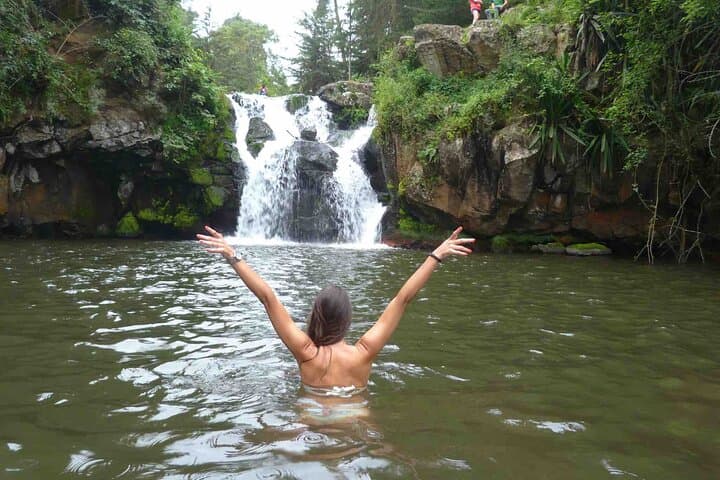
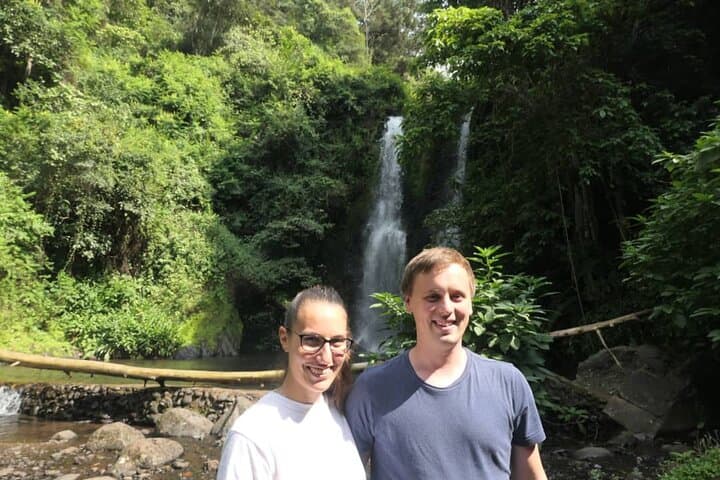
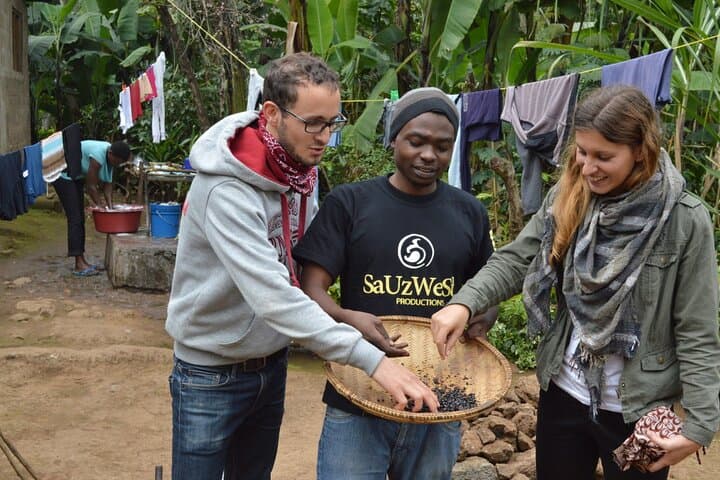
The route moves from cultural micro-farms to a working coffee village where beans are grown, pulped, sun-dried and traditionally roasted over small fires. Trying a hand at processing and roasting connects you to a local food economy shaped by volcanic soils—Kilimanjaro’s ancient eruptions left fertile loam that made coffee cultivation a regional mainstay. From the farm the trail descends toward Ndoro Waterfalls; the hour-long walk drops through forest, with basalt outcrops and braided streams shaping small cascades and plunge pools.
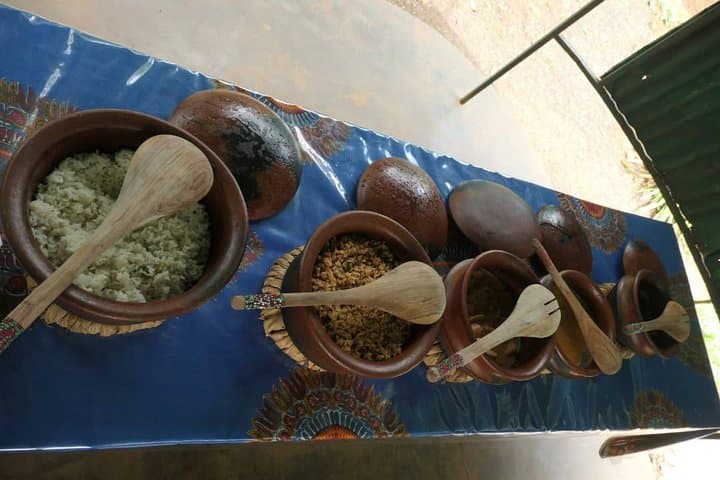
Later visits include the Chagga Underground Caves—historic defensive tunnels used during raids—and a short interpretive stop at the Chagga Live Museum. Lunch in a nearby eatery serves hearty, local dishes and optional banana beer.
Practical notes: the day runs about eight hours with moderate walking on uneven, often muddy paths; footwear with grip and a light rain layer are advisable. Altitude is mild but the humidity can sap energy—carry water and sun protection. Respect cultural spaces: ask before photographing people, and consider buying coffee directly from producers to support local livelihoods.
easy.
8 hours.
Light to moderate fitness—able to walk up to an hour on uneven ground and manage short downhill sections.
The descent to the waterfall takes about one hour on a maintained trail with some steep and muddy sections—suitable for most walkers with basic footwear.
Yes, visitors typically participate in harvesting/processing demonstrations, roasting over small fires and preparing a fresh cup under local supervision.
Yes—there is a plunge pool at the base where visitors often bathe; assess water depth and current, and avoid swimming after heavy rains.
Guides commonly speak English and Swahili; some guides also speak German or French depending on the operator and group.
The Chagga have farmed Kilimanjaro’s lower slopes for centuries; networks of underground caves were historically excavated as defensive refuges during intergroup conflicts.
Local conservation focuses on protecting the montane forest and sustainable coffee practices—buying directly from smallholders helps support agroforestry that stabilizes soils and water sources.
Tanzania Serengeti Safaris operates guided outdoor trips and adventures with an emphasis on safety, stewardship, and memorable experiences.
You step out of the vehicle at Marangu Gate (≈1900m) and the mountain’s lower slopes press close: humid air, tall forest trees, and the distant white crown of Kilimanjaro framing the morning. The group follows narrow tracks into patchy rainforest, the scent of wet soil and coffee blossoms mingling as a guide talks about Chagga life and the mountain routes used by generations.
You step out of the vehicle at Marangu Gate (≈1900m) and the mountain’s lower slopes press close: humid air, tall forest trees, and the distant white crown of Kilimanjaro framing the morning. The group follows narrow tracks into patchy rainforest, the scent of wet soil and coffee blossoms mingling as a guide talks about Chagga life and the mountain routes used by generations.
The route moves from cultural micro-farms to a working coffee village where beans are grown, pulped, sun-dried and traditionally roasted over small fires. Trying a hand at processing and roasting connects you to a local food economy shaped by volcanic soils—Kilimanjaro’s ancient eruptions left fertile loam that made coffee cultivation a regional mainstay. From the farm the trail descends toward Ndoro Waterfalls; the hour-long walk drops through forest, with basalt outcrops and braided streams shaping small cascades and plunge pools.
Later visits include the Chagga Underground Caves—historic defensive tunnels used during raids—and a short interpretive stop at the Chagga Live Museum. Lunch in a nearby eatery serves hearty, local dishes and optional banana beer.
Practical notes: the day runs about eight hours with moderate walking on uneven, often muddy paths; footwear with grip and a light rain layer are advisable. Altitude is mild but the humidity can sap energy—carry water and sun protection. Respect cultural spaces: ask before photographing people, and consider buying coffee directly from producers to support local livelihoods.